Book Review

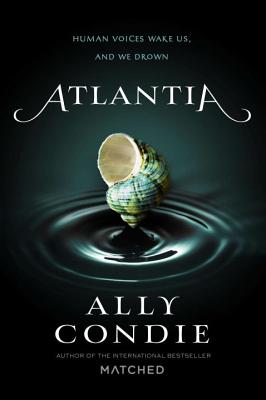
Atlantia by Ally Condie

Publisher: Dutton Books, 2014
Genre: Dystopian YA novel
Pages: 320
Format: Hardback
Buy Local
My Rating: 4.5/5 stars
Summary

Feeling trapped as a hidden siren in the underwater world of Atlantia and forever recognized as the daughter of the beloved deceased leader Oceana, Rio Conwy is desperate to go Above. But her twin sister Bay unexpectedly chooses to go Above instead, without leaving an explanation. Heartbroken and alone, Rio is forced to find answers from the only family she has left—her mother’s sister Maire, the dangerous siren.

As Rio attempts to find out why her sister left and to get Above herself, she discovers secrets and truths about her family and herself, and the Divide system now separating her from Bay. Rio learns to recognize the strength in her own voice through unexpected ways as she unearths the past and determines her future.

Thoughts

Admittedly, Ally Condie is one of my favorite YA authors, so I was a little biased in favor of Atlantia when I chose it off the shelf. However, even for those unfamiliar with Condie’s other award-winning work, Matched, this stand-alone bestseller is sure to be a satisfying read. Though Rio’s story presents serious themes that are handled justly, the narrative retains a feeling of enjoyable entertainment throughout. In particular, the races in the deepmarket have a pleasantly exciting rhythm. The style of the narration flows and fits well with the subject matter, and the ending is appropriate without being unrealistic.

The romantic relationships in this book were paced well, although some of their dialogue and scenes came off somewhat stilted. The romance was the weakest narrative aspect for me personally. The dynamics between family members or friends felt more natural and engaging. In particular, I felt that the difficult decisions at the end for Rio and Bay were well structured, showing the progress and strength in their connection from the beginning when Rio’s world was ripped apart by Bay not explaining beforehand why she had to go Above.


I would recommend this book to any YA reader who enjoys page-turning dystopian fantasies with beautiful world-building and expert character development.

Book Review

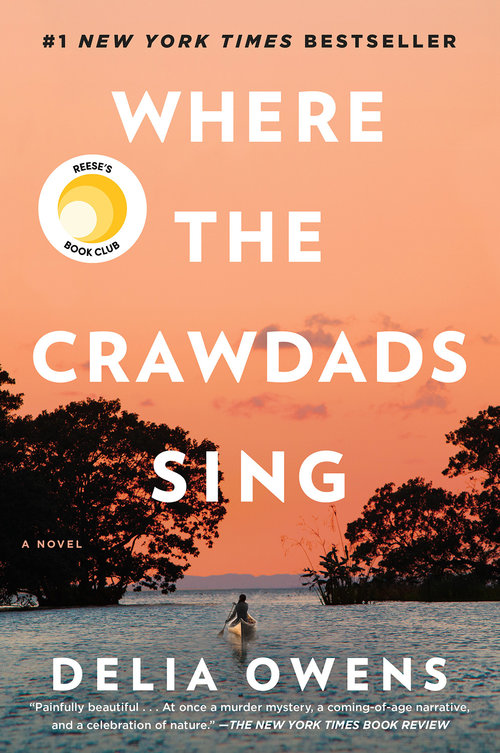
Where the Crawdads Sing by Delia Owens

Publisher: G.P. Putnam’s Sons, 2018
Genre: Fiction
Pages: 384
Format: Hardcover
Buy Local
My Ratings: 5/5 stars

Summary

Outside a small town on the North Carolina coast, Kya Clark’s family abandons her in a shack on the marshland, where she must learn to survive on her own, living off of the land she admires and studies. For years, rumors and prejudice follow Kya, known as the uneducated, wild “Marsh Girl.”

When two men from town become entranced by her wild beauty, Kya decides to open her heart to the vulnerability of love—only to find herself hurt and in pain.

After the town’s beloved quarterback, Chase Andrews, is found dead, townspeople point fingers at “Marsh Girl,” the suspicious figure that looms behind the twists and turns of the marsh’s waterways. How did Chase Andrews die? Was it murder? And if so, did Kya have anything to do with his death?

Thoughts

This coming-of-age story is my favorite book of the summer so far. It’s hard for me to characterize this book—other than to say it is a work of coming-of-age fiction. In some ways it is a mystery, revolving around the suspicious death of Chase Andrews and borrowing tricks from the crime fiction genre. In other ways it’s a romance, but it only offers small glimpses into Kya’s relationships with the two townie boys. Owens chose to focus more on the development of Kya and pain the men caused her. Still, in other ways, it has some elements of a young adult book, where Kya learns about menstruation and womanhood from a wise woman named Mabel. However, it targets a more mature audience in its commentary on human behavior, especially that of sexuality and violence. I think the fact that Owens borrows elements and storytelling strategies from so many different genres makes her work more compelling. Her story isn’t confined by one specific genre expectation.

The novel is a nonlinear narrative, containing switchbacks between Kya’s story growing up in the marsh and the discovery of Chase Andrews’ body (and subsequent investigation and court trial). Although date-jumbling like this can be a risky writing choice, I think Owens executed her plan perfectly. It was easy to jump between the two story strands, and I felt that she switched between the two parts of the story at the right moments, keeping me interested and not letting me forget about one narrative strand or the other. She never lost me once in all of the switchbacks, but I can’t say the same for some of the other books I’ve read that use this technique!

The protagonist, Kya Clark lives mostly in isolation with only the landscape to keep her company throughout much of the narrative. It was interesting to see a character like this learn to open up to other people and try to apply her knowledge of other creatures to her understanding of humanity.

The one critique I had was about the poetry of Amanda Hamilton that is intertwined throughout the novel. To me, the poems seem a bit trite and on the nose, but I believe this is forgivable once you reach the story’s conclusion. I’m jumping around a spoiler here, but the unexpected ending ties the novel together and answered my remaining questions, leaving me feeling satisfied with the story.

Because the book borrows from so many different genres and explores such an interesting protagonist, I suspect many fiction lovers will adore this beautifully-crafted novel.

Book Review

Strange Diary Days by Blake Edwards

Publisher: Independently published, 2018
Genre: Poetry
Pages: 32
Format: Paperback
Buy Local
My Rating: 4.5/5 stars

Summary

Hailing from Tucson, Arizona, local author Blake Edwards shares the first volume of his two volume collection, Strange Diary Days.

Beginning in ethereal desert landscapes, readers soon leave the dust behind as they are transported into a world both surreal yet strikingly tangible.

From dirt roads to ancient spells awaking, Edwards’ work truly delivers his promise to his readers—a world where all that can be imagined exists; and you are right in the middle of it.

Thoughts

I would like to preface my review with this tidbit of knowledge about my literary preferences: normally, I am not one to get easily immersed in fantasy. My poetry collections are few, and they are grounded in reality with the likes of Carolyn Forche. To be honest, I just wasn’t sure if I would connect with this collection because of it’s promises.

I have never been so pleased at being wrong.

Edwards took a brilliant approach to this collection; the first poem of the collection, “Strange Diary Days,” hints at the otherworldly themes readers will encounter later, but only just so. He then goes on to ground his readers in beautiful but relatable realities in which he describes the desert and his perspective having grown up in Tucson, Arizona.

My favorite poem from this first part of the collection is “Winter Throes.” I found Edwards’ details so tangible—”I listen to the fire crackle deep, yet the floor is cold”—yet also so ethereal—”Past these boneyards lie quick-wild spring, where colors spill over and salve the scars away.” His words were the perfect balance of grounding and ethereal, poignantly preparing the reader for what was to come in the later half of the volume.

Slowly I saw the ethereal take hold over the realistic, as if each poem were my feet leaving the ground a little bit more, until I looked down and saw that they were no longer on the floor. It was gradual, painless, and so cleverly crafted.

“Wicked” was my favorite poem from the second half of the collection, clocking in at four stanzas and leaving me pouring over them again and again. Edwards’ craftsmanship with each word left an incredible imprint on me as a reader.

I would recommend Strange Diary Days to anyone—no matter what genre, material, or platform you prefer. It was a true delight to be taken into Edwards’ world, and I hope each reader gets a chance to experience what I did.


I would like to thank Blake Edwards for the ARC in exchange
for an honest and unbiased review.

Book Review

Family of Origin by CJ Hauser

Publisher: Doubleday Books, 2019
Genre: Fiction novel
Pages: 283
Format: Paperback
Buy Local
My Rating: 4/5 stars

Summary

On hearing that their biologist father Dr. Ian Grey has died, estranged half-siblings Nolan and Elsa Grey reunite. They travel to his island research station and become acquainted with his team, the Reversalists, who study a duck species in an attempt to prove their theory of reverse evolution.

While learning about and searching for the “Paradise Duck” for which their father had been preoccupied, they also learn about their own “family of origin,” uncovering various layers of family secrets and complications. With flashbacks and foreshadowing, Hauser illustrates the complication that comes with determining how much of the past should affect the future.

Thoughts

To be honest, the first time I attempted to read this book, I failed to get through it. I think this is perhaps because I was not in the right frame of mind to make sense of Hauser’s web of themes and stylistic choices. The flashbacks and foreshadowing tell compelling backstories, but are also more complicated to read than a traditionally chronological narrative. I also particularly struggled with her decision to not separate dialogue with quotation marks. This made the conversational flow difficult for me personally to follow.

That being said, I felt like what redeemed this book was its layering of familial secrets, histories, and relationships. This made the characters feel real and the narrative more engaging. As a reader, I wanted the estranged siblings to find out more about their past which would help them to connect in the present. It was interesting to consider family dynamics in relation to the evolutionary theories posited in the novel.

I would recommend this book to adult readers who like learning about backstories, histories, and scientific theories—and who do not mind the absence of dialogue quotes.


Thanks to the author and publisher for providing an ARC in
exchange for this honest and unbiased review.

Book Review

The Tenth Muse by Catherine Chung

Publisher: Ecco, 2019
Genre: Historical Fiction
Pages: 304
Format: Paperback
Buy Local
My Rating: 4.5/5 stars

Summary

In this coming-of-age story, we see a young girl named Katherine grow up to become a well-respected mathematician with a fascination for all things numbers and a special interest in the famous Riemann hypothesis.

As she pursues a career in mathematics, she is forced to question and evaluate her identity. Growing up in the 1950s, she studies in a male-dominated field where she feels she must learn how to fit in when she can’t help but stand out. Hoping to find her biological parents for answers about who she really is, she uncovers a complicated, tangled family history that seems to raise more questions than answers.

Katherine learns to rethink her identity as she discovers beautiful mathematics as well as chilling stories of the women who came before her.

Thoughts

Before I begin, I do have a confession: I am a bit of a math nerd. Going against the stereotype that English majors fear and despise numbers, I actually enjoy learning theorems and even took a few college mathematics courses despite my academic advisor’s confusion and explanation that the classes wouldn’t help me graduate.

Because of my love for numbers and logic, I really adored Catherine Chung’s well-researched novel about a young mathematician. The book contains quite a few hidden math gems such as a variation of the Gauss addition story, the Königsberg bridge problem, and several references to historical mathematicians and scientists. That being said, you don’t have to love math to appreciate Chung’s beautiful novel that explores identity, family history, and legacy.

Since the theorems and math references are written about in more of a metaphorical way than a technical manner, the book makes imagining the experience of a young woman trying to find her place in the world of mathematics accessible to a wider reading audience.

The main character, Katherine, grows up with the understanding that she is the daughter of a Chinese immigrant and World War II American veteran. However, she soon learns that her family history is much more complicated than her parents once claimed. This, in addition to the realization that some people questioned her place in mathematics, forces her to redefine her identity and learn to make a contribution to mathematics—for herself, and by herself.

It’s a beautiful novel that examines what it means to truly know yourself and act independently of societal expectations, and I highly recommend it to anyone who is a fan of historical or bildungsroman fiction.


If you are, in fact, a math nerd like me, you can learn more about the Riemann hypothesis, which Katherine attempts to tackle in the book, in the video below.


Thanks to the author and publisher for providing an ARC in
exchange for this honest and unbiased review.

Book Review

Bully Love by Patricia Colleen Murphy

Publisher: Press 53, April 2019
Genre: Poetry
Pages: 84
Format: Paperback
Buy Local

Summary

Winner of the 2019 Press 53 Award for Poetry, Patricia Colleen Murphy shares her journey from Ohio to Arizona in her latest book, Bully Love.

The collection offers glimpses into the harsh but beautiful Sonoran Desert, painful but important memories, and an unexpected but powerful love for landscape and people.

Amidst the many life changes—from Ohio twisters to Arizona monsoons, childhood to adulthood, and solitude to love—the poet examines how she finds peace and beauty in spite of hardships, including death and grief, as she leaves a broken home behind to build up a new life.

Thoughts

Although I consider myself to be more of a fiction junkie than anything else, a few poetry collections have found their way onto my bookshelves. Usually these collections sit on my shelves for years as I pick away at them one poem at a time. A poem here during a stressful finals week. A poem there to break up my reading flow during the hot summer months.

Reading Bully Love was a different poetry experience for me as I read it in its entirety (and even reread some of the poems) over a few short hours. I really appreciated the curation of this collection. Although each poem captures a specific scene or memory, they each clearly belong together to explain the poet’s transition from Ohio to Arizona. There’s a contrast between these two different landscapes that’s mirrored in other areas of the book: having parents and being parentless, being alone and finding a companion, remembering childhood and reflecting on adulthood. I think it’s this contrast in both the moments and scenery that tie the poems together and kept me reading.

I found the most haunting—and perhaps most revealing—poem to be “Tell Your Story Walking,” where the poet admits,

There are two ways to tell a story.

When I was fifteen you went mad and I saved you.

When I was fifteen you went mad and I never forgave you.

This collection embraces all of life—both the suffering and happiness it brings—bravely and without being timid. Although Murphy grapples with some difficult topics in many of her poems—such as loss, loneliness, and madness—the poems are still very digestible because of the imagery she couples these topics with. By sharing descriptions of the landscape and those who inhabit it, the poems make reflecting on life’s hardships feel more manageable.

As a fellow Arizonan hiker, I absolutely loved the landscape imagery and was even able to recognize some of the desert locations described. I think the writing brings the Sonoran Desert to life almost as a character of sorts. It was interesting to see how place, especially the desert, is so important to these poems. In fact, many of the poems’ titles are place names, reflecting the importance of the land in these shared memories.

I suspect that I’ll return to this collection soon—if not to read it in full, then to tuck a poem or two away for a stressful week, or a change of pace, or a reminder that unexpected beauty can be found even in hardship.

Book Review

The Reunion: A Novel by Guillaume Musso

Publisher: Little, Brown and Company
Genre: Thriller
Pages: 273
Format: Paperback
Publication Date: July 9, 2019
Buy Local
My Rating: 5/5 stars

Summary

25 years after his high school love’s disappearance, Thomas returns to his childhood home on the Côte d’Azur to prepare for his former prep school’s class reunion—and his inevitable arrest. 25 years ago, he and his friends, Fanny and Maxime, buried a body in the school’s walls. Their secret is secure until the school plans a demolition for renovations.

However, as the day for demolition draws closer, the three friends begin to discover that perhaps there are far more secrets about to be unearthed than just the body in the wall—and they are caught dead in the center of them.

From France’s #1 author, Guillaume Musso, The Reunion packs everything from friendship and betrayal to affairs and dangerously addicting plot twists. Without a doubt, The Reunion will leave you with one massive book-hangover. Luckily, you can grab another one of Musso’s great books right after. Hair of the dog anyone?

Thoughts

This was my first time reading a novel by Guillaume Musso, and all I can say is that I’ve found one of my new favorite authors. Because the book was originally written in French, I was expecting some of the story to fall through the cracks of the translation; however, I was blown away. The translation was absolutely brilliant, and it felt like no nuance was lost on the pages.

The Reunion is definitely unlike any thriller (or book for that matter) that I’ve read before; I started off feeling like I had the whole story figured out, but each page showed me just how little I knew. It was delightful to unravel the story with the main character, Thomas, and as the novel finished I couldn’t believe how much Musso was able to subvert my expectations of the classic “who-dun-it.”

While thrillers run the risk of feeling dated and dry with the same formula, The Reunion surprised me in the most incredible and exciting ways. I cannot sing high enough praises of Musso’s newest masterpiece!

Due to a few graphic scenes of violence and a some more mature subject matters, I would recommend this book to be read at a high school level or above.


Thanks to the author and publisher for providing an ARC in
exchange for this honest and unbiased review.

Book Review

Just for Clicks by Kara McDowell

Publisher: Amberjack Publishing, 2019
Genre: Young Adult Literature
Pages: 343
Format: Paperback
Buy local
My Rating: 4.5/5 stars

Summary

Though everyone on the Internet thinks Claire Dixon is “life goals,” she isn’t sure how long she can keep having her life on display—but with her mom Ashley’s famous blog and her twin Poppy’s commitment to their social media influence, she doesn’t feel like she has much of a choice.

With viral videos, stolen secrets, and critical choices, Claire navigates how to let herself be “just Claire.” This insightful read follows her journey to recognize that life shouldn’t be “just for clicks,” revealing that under the surface of this teen Internet star’s life is the depth of real emotions and the courage of personal discovery.

Thoughts

Being a twin from Arizona, I expected to relate to this narrative superficially; what I did not expect was to feel so much genuine emotion during what I assumed would be a light read. The heart-wrenching account with discovery of family and oneself felt powerfully real.

I thought that the themes and messages were particularly relevant and poignant. Claire, the narrator, provides an honest look into a high schooler trying to find her own identity through all the likes and texts.

Beyond suggesting that no online profile, no matter how perfect, provides an accurate picture into reality, Claire’s journey explores the choices that each of us as young adults have to make in today’s society, including when to go with family and when to find your own path, when to forgive and when to say no, when to make eye contact, and when to press delete.

For anyone familiar with the experience of high school in the Valley of the Sun, this book will be a treat for its accurate portrayal of Gilbert and the surrounding area. The descriptions are both strikingly beautiful and impressively accurate.

Book Review

Giovanni’s Room by James Baldwin

Publisher: Vintage, 2013
Genre: Literature
Pages: 176
Format: Paperback
Buy Local
My Rating: 5/5 stars

Summary

When David’s girlfriend Hella flees the country without answering his marriage proposal, his life is plunged into emotional and financial turmoil. Left alone in Paris in the 1950s, he must find a way to support himself while his father denies him money in hopes of pressuring him into returning to the United States. For a season, David finds refuge in the apartment of a handsome Italian bartender named Giovanni. The two men begin a romantic relationship that plunges David into a moral crisis, dredging up an identity he had been running from. Ultimately, their affair is full of discovery, dependency, and loathing—coming to an inevitably tragic end.

Thoughts

What I most enjoyed about this book is how it fearlessly grapples with the topics of sexuality and masculinity. David and Giovanni’s relationship is enshrouded in a secret—David’s would-be-fiancé Hella—from the beginning, predestining it for a short lifespan. Further complicating their affair, societal pressure weighs the men down and warps their perception of one another. Simultaneous to this relationship playing out, Baldwin presents a secondary character who questions the reader’s view of masculinity: the always sharply dressed Guillaume, a man wealthy enough to force the young men who work for him—like Giovanni—into doing whatever he wants at risk of losing their jobs and having their reputations ruined. While Guillaume is not a particularly appealing character, there is no doubt that he has agency, a revolutionary concept—especially in 1956–for a homosexual male character who is not masculine presenting.

Baldwin furthers the work’s modern sensibilities, and my delight, by perfectly illustrating the “it’s complicated” relationship status on Facebook. Though this is not David’s first same-sex encounter, he finds himself blaming Giovanni as if he has been taken advantage of. This blame leads him to a personal affirmation that their affection for one another is unnatural, driving a wedge between the two men and highlighting the damage that shame and guilt can cause if woven into the emotional tapestry of a relationship; a theme that is universal beyond same-sex relationships, making this novel more accessible to a wider audience.   

What resonates most with me about this book, however, is how it examines the cost of living life authentically. David knows that he desires Giovanni more than anything else, and yet, for a chance at normalcy, he must deny his authentic self; Giovanni is a working-class immigrant who is running from normalcy in hopes of finding his authentic self; and Hella wishes to be an independent woman, but also feels that she cannot take full advantage of life without living in a traditionally domesticated way. These internal struggles showcase the damage that denying our authentic self can cause—not only internally, but to those nearest to us as well. 

Full of beautiful language and rich emotional landscapes, Giovanni’s Room is an incredibly accessible read and comes in at less than two hundred pages—making it a perfect addition to your pride month reading list. 


Guest blog post courtesy of Edward Dolehanty.

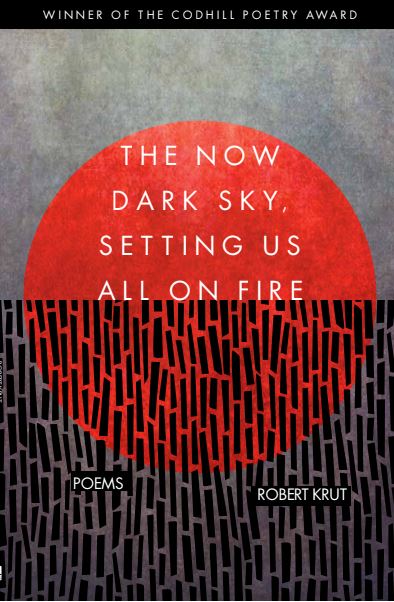
Book Review

The Now Dark Sky, Setting Us All on Fire by Robert Krut

Publisher: Codhill Press, 2019
Genre: Poetry
Pages: 56
Format: Paperback
My Rating: 4.5/5 stars

Summary

Krut’s collection contains three sections: the first two with fourteen poems each and the last one with thirteen. The poems do not necessarily tell a single unified narrative, though they do flow and have a definitively similar tone.

However, it is worth noting that these poems must be read in order to gain a true sense of the collection.

While I cannot claim a perfect understanding of this collection, I can say that the title gives a good indication of the themes, subjects, and images that repeat throughout the collection. The sky is dark “now”, encompasses the immediate value and poignancy of these poems, as well as the action they contain. The striking images of a dark sky setting us on fire illuminates how the natural world has this effect on “us all”, a reminder of a unifying inability to control our own mortality.

Thoughts

When you read a poem, you get a tiny glimpse into the author’s perspective on the poem’s subject filtered through the perception of the poem’s speaker. But when you read a collection of poems, you really get a sense for who the author is, what they feel, and what is on their mind. This poetry collection reveals the mind of a man who has a sharp eye for observation and keen insight into the common experience of human emotions, filtered through startlingly unique and moving imagery.

Krut’s collection surprised me with its portrayals of the world that felt both aptly universal and intensely personal, capturing the essence of the human journey with its yearnings and fears. The most repeated setting, or at least the one that left the deepest impression on me, was the graffitied streets of a city bustling with cabs that was still somehow hollow inside. Krut’s distinctive voice characterized cities and their residents with unique associations that relayed powerful truths.

Though many of the images in Krut’s collection were unsettling, this felt intentional rather than jarring. Each poem had its beauty, albeit an evocative and haunting appeal. My personal favorite, “The Tuning Fork and the Listeners,” was the one that seemed to most aptly characterize the echoing that resounds throughout our world, masterfully applied through the metaphor of song and a tuning fork. Krut’s skill in conveying ideas in a few lines is evident on each page in the collection; the short length is a gift that allows readers to return and glean more insight from the poetry.

Despite the intensity of the imagery and sophisticated writing, I believe high school students and above should be able to understand Krut’s message, or at least, appreciate his thematic and stylistic construction.


Thanks to the author and publisher for providing an ARC in
exchange for this honest and unbiased review.