Publisher: Tor Books Genre: Thriller, Fantasy Pages: 352 Format: Hardcover Buy Local My Rating: 4.5/5 stars
Summary
The stage is set in pre-second-world-war New York with an oracle, an assassin, and an underworld gang about to lose its alpha—all thriving in a be-bop jazz bar, brazenly ignoring the Prohibition. Phyllis Green, blessed with saints’ hands, is mob boss Victor Dernov’s executioner. Known to some as Victor’s angel, and to most as Victor’s knife, she goes by Phyllis LeBlanc in downtown Manhattan, meting out mob justice with her holster of knives.
That is until she meets Dev. Playing judge, jury, and executioner turns out to be a lot more complicated when she falls in love. Devajyoti Patil, bartender at The Pelican, is also blessed with saints’ hands – he can detect threats on a single touch. But unlike Phyllis, he does not use them to throw knives. Just when Phyllis believes she can act on her promise to Dev of never killing again, she is given a task that forces her to go back on her word.
Someone is killing people with “the hands” and leaving the corpses behind with bleeding stumps and clear signs of having involved them in some form of dark ritual. It’s obvious—they’re trying to steal the power of these hands. Victor’s lieutenant, Red Man, tells Phyllis that the murderer is Trent Sullivan, and that she must take him out.
Having grown up in an all-Black neighborhood, Phyllis has spent her whole adult life trying to pretend that she’s not. Owing to her lighter skin, she passes scrutiny in most segregated places in 1930s New York. She has even taken care to change her name, so no one can trace her back to her old neighborhood—it’s how she has survived. But a decade after she executes Sullivan, and Dev leaves her for it, she finds that her heritage is about to be revealed, and that, suddenly, her life depends on her proving her whiteness.
A lot of factors wrestle for priority as Dev returns unexpectedly to her life as she’s simultaneously given a new assignment. Not to mention, the draft creeps up and starts upending the lives of everyone she holds dear.
Thoughts
The struggles of people of color before World War II that changed society in many irreversible ways are depicted in sincere detail in this book. Skin trumps economic status as Phyllis, Dev, and their friends find themselves increasingly vulnerable as they try to get away from the criminal element that has protected them so far.
It is really promising to find that BIPOC literature is finally making its way into the limelight. The story is set at a time when very few would think to write a novel with a black woman and an Indian man as the lead duo. Hopefully, we are at a time when we can look back at these immortal years from a different perspective than we are used to.
Thank you to Changing Hands Bookstore for providing an ARC in exchange for this honest and unbiased review.
Every October a craving begins for pumpkin spice-flavored anything, sweet tooths start aching, and harmless orange fruit becomes the bearer of terrifying and toothless grins. The yearning for a good scare also grows as full as a harvest moon as we flock to haunted houses and corn mazes, or even to Netflix to give us that shot of fear-based adrenaline. Another surefire way to create some chills is simply turning to some classic horror stories—and there are a plethora of short story anthologies to get your spine tingling and your heart racing. In this classic selection of oldies-but-goodies, there will be aches (but not the sweet tooth kind), the bittersweet taste of revenge, mad men, and weird women a-plenty. Enjoy, but be sure to read with the lights on.
Norman Bates has nothing on some of these psychos…
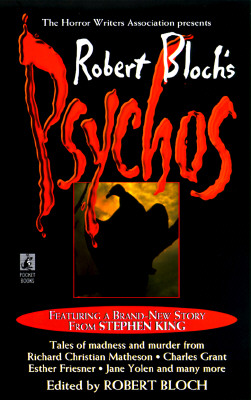
Psychos—Robert Bloch. Not to be confused with Bloch’s classic Psycho, this collection centers around madness and its many forms. Whether it comes under the guise of a seemingly benign object with murderous intention, the most intense road rage on record, a meticulously planned revenge plot on a drunk driver, or a “oops” of an autopsy, these stories will genuinely freak you out. A notable tale from this anthology is “Grandpa’s Head” by Lawrence Watt-Evans, which will make you rethink the pasts of every single person in your family, even the most innocent-seeming!
These ladies were ahead of their time…
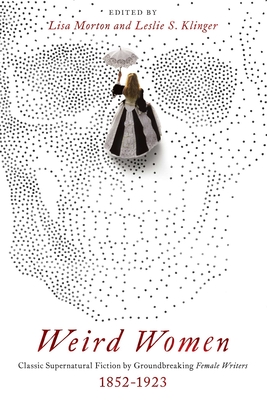
Weird Women: Classic Supernatural Fiction by Groundbreaking Female Writers (1852-1923). More recently published, yet by no means modern, Weird Women is a collection from the female perspective. Compiling work from such greats as Louisa May Alcott, Charlotte Perkins Gilman, and Frances Hodgson Burnett, these stories are beautiful, bold, and brooding. From ghostly little girls in locked rooms, unrequited wishes coming true through dreamscapes, and the beauty of wistaria (the old-fashioned spelling) covering sinister deeds, these tales are all supernaturally stunning. The stories are helpfully annotated to bridge the gap in some vernacular differences as well. If you appreciate lush writing, descriptive details, and the suspense of a slow burn, you will love this collection.
A little naughty, not nice…
I Shudder at Your Touch: 22 Tales of Sex and Horror. For those who like a little risque with their risk, I Shudder at Your Touch features distinguished writers such as Stephen King and Clive Barker. With such disturbing topics as devilish weight loss programs, a not-so-little mermaid, a yearning for youth gone dark, and perverse revenge on an ex-lover, these stories spice things up more than that latte at Starbucks. A notable tale here is “Keeping House” by Michael Blumlein, with a creepy look at a woman’s descent into madness. If you like “The Yellow Wallpaper” by Charlotte Perkins Gilman, you will be sufficiently spooked by Blumlein’s story. There is also a follow up edition, Shudder Again.
The indisputable king of macabre…
Everything’s Eventual: 14 Dark Tales—Stephen King. No list of short story anthologies would be complete without one from the king of horror, Stephen King. Everything’s Eventual is a collection featuring what you would expect from King—the unexpected. A lunch date gone gruesomely wrong, wish fulfillment for a quarter, and a traveling salesman debating his own self-inflicted untimely death, this is one diverse batch of dark tales indeed. Notable stories are “1408,” which explores just how creepy a hotel room can be, and “The Man in the Black Suit,” which is King’s nod to Nathaniel Hawthorne’s “Young Goodman Brown.” Incidentally “1408” was adapted into a decent film starring John Cusack and Samuel L. Jackson.
So, curl up with your favorite blanket and a pumpkin spiced latte, turn the lights down low, and give yourself the willies. Just don’t blame me when you lie awake in the dark wondering what those strange sounds are!
Most of us grew up reading Fairy Tales. They are both bizarre and alluring and for many of us, they continue to interest us well into our adulthood. Best-selling author James Riley takes an in-depth look at fairy tales: why they are so strange, the logic within them, and why we are so fascinated by them.
Riley has written his own collection of fairy tales, which he will use to illustrate some of their most peculiar features. If you’re interested in learning more about fairy tales, this event might be perfect for you!
As Netflix has grown more popular, they have started producing more and more of their own content. Plenty of top ranking shows, movies, and documentaries are Netflix originals. A handful of these are based on best-selling novels, and most of the time they do a pretty solid job bringing these beloved books to life. I have compiled a list of my top four book-to-film adaptations from Netflix which are all very close to my heart.
To All the Boys I’ve Loved Before—Jenny Han. When I was 14, this was one of my all-time favorite books, but I had forgotten about it as I got older. As soon as I heard Netflix was coming out with a movie adaptation of it, it immediately jogged my memory and I couldn’t wait. For those of you who aren’t familiar with the story, it is about a girl named Lara Jean who wrote five love letters throughout her life, kept them in a box with no intention to mail them. So when they suddenly got out and all the recipients had them, including her sister’s ex-boyfriend, Josh, Lara Jean freaks out. She decides to fake date a different letter recipient named Peter to throw Josh off, but that doesn’t exactly go as planned—you’ll have to watch to find out why.
Book to movie adaptations are always hit-or-miss, but this one did not disappoint for me. They cast it well because the characters are exactly how I envisioned them, and they truly brought the story to life. I highly recommend this film to any lovers of the books!
All the Bright Places—Jennifer Niven. This novel is definitely a bit heavier than the previously mentioned one, but it is still phenomenal. It’s definitely a tear jerker, but in the best way. If you haven’t read the book, it follows Theodore Finch starting when he finds his classmate, Violet Markey, about to jump off a roof. He doesn’t know her very well but decides to befriend her anyway, making a silent pack to himself that he won’t let her struggle alone. As he is dealing with his own mental health issues, this is something he hopes will help him, too. It’s a beautifully written story, but I definitely recommend reading it alone (unless you don’t mind people seeing you sob uncontrollably).
Netflix did a great job bringing it to life as a film—it’s a great blend of tragic and heartwarming, and is sure to tug on your heartstrings. Whether you loved the book or just prefer to watch movies, I recommend getting cozy with a box of tissues and putting this one on.
1922—Stephen King. This one is for the horror/suspense junkies out there. This novella is quite different from the previous two books on this list, but the film adaptation is pretty solid and very underrated. The story follows a farmer named Wilfred who kills his wife—and gets his son in on it—in order to avoid having to sell his land. After this happens, weird things begin to happen around the farm, most of them unexplainable. The film adaptation came out in 2017, which was a big year for King, so naturally this one was swept under the rug a bit more. That being said, the film does bring certain aspects of the novella to life and the story is very interesting. If you’re a fan of King and a fan of supernatural horror stories, this movie should definitely be included in your scary movie marathon.
Let it Snow—John Green, Lauren Myracle, and Maureen Johnson. When I was in middle school, I went on a John Green kick, much like a lot of people my age. In doing so, I stumbled upon this masterpiece of a story. This is one of my favorite holiday stories and when I saw they were making a movie out of it, I freaked.
If you’re not familiar with the novel, it follows three different main characters in the same town as they handle various decisions. Without giving too much away, we have best friends who may or may not have feelings for each other, a celebrity encounter, and a girl dealing with a breakup. These stories all take place simultaneously around the holiday season—I mean, what more could you ask for?! Netflix turned this novel into a film last year and despite some small changes, I absolutely loved it. I felt that the changes really added to the story and the actors were perfectly chosen. It really is an adorable film and sure to put you in the holiday spirit (so maybe save this one for after Thanksgiving).
Publisher: Atria/ Emily Bestler Books Genre: Fiction, Romance Pages: 320 Format: Hardcover Buy Local My Rating: 4/5 stars
Summary
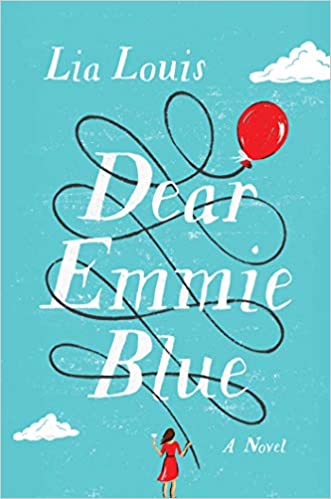
Dear Emmie Blue tells the story of Emmeline Blue as her life falls to pieces. When she was 16, Emmie released a balloon with a secret written on it, only for it to wash up on a distant shore and introduce her to her best friend, Lucas. Now in her twenties, she is hopelessly and irretrievably in love with Lucas, and thinks he is finally going to ask her out—only for him to announce that he is getting married. To make matters worse, Lucas wants Emmie to be his “best woman,” prolonging and magnifying her anguish. From her dead-end job, distant mother, and aloof landlady, Lucas’s engagement is the last straw for Emmie.
Despite all the loneliness and heartache, however, wonderful things are in store for Emmie Blue. Lia Louis’ novel pays homage to the idea that life is what happens while you’re busy making other plans, and reminds us that unexpectedly wonderful things could be waiting just around the corner.
Thoughts
I don’t know about you, but this year has been a doozy for me. This was a book that I desperately needed to help me cope with this unpredictable—and sometimes depressing—world we’re living in. This might seem to be an odd sentiment, given that Emmie faces heartbreak and calamity for a decent portion of the book. I would argue, though, that a book with a certain amount of despair is fitting, given the current state of things (so long as all ends well). While Louis undoubtedly forces the reader to empathize with the protagonist, there is a certain hope found in seeing a character continue pressing on, even when things look bleak.
I think a great deal of charm in this novel comes from Emmie Blue herself. She manages to be strong and fragile, resilient and weary, all at once. More so than this, you truly feel for her throughout the book. Especially when she divulges the details of a sexual assault in her youth, and wrestles with her broken relationship with her parents, you can’t help but root for her. It’s hard to not be in Emmie’s corner, especially concerning her relationship with Lucas—a kismet meeting if ever there was one. Both Emmie and us as the reader see these two as so obviously destined to be together, and it’s beyond frustrating that they aren’t. Even characters that I didn’t find very likable, such as Rosie and Marie, were appreciated insofar as they related to Emmie.
Dear Emmie Blue is an important reminder that life is unpredictable, and that sometimes that’s the best thing about it. If everything stayed the same, there would be no way for things to get better. It’s a cheesy sentiment, sure, but true nevertheless. The only complaint I had about this book comes from the predictability of the ending, but I would argue that even this lends a certain charm—knowing how something ends doesn’t make the journey any less meaningful, right? I would recommend this book to anyone who needs a mental reset, or a reminder that there are sunnier days ahead.
Thank you to Changing Hands Bookstore for providing an ARC in exchange for this honest and unbiased review.
When I was little, my mother bought all 13 books in this series because it was the first series we found to have a character named ‘Violet,’ my sister’s somewhat unusual name. This was what began my love for this series, and I have endlessly consumed the books, movies, and TV shows based on it ever since. From Klaus’ distaste of bread pudding to Violet tying her hair up when inventing, and from Sunny transforming from an infant who loved to bite into a brilliant chef to Lemony Snicket’s endless wit, I love everything about this series. That being said, I love some of the books more than others. Here is my ranked list of every book in the series.
13. The Vile Village—This book just didn’t do it for me. It was lacking the humor and the storyline, and characters were just not as engaging as the other books on this list. In each of these books, ridiculous and comically unfair things happen; here, it felt like just unfair things happened. It is somewhat of an outlier in the series, both in terms of plot and tone, which is why it ended up near the bottom of the list. Also, the book seems to taunt the audience by naming the town “VFD,” but it isn’t the real VFD we don’t even learn anything about VFD!
12. The Miserable Mill—As much as I enjoyed Count Olaf dressing up as Dr. Georgina Orwell, this book just was not as interesting as some of the others. I found the tone depressing, but not in Lemony Snicket’s classic, darkly humorous way. In general, this book felt like filler and it didn’t have much of a real and lasting impact on the broader plot of the novels. Overall, it was not my favorite and was pretty hard to get through without feeling sad.
11. The Slippery Slope—What this book is missing is the dynamic between the Baudelaires and their guardians. Though naturally they need to be on their own at some point, as well as the plot needing some diversification, this book lacked many of the elements that make A Series of Unfortunate Events books so wonderful. I also felt like this book dragged on a bit too long, and with the exception of meeting Quigley, it was not as integral to the plot of the series.
10. The Carnivorous Carnival—This book definitely isn’t bad, but it just isn’t my favorite. I really liked the “freaks” who were really just relatively normal human beings, and I love the sheer absurdity of feeding the Baudelaires to the hungry lions. However, despite these humorous moments, it was simply not as engaging as some of the others, and I did not leave this book desperate to read the next one like I did with the books further up on this list.
9. The End—Though this book is rather sad and I wish things could be different, the ending of the series is fitting. I found it bittersweet to learn the answers to some of the secrets that had plagued the Baudelaires since the beginning of the series. Part of the fun of the books was the thrill of the secrets and reading until late hours in the night hoping to find answers. Secrets were a driving part of the plot, and, while my curiosity was satiated, I was slightly saddened to learn the answers because it meant that the series was over. That being said, it is a good and interesting conclusion to this 13 book series.
8. The Hostile Hospital—We are now getting into the section of this list where I thoroughly enjoyed all of the books listed here. Cutting off Violet’s head is a stroke of genius and Lemony Snicket’s writing perfectly blends humor and horror. The library is also one of the best parts of this book because it makes the mystery of VFD even more intense.
7. The Penultimate Peril—The morality of this book is a lot more gray than some of the earlier ones, with some characters not exclusively good or evil. Though I like this development a lot, it does not lend itself to as much wittiness as the stricter binaries that the earlier books do. My favorite part of this novel is how close we get to unraveling the secrets without actually revealing them. This makes it very intense and engaging. It’s also a stroke of sheer inspiration to organize a hotel based on the Dewey Decimal System!
6. The Bad Beginning—The first book in this series is a classic for a reason. Meeting iconic characters like the Baudelaire orphans, Count Olaf, and Mr. Poe is the reason why this book is number six on the list. It establishes the amazing dichotomy between children and adults, good and evil, and smart and stupid. I really adore how the children need to convince an incompetent adult that Count Olaf is evil. This is not present in some of the later books and it is detrimental to them. Though the plot is not as complex and interesting as some of the later books, it is still amazing, absolutely hilarious, and sets the tone that we all know and love for the rest of the series.
5. The Grim Grotto—This book sets up the ending for the next two books and introduces the newest danger: the Medusoid Mycelium. I also love the mystery of the Question Mark, which only shows up on the radar as a “?.” I’m still angry at the TV series for telling us what the question mark was, because the ominousness of not knowing was why it was so terrifying. Overall, this was an excellent addition to the series and I love the shenanigans—albeit rather frightening ones—that accompany the Baudelaires and Count Olaf on a submarine.
4. The Reptile Room—Who can forget the whole page of “ever?” The Reptile Room is full of wonderfully executed twists and turns, and I adore that it almost reads like a classic mystery novel. Uncle Monty is also one of my favorite adults in the whole series, and his charm is one of the reasons why I love this book as much as I do. This is also the first novel where we get one of Count Olaf’s disguises. The disguises are a hilarious constant throughout the series. When I was reading the series the first time, finding out his latest disguise was always one of my favorite parts to each novel so needless to say, the very first disguise he donned was particularly exciting.
3. The Wide Window—There is something deliciously hilarious about Count Olaf dressing up as a sailor named Captain Sham and having none of the adults notice his disguise. This book really sets the precedent that the adults either can’t or won’t help the Baudelaires, something that remains constant throughout the series. Thus, in this book, we find the orphans coming into their own.
2. The Austere Academy—This was our first introduction to the Quagmires! I absolutely love the Quagmires, and their introduction leads to even more knowledge of VFD and the secret lives of the Baudelaires’ parents. It is also where we first meet Carmelita Spats, who is undoubtedly one of the most hilariously entitled characters that I’ve ever read. The ideas of an “Orphan Shack” and a Vice Principal named Nero who plays the violin are similarly brilliant. Overall, this book is amazing and one of my favorites!
1. The Ersatz Elevator—This book is my all time favorite! I love the constant fluctuation between what is “in” and “out.” It also exemplifies the narrator’s dark humor and both clever and hilarious writing style.The Ersatz Elevator is also perfectly paced and highly suspenseful and it was honestly difficult to find anything wrong with it. I also love how it introduced us to Esmé Squalor, a recurring character. She adds a lot to Count Olaf’s pretensions of grandeur and their relationship creates two compelling villains for the remainder of the series. This book represents everything that is great about the series!
I hope you enjoyed my ranking of these childhood classics! Feel free to comment your list or to disagree with me in the comments! If you want to purchase any of these books, go here!





 The Spellbinding Shelf