10 Books to Inspire Women

As a female book lover, there is nothing quite like being able to effectively identify with a female protagonist. This is especially true when the heroine of the book isn’t reduced to a simpering mess without a romantic driving force, or when the author is able to use that trope as a way to balance the strength of their protagonist. Some books are able to do this well, and some, not so much. But, it just so happens that sometimes the strongest female characters are created by writers who also are strong, independent women. Below is a list of books starring female characters that are able to overcome anything life throws at them. These women are real, flawed characters that are more than a pretty face or pining heart—they are mothers, sisters, wives, and lovers—fulfilling these roles in a way that represents strength, class, and perseverance. In turn, these books are written by female authors that also fulfill these roles: talented women that give a voice to women of all ages through their novels, empowering current and future generations through their work.
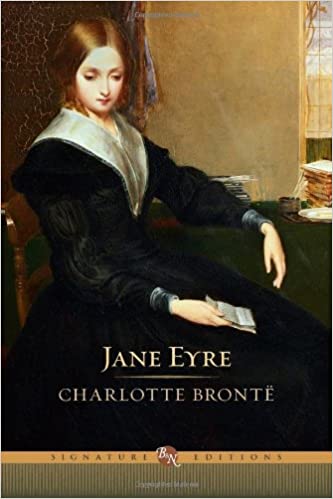

Jane Eyre by Charlotte Brontë—Let’s start this list off with a classic. Jane Eyre is the timeless story of a young girl’s life from the time she is passed into the care of her cruel aunt, to living in poverty at a derelict boarding school, to finally finding her purpose as a governess for an arrogant, but alluring gentleman. What makes Jane’s story iconic isn’t her romance with Mr. Rochester, but her tenacity through all the trials and tribulations that plague her throughout her story. She overcomes and remains true to herself throughout. The same can be said of the writer, the eldest Brontë sister. Despite having to don masculine pseudonyms to have their work published, the sisters have gone down in literary history for their role as women writers.


Ezperanza Rising by Pam Munoz Ryan—Set during the Great Depression, Ezperanza’s story begins with the death of her father in Mexico, her family forced to flee to the United States to start a new life. To go from a position of wealth to one of hard work and toil is difficult for 13-year old Ezperanza to come to terms with, but, throughout the novel she grows as a young woman and learns to adapt and have hope. Writer Pam Munoz Ryan has won numerous awards for Esperanza Rising and other works, representing strong role models for young girls and her own Mexican heritage.
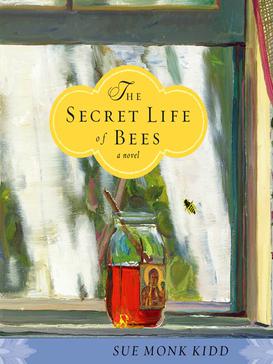

The Secret Life of Bees by Sue Monk Kidd—Lily Owens is haunted by the memory of her mother’s death and the abuse she sustains from her father T. Ray. Her only ally is their maid, Rosaleen. After an incident that sets them on the run, Lily attempts to track down the truth about her mother’s life and in the process, comes to terms with her role in her death, finding her own inner strength. Sue Monk Kidd continues to honor her role as a feminist after the immense success of The Secret Life of Bees and its important message not only for feminism, but for its depictions of the civil rights era and the relationship of a little white girl with strong women of color.


Untwine by Edwidge DanticatUntwine is the story of 16-year-old Giselle and her twin sister Isabelle. This novel explores the bonds of family, especially those between sisters, as a horrific accident forces Giselle to look back on her past and come to terms with change, garnered by the love for her sister. Edwidge Danticat has become a driving force as a female Haitian-American writer. Her work continues to be praised for shedding light on historical and current issues ongoing in Haiti.


The Awakening by Kate ChopinThe Awakening has earned its place as a literary classic most commonly associated with female independence, a concept that is discussed and symbolized greatly throughout the novel. Edna Pontellier is a wife and a mother, but she takes on that role only because that is what society has deemed appropriate for a woman to do. When she falls in love with a younger man, for the first time in her life she starts to consider what it would be like to break free of societal constraints. While her thoughts might be tied to her romance, Edna still represents a woman struggling to break free, and that lack of freedom is what drives her. Kate Chopin also was able to cement herself among the great female writers of history, alongside Flannery O’Connor and Edith Wharton.


White Oleander by Janet Fitch—Astrid Magnussen is only 12 when her mother poisons her cheating boyfriend and is sent to jail. Astrid then begins a long journey between foster homes; dealing with addiction, abuse, and trying to grow up without her mother in her life and reconciling with who she is. This is a powerful novel about growing up and becoming your own person, and an equally important novel exploring the concepts of motherhood. Janet Fitch gained notoriety with this bestselling book after transitioning from her love of history to writing fiction.


Cavedweller by Dorothy Allison—Another novel that explores the complex feminine role of motherhood, Cavedweller follows Delia Byrd and her daughter Cissy. Delia has two other daughters that are estranged, working throughout the novel to establish a relationship with them. Dorothy Allison became a household name with her novel, Bastard Out of Carolina, another novel with a strong female protagonist, and often explores complex relationships in a brutally honest fashion. She champions her own fearless brand of feminist lesbian representation in her work.


The Color Purple by Alice Walker—Celie’s story is as iconic as it is tragic. A poverty-stricken African American girl, she suffers rape and abuse at the hands of her father. The two children she mothers in her youth are taken from her, and the only bond she can rely on in the world is the one she shares with her sister Nettie. Once she loses her, she must learn to find strength in herself. Celie finds this through relationships with other strong women throughout her life, until she is finally reunited with her loved ones. The Color Purple is an incredibly moving account of the bonds of sisterhood and motherhood. Alice Walker is a household name in the literary community, through this masterpiece and her work championing African American women writers.
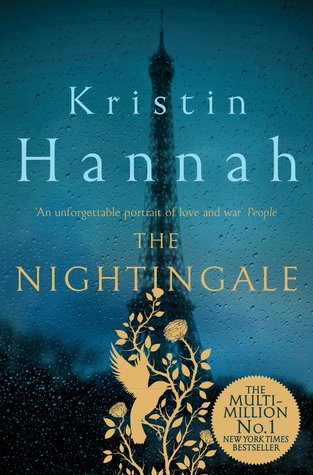

The Nightingale by Kristin Hannah—In another story that explores the bonds of sisterhood, The Nightingale tells a tale of two sisters, Vianne and Isabelle, surviving through the Nazi occupation of France. With both sisters exhibiting their own unique display of strength during a time of violence and war, this book is a poignant and powerful tale of perseverance. Kristin Hannah used real women who resisted the Nazi occupation and rescued allied soldiers to inspire her bestselling novel.
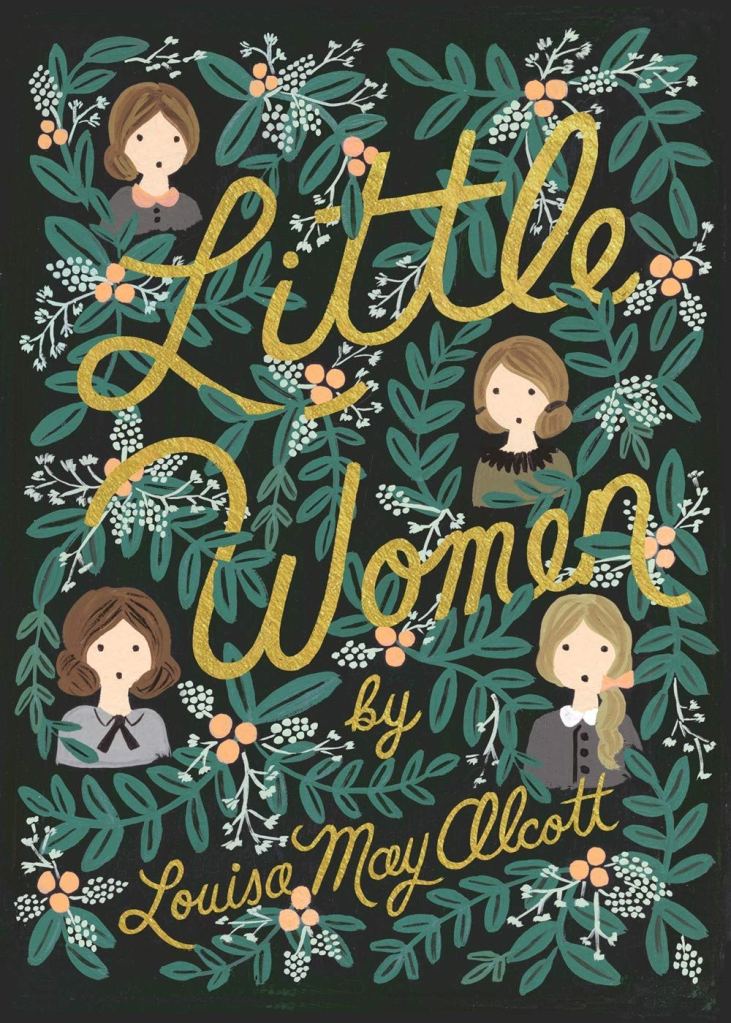

Little Women by Louisa May Alcott—Last but not least, we return to another classic. Little Women has been inspiring young girls and breaking hearts for many years—still remaining a testament to the roles of mothers and sisters to create independent women. The main character, Jo, defies many gender norms and remains true to herself in her journey to become a writer and was a source of inspiration for me as a young girl. It is a powerful novel of women supporting other women, and one that has stood the test of time. Louisa May Alcott based the character of Jo on herself, and was an abolitionist who was active in women’s suffrage throughout her life.


The artwork featured on our blog post above was provided by female local artist Kelly Seifert.
Book Review

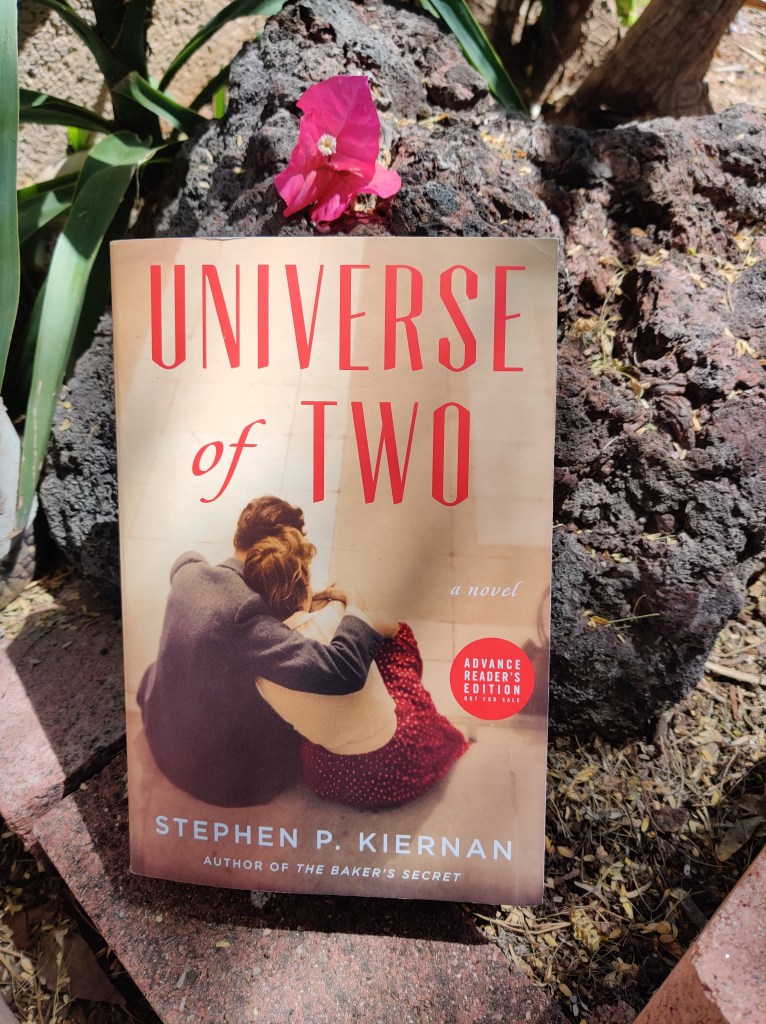
Universe of Two by Stephen P. Kiernan

Publisher: HarperCollins 
Genre: Historical Fiction 
Pages: 429 
Format: Paperback 
Buy Local
Rating: 4/5 Stars

Summary

Stephen P. Kiernan’s Universe of Two is a time machine back to the year 1943. The story takes place in the United States as the country is at war with the allied forces in World War II. Unlike many World War II novels, Universe of Two doesn’t follow the story of a soldier or officer fighting in the war. Instead, it focuses on the connection between two civilians who play just as significant a part in the war efforts as any man in battle.

Brenda Dubie is a spoiled nineteen-year-old girl who spends her time working at her family’s music shop and dating every soldier she can find who is home on leave. Her life changes when she meets a young mathematician named Charlie Fish who is at work doing calculations for the US government. As the pair build a romantic connection, Charlie is pulled deeper into the war efforts, eventually finding himself in New Mexico working as a vital piece of the Manhattan Project. His role in the project to create the atomic bomb riddles Charlie with guilt. Brenda, who pushes him so hard to pursue his work, shares the heavy moral burden Charlie faces when she finally realizes the consequences of his work. The pair are faced with the difficult task of trying to love each other while making up for the horrible destruction they helped to create.

Thoughts

What impressed me most about Universe of Two was the way it didn’t try to romanticize either war or love. Although it is a historical romance, the novel was utterly realistic about the moral challenges faced by its characters. The chapters alternate between Brenda’s narration and a omniscient narrator reporting on Charlie’s top-secret work. As a reader, I felt a deep frustration at how naïve Brenda was to the severity of Charlie’s situation. Kiernan was able to play with my emotions, drawing me into the story as if it were a train wreck that I could not look away from. Universe of Two is anything but the stereotypical romance novel—it is an honest look at the ways a relationship can be tested and morals overlooked in pursuit of victory. I would recommend Kiernan’s novel to anyone who relishes in the feeling of a bittersweet ending.


Thank you to Changing Hands Bookstore for providing an ARC
in exchange for this honest and unbiased review.

Book Review

Florence Adler Swims Forever by Rachel Beanland

Publisher: Simon and Schuster
Genre: Fiction
Pages: 320
Format: Hardcover
Buy Local
My Rating: 4.5/5 stars

Summary

This novel follows three generations of an American-Jewish family in 1934 Atlantic City. Florence, the youngest daughter, is intent on swimming the English Channel but tragically drowns while training. Her mother, Esther, decides to hide her death to help protect her other daughter’s dangerous pregnancy. Their situation is complicated even further when Joseph, the father, helps a young Jewish woman emigrate from Germany for seemingly no reason. 

The web of secrets ultimately untangles, in the process both harming and freeing members of the family. Florence Adler Swims Forever provides a nuanced account of a family broken on many levels trying to endure, despite the racism, the effects of the Great Depression and the looming threat of Nazi Germany. 

Thoughts

There is no one who loves family secrets and dysfunction more than I do, and this book definitely delivers! It takes a softer approach than these types of books normally do, though. It was wonderfully intimate and heart-breaking, since we got to hear how Florence’s death impacted each member of the family. It was also very well written and was so enthralling that it kept me up well after 2:00 a.m. to finish it. Their lives are messy and the way their stories tangle together kept me wanting more.

It was fascinating to read about how the American-Jewish were reacting to Nazi Germany, as well. Normally, historical fiction set during WWII takes place in Europe, much closer to the action. Reading about the Nazi’s rise to power from a distance both minimizes the threat as well as making it more relatable to the audience, since that is how those of us today learn about the Holocaust. In a world still facing many of the same issues, seeing how such a large threat can seem somewhat small from far away—as well as the true scale of the threat from the perspective of a German Jewish woman—helps contextualize the issue and can help us better understand similar issues that still affect us. 

My only critique is that I wish we had gotten to hear more from some of the characters’ perspectives, because the point of view switched so frequently. Thus, some of the storylines were not as complete as they could have been. The storyline that left me wanting more was how Esther and Joseph’s tense relationship unraveled and came back together. 

Overall, though, this book is definitely worth the read and I recommend this book to lovers of fiction and family secrets. It will keep you reading until the last page!


Thank you to Changing Hands Bookstore for providing an ARC
in exchange for this honest and unbiased review.

6 Best Sherlock Holmes Stories

Few works are quite as timelessly transcendent as the stories of Sherlock Holmes, and as such, the pipe-smoking sleuth needs little introduction. The legacy of Sir Arthur Conan Doyle’s works is made obvious through the many adaptations that have been created throughout the years, as well as the reshaping of the mystery genre as a whole. The last Sherlock Holmes story was published in April of 1927, and to celebrate the 93rd anniversary of our favorite detective, I have compiled a list of my personal favorite Sherlock Holmes stories. Don’t worry, I won’t give away any endings! So, without further ado, let’s dive in!


The Adventure of the Devil’s Foot. This story has a title that’s as unique as its plot. Holmes and Watson find themselves vacationing in a cottage in Cornwall, as Holmes has been urged to take a break from consulting for his health. Their holiday is soon interrupted, however, by the news that a local’s house was struck by a terrible tragedy. Mortimer Tregennis explains that he had visited his sibling’s house one night, then returned the next morning to find his sister dead and his brothers sitting at the table maniacally laughing and singing. Judging from the grotesquely horrified faces of the three victims, the death and insanity was presumably caused by fear. At once baffling and eerie, I especially love this story for the way it shows Holmes and Watson’s unyielding dedication to unveil the truth, at times with no regard for their personal safety.


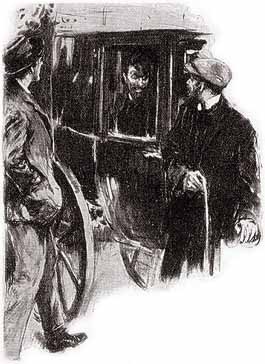
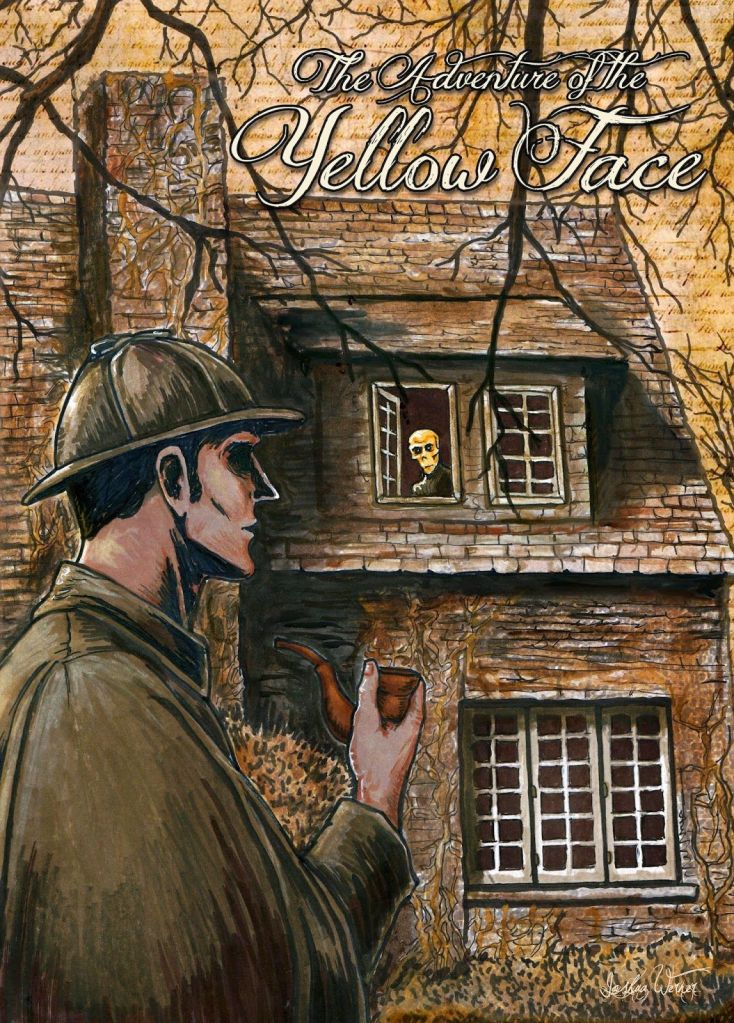
The Yellow Face. Initially appearing to be somewhat mundane compared to some of Doyle’s other works, this story shows itself to contain a great deal of depth upon its conclusion. Mysteries tend to highlight the darker side of human nature, and this story is a uplifting exception. A visitor arrives at Baker Street one morning seeking the detective’s help to discover a secret his wife is keeping from him. Mr. Munro swears by a happy and trusting relationship with his wife, Effie, until her peculiar behavior beginning a few months earlier. Without preface or reason, she asked her husband for one thousand pounds, then began secretly sneaking off to a nearby cottage in Norbury. Despite his wife’s insistence that he not speculate about her actions, Munro surveyed the house and saw a mysterious figure with a yellow face, and promptly decided to consult Sherlock to discover the truth. This story is singular in that it highlights a rare folly on Holmes’ part, and strikes a strong contrast to the typical nefarious acts carried out in Doyle’s other mysteries.


The Reigate Squires. This story begins, yet again, with Holmes and Watson taking a vacation from their investigative work, as Holmes has fallen ill after a particularly strenuous case. Rest continues to evade him, however, as a string of robberies in the area is brought to his attention. The first burglary was puzzling in that the thieves stole a number of items, but none of them were of any value. The second, however, resulted in the murder of the estate’s coachman, who was found with a torn note in his hand. Amidst the mystery, Holmes finds opportunities to use his illness to his advantage in order to discover the truth. This story in singular in that it highlights Sherlock’s cunning, and sometimes duplicitous, methods. The reader is reminded that the detective has a keen understanding of both crime and deceit.


The Adventure of Charles Augustus Milverton. Charles Augustus Milverton is a notorious blackmailer, and regarded by Sherlock as the most repulsive type of criminal. Presently, he and Watson are forced to meet with Milverton on behalf of a client currently at his mercy. The client, Lady Eva Blackwell, is hoping to buy compromising letters from Milverton that, if released, would scandalize and end her engagement to the Earl of Dovercourt. Upon meeting with Charles to negotiate a price for his silence, the duo finds Milverton to be uncooperative, and must result to alternative means to protect their client. As an independent consultant, Holmes is ruled more by his own morals than any legal obligations. As such, this story highlights the moral gray areas that exist in the detective’s business and provides an interesting glimpse into the sometimes criminal acts of the two men.


The Speckled Band. This story is widely-acclaimed, with Doyle himself claiming it to be his best work. It begins with Helen Stoner consulting Holmes and Watson because she fears that her stepfather is trying to kill her. Helen explains that Dr. Roylott was the widowed husband of her mother, and was known to be a violent man, having already served time for murder. Two years earlier, shortly before being married, Helen’s twin sister died, her last words being, “The speckled band!” Now, Helen has been the observer of many strange occurrences within her home, and has recently been relocated into the room where her sister died under the pretense of construction. This work is a classic locked room mystery and provides perhaps the best example of the way in which Doyle’s works forever altered the genre as a whole.


The Red-Headed League. Last, but certainly not least, is the baffling and entertaining mystery of the red-headed league. As the title suggests, the detective meets a client with shocking red hair and a perplexing story. The client, Wilson, explains that his assistant had previously urged him to respond to a newspaper ad offering high wages for employees with bright red hair. Taking this advice, Wilson attends an interview and is hired on the spot, as the other applicants had hair that was either too light or too dark, according to the interviewers. His “job” with the league entailed going to their office during the week and copying pages of the encyclopedia, a menial task which Wilson happily completed for high wages. A few weeks later, however, Wilson arrived to find a note announcing the disbanding of the league, and was unable to learn more. This story is amusing and singular in its plot, but the conclusion reveals itself to be far more sinister than it seems at a glance.

Author Interview with Novelist Stephanie Elliot

Meet Stephanie Elliot, local author of A Little Bit of Everything, and more prominently known for her recent novel, Sad Perfect. T/W, her novel is inspired by her daughter’s experience with ARFID (Avoidant/Restrictive Food Intake Disorder). I had the pleasure of speaking with her about the novel, her current read, and more!

  1. From what I understand, your novel, Sad Perfect, was written while your daughter went through treatment for ARFID. Where did the idea to write about the experience come from and how did it affect the way you handled the situation?
    Yes, I did write Sad Perfect as my daughter was diagnosed with ARFID. I didn’t anticipate ever writing a young adult novel; my others have been more along the lines of women’s fiction. But when she was diagnosed and in an intense therapy program, I spent a lot of time across the street at a coffee shop and started writing it. It was so therapeutic for me to write as I was dealing with certain feelings of my own as well.
  1. This novel is based on your real-life experience with your daughter. How did this experience translate to the novel? That is, how did you balance actual events and the fictitious elements?
    As for the balancing of fact with fiction—everything in the book that has to do with how ARFID affects the person and her family is true to what my daughter and our family experienced with her ARFID. However, there are many fictionalized scenes. The book might have been very boring without them. While it’s true that my daughter did meet a boy rafting on the Salt River, she didn’t have a long term relationship with him like Pea and Ben did. My daughter also did not get admitted to the pysch ward in real life. Some discussions in the book about ARFID (like the first meeting with Shayna, the therapist) are almost identical to the conversations my daughter had with her therapist in real life. I wanted to put a face on ARFID, to let others know about it and share the real aspects of this disorder, while also ‘inventing’ some other stuff to make it more interesting.
  1. Sad Perfect is actually your second novel and differs a bit from your first, A Little Bit of Everything Lost. Aside from your experience with your daughter, did anything else inspire this change?
    As I said above, I hadn’t set out to write young adult. I had written and self-published A Little Bit of Everything Lost and several other more adult books and had no plan for YA. My daughter was the sole inspiration for making the change to young adult novels. I had been stuck writing a couple other adult books and then when the idea of Sad Perfect came out, it just poured out of me and I couldn’t NOT write it.
  1. Going along with the previous question, how has your approach to writing changed over the years?
    I have a really really really HORRIBLE approach to writing. I don’t do it steadily. I wish I was more disciplined in my writing, but I haven’t written a big chunk of anything in a really long time. But I’m not being hard on myself. Other stuff has gotten in the way: family issues, now Coronavirus—but, I feel that when it hits me again, when I get a really good story idea and start it, then it will roll out of me. I just wait and anticipate that I will be able to do it again someday, hopefully soon!
  1. Do you have any ideas or plans for another novel at this time?
    Yes, I would like to write a novel about a teen boy with mental health issues and severe depression who overcomes a lot. That’s all I’ve got so far so I better start thinking or maybe if I start writing it, stuff will appear on the page! 
  1. What advice do you have to writers working towards being published?
    Connect with other writers in any way that you can. Ask them for advice. Sit down and write. Never throw away anything that you think is not good writing—you can delete it, but keep these ‘trashed’ scenes in a file on your laptop—it might inspire something later! Also, do the work. If you want to get traditionally published, you need to finish your book, edit your book, share your book with people you trust, write a query letter, find an agent who will then hopefully find you a publisher! Sad Perfect was about my fourth or fifth completed manuscript before I was traditionally published. It takes thick skin and a lot of work and a lot of rejection to become a writer. Anticipate and appreciate the rejections because they bring you closer to the YES!
  1. And lastly, we like to ask all of our featured authors to share their current read. Are you reading anything right now that you would recommend?
    I just read STRUNG OUT by Erin Khar which is an amazing and inspiring memoir about how she overcame addiction. And, I just got the advance copy of Emily Giffin’s THE LIES THAT BIND. I love, love, love everything Emily writes and usually drop everything in life to start her books when they come out!

I really enjoyed working and speaking with Elliot, she has a lot of wisdom to share! Prior to the COVID-19 closures, she was the Writer in Residence at Tempe Library, so definitely keep an eye out when things open back up! I highly recommend everyone read Sad Perfect if interested, it is deeply honest and beautifully written. You can purchase it from Changing Hands Bookstore here.

Edward’s Most Anticipated Sci-fi & Fantasy Reads of Fall 2020

Times might be strange right now, but the book publishing industry is still bringing forth promising reads. While the current moment likely has your TBR pile stacked to the ceiling, I say half the fun of being an avid reader is looking for future books to salivate over. With that in mind, and just needing a break for the stress of life moment-to-moment right now, I’ve curated a list of five science fiction and fantasy books that are forthcoming in the fall of 2020.


Beowulf: A New Translation, by Maria Dahvana Headley (08.25.20)

While August might not technically be the fall, that does not make me any less excited for this book! Maria Dahvana Headley is the author of The Were Wife, a modern retelling of Beowulf from the perspective of Grendel’s mother; and this new translation seems like it will be equally tantalizing. This translation is said to have an eye gear toward gender, genre, and history, and I can’t wait to revisit this classic tale through the scope of the twenty-first century!


Piranesi, by Susanna Clarke (09.15.20)

It is hard to believe that it has been sixteen years since Susanna Clarke’s debut novel, Jonathan Strange & Mr Norrell, was published! That book has remained in my heart since the first time I read it all those years ago, and is one that I go back to often. So, maybe I am being dramatic, but I feel like I have waited my whole adult life for Susanna Clarke to publish another novel. While Piranesi is said to be much shorter than Clarke’s debut, it does not sound any less enchanting. It is a tale of a man who lives in an endless magical house that contains countless corridors, an infinite amount of statues, and even an entire ocean, and is about a newfound truth turning his reality upside down.


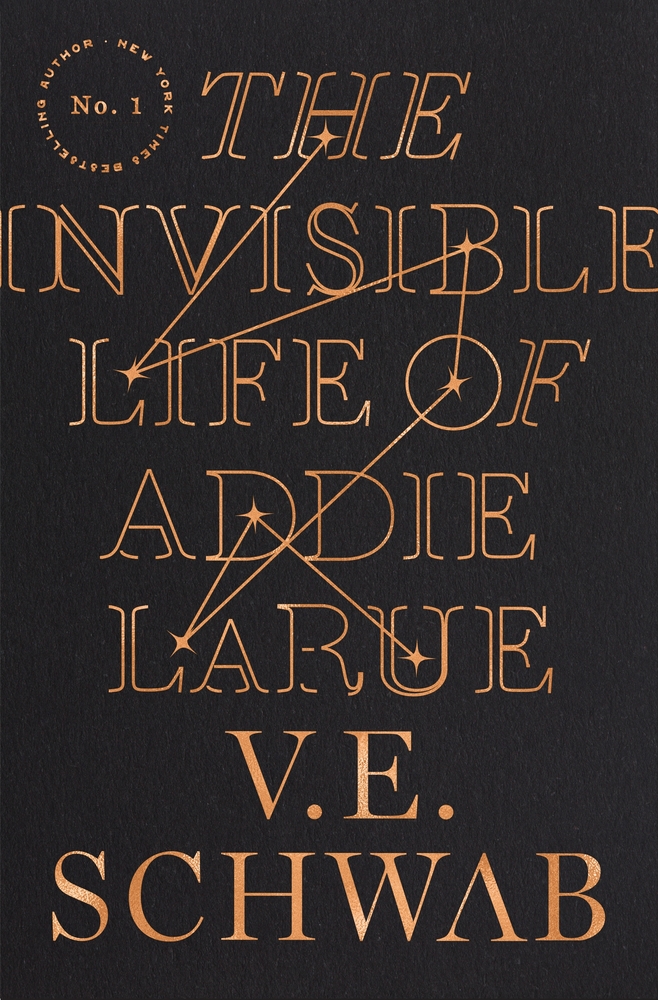
The Invisible Life of Addie LaRue, by V.E. Schwab (10.06.20)

Versatile author extraordinaire V.E. Schwab will be back this fall with her new adult fantasy book. The story is said to be about a young woman who trades immorality for being forgotten by everyone she meets. The young woman carries on this way for over three hundred years, until one day, a man remembers her name. I have never read anything by Schwab that did not have me instantly hooked, and this book does not sound any different.


The Conductors, by Nicole Glover (11.03.20)

Author Nicole Glover’s debut novel, from JJA Books, is about a magic wielding African-American couple in post-Civil War Philadelphia who use their powers to investigate a murder that the police won’t touch. Said to be a mash-up of The Dresden Files and Octavia E. Butler’s Kindred, this book combines elements of traditional fantasy, mystery, and history. I can’t wait to get my hands on it, as it combines some of my favorite things, and because the narrative sounds so exciting and fresh!  


The Rhythm of War, by Brandon Sanderson (11.17.20)

What would a list of forthcoming science fiction and fantasy novels be without the genre’s darling, Brandon Sanderson? The uber-successful author will be publishing the fourth installment of The Stormlight Archive this fall. Coming in at over one thousand pages, this book should keep readers busy, at least for a few hours. It is said to pick up with the human resistance taking on the enemy, only to find that the situation is a stalemate. From there, the war with the enemy develops into an arms race that begins to unveil secrets of the past. Sanderson can almost do no wrong, and I am sure that this book is going to be fantastic! 

Online Literature Resources for Staying at Home

So, we are in our homes. There’s no getting around that. While going outside in the sunshine is great, and I definitely enjoy a long, leisurely afternoon walk, a new free-time inspired exercise regime is unlikely to happen in my world. I much prefer to curl up in a cozy sweater on a soft bank of pillows with a cup of tea and a good book. I don’t often get a chance to do this, as many of us don’t. Our lives are busy, and reading for pleasure can become a luxury which falls by the wayside.

Right now, many of us are being given a moment of pause from the to and fro of our normal lives. While this can be scary and intimidating, it can also be a time for us to reconnect. We have a moment to rediscover those things about which we are passionate. For us bibliophiles and lovers of literature, that is books and anything to do with the books. With many bookstores and libraries closed, the normal venues where we get our fix seem out of reach. To remedy this situation, authors, publishers, and book lovers the world over are uniting to establish a strong online literary community.

Many bookstores are providing curbside and online shopping via web stores or social media. Changing Hands bookstore in Tempe and Phoenix will assemble a custom book care package tailored just for you or someone you love. This is just one of the many offerings being made by local bookstores—so be sure to check your local listings and see what’s available near you. Although live, in-person events have been canceled or postponed, book tours and public literary lectures are being moved to web-based platforms for home viewing. Libraries and online magazines are offering their archives for free. A simple web search will bring you hundreds of resources, at your fingertips, for your reading pleasure. Use this time of interlude and rekindle your fire for the written word! Here are a few links to get you started:

Literary Links

  1. https://www.quarantinebookclub.com/ – The Quarantine Book Club is a Zoom-based platform which hosts weekly author events. Their tag-line, “You’re stuck at home. Chat with an author,” pretty much sums up how it works. In the meetings, authors discuss their work and answer audience questions.
  2. http://www.gutenberg.org/ – Project Gutenberg is an online library with over 60,000 books in a wide-range of subjects. These books are free for download or online viewing.
  3. https://lithub.com/author/thevirtualbookchannel/ – Lit Hub’s Virtual Book Channel hosts live-stream author events, including interviews, literary festivals, and even book launches.
  4. https://electricliterature.com/ – Electric Literature is a nonprofit digital publisher whose website contains essays, criticism, and literary news. Along with this content, Electric Lit’s digital magazines, Recommended Reading and The Commuter offer short stories, novel excerpts, poetry, flash fiction, and graphic narrative.

For the Kids

  1. https://www.storylineonline.net/ – Storyline Online is a streaming platform which hosts celebrity actors reading children’s books aloud alongside colorful illustrations. Readers such as Chris Pine, Lily Tomlin, James Earl Jones, and Betty White bring children’s stories to life. The site also offers supplemental educational curriculum developed by educators with each book.
  2. https://www.weareteachers.com/virtual-author-activities/ – We Are Teachers virtual community has gathered its “Big List of Children’s Authors Doing Online Read-Alouds & Activities” here. Many of these events are available via social media, and accessible using your smartphone or other mobile device.

Book Review

Unabrow: Misadventures of a Late Bloomer

Publisher: The Penguin Group 
Genre: Nonfiction, Memoir
Pages: 249 
Format: Paperback
Buy Local 
My Rating: 4/5 Stars

Summary

What do aggressive facial hair, childbirth, an unhealthy obsession with the year 1993, and troll dolls have in common? Una Lamarche. Unabrow: Misadventures of a Late Bloomer is a hilarious collection of diary entries, observations, and convoluted graphics, some of which involve the correct way to use a public restroom.

Lamarche’s memoir tackles the most cringeworthy challenges of growing up female. Leapfrogging from one side splitting topic to another, and in no particular order, she takes the reader on a ride through the pitfalls of childhood, puberty, and even adulthood.

Lamarche recalls, with appalling and humorous clarity, her first-time experiences with drinking, sex, jobs-from-hell, and learning how to drive. As the book cover indicates this is “the book June Cleaver would have written if she had spent more time drinking and less time vacuuming.”

Thoughts

I am not sure which I did more of while reading Unabrow: laugh out loud or grimace. Anyone who has ever endured childhood, high school, or parenting will appreciate all the cringey and hilarious moments of this memoir. Lamarche is unapologetic, honest, and brash which makes for some entertaining stories.

Who wouldn’t identify with her obsession with the show Friends and the proclamation that she is the “Chandler” of her roommates? Or an apartment cleaning routine to the Led Zeppelin tune “Stairway to Heaven?” Then of course, there is the titular situation where Lamarche discusses her eyebrows, which, from birth, had joined to form a furry, face caterpillar. Her facial hair pact with her sister is one of those why-didn’t-I-think-of-that moments, and deserving of being the introduction to the book.

Despite my being slightly older than the millennial Lamarche, her stories are ones that any girl who’s ever memorized lyrics to an entire album, or has been dumped by their sixth grade friends can relate to. The random and chaotic format of the book just adds to its charm, and it was as if I was taking a peek inside Lamarche’s brain. As as a result there were some things, like the restroom graphics, that I can never unsee or forget!

Book Review

The Cheapest Nights: A Collection of Short Stories by Yusuf Idris, Translated by Wadida Wassef

Publisher: Penguin Classics
Genre: Short stories, satire
Pages: 181
Format: Paperback
Buy Local (Preorder)
My Rating: 4/5 stars


Published in Egypt in 1954, this collection of short stories captures glimpses of the lives of the Egyptian lower class, most of them based in Cairo. This compilation, which is to be published on June 9, includes a few stories from Idris’s other collections as well. Here, I’ve shared my thoughts on the three stories I found the most remarkable.

Summaries

The Dregs of the City —It all begins when Judge Abdallah loses his wristwatch. Being a textbook introvert and a man of routine, this minor inconvenience sends him into an introspective spiral where he contemplates his social awkwardness and general lack of success with women. But, he must find a wife before he is thirty-five (few aspects of his life are left unscheduled), so he doesn’t give up.

The narrative describes Abdallah’s misadventures with women in a jesting, almost O Henry-esque tone until it takes a sudden turn and we meet the dark side of the man that polite society knows as Judge Abdallah—a morally bankrupt person with no shortage of enthusiasm in judging others for faults in character, especially women. The story depicts in unapologetic detail the carnal urge to abuse one’s power that lurks in the best of us, and the pain of living with oneself after it’s been done.


Did You Have to Turn on the Light, Li-Li? —A priest forgets to end the morning prayer and leaves rows of men bowed in prostration for a long time. This is eventually written off as a joke and added to the annals of the neighborhood. But the narrative reveals the real reason behind the Imam’s lapse.

It goes back to when a young Sheikh Abdel Al is appointed as the Imam of the mosque in Al Batiniyya, where the people are generally intoxicated on opium and hashish throughout the day and go to bed at dawn, when he calls for prayer. But his real test appears in the form of temptation: a woman. When we covet something that we have no right to, we tend to blame ourselves less than we blame the thing itself. The story stealthily underlines that.

Having remained chaste and above impulses all his life, he sees her as the devil incarnate, even as he is drawn to her. Suddenly, he is very aware of his mortal flesh with all its weaknesses. He prays for divine intervention so that he may remain worthy of his position. His deliverance comes in a wave of poetic irony.


The Errand —In his youth, El Shabrawi traversed the length and breadth of Cairo as a city cop. But in recent years, he has been stationed out of town and he would give his life—his words—to go back to the city, if only for an hour. As luck would have it, a woman of unstable mental disposition is brought into the police station one day by her relatives and the need arises for a chaperone to take her to the asylum in Cairo. Predictably, El Shabrawi volunteers and, as no one else does, is given the responsibility of Zebeida.

But, it turns out that it is a little difficult to enjoy all the city has to offer with a woman in tow who is screaming and struggling to get away at every step. El Shabrawi is pushed to his limits as his patience is tested and as he dashes from one government building to another, caught in a web of bureaucracy. His release comes in an unexpected way. When it does, he is taken aback by his own feelings and subsequent actions. It is a story of human compassion written at a time when the subject of mental illness was treated with little sensitivity.


Thoughts

A writer who lived in a time and society of strict moral codes, Idris’s writing is bold yet eloquent. He doesn’t hold back in his dressing-down of the entitled, privileged man, or the underprivileged man, for that matter, and shines a clear light on the oppression of the women they lord over. His stories signify that he acknowledged and despised the hypocrisy of a society that held different standards, always, for men and women, for the powerful and the subjugated.


Thank you to Changing Hands Bookstore for providing an ARC
in exchange for this honest and unbiased review.

The Screw Keeps Turning

Hollywood horror movies have earned their place as the reigning champions of clichés and overdone tropes. Iconic stories like “Frankenstein” and “Dracula” have been recycled, re-imagined, and represented both with success and resounding box office failure (looking at you, 2017’s “The Mummy”). Right alongside our favorite monsters are the ghost stories—which happen to be a personal favorite of mine. In my opinion, it’s a little harder to make a good ghost story into a movie, because suspense is harder to portray successfully then a well-done CGI monster. Ghost stories have their moments, and just like our iconic monsters, there are some ghost stories that stand the test of time and earn their place among the great horror novels of history, and thus their place in cinema.

The Turn of the Screw is the type of ghost story you may not have known you’ve seen before. It has the creepy house with dodgy staff, a spotty history with unexplained deaths, and Hollywood’s favorite horror trope, creepy children. Not only is it a staple of Henry James’s work, but it has been made and remade into films for decades, some successful, and some, not so much.  At one point, James’s strange Gothic tale of a governess and her encounter with the supernatural was even transformed into an opera. Just like the works of Shelley and Stoker, ghost stories like The Turn of the Screw have their moments in the spotlight, and we need only wait for the right inspiration before they return to mainstream relevancy with a vengeance.

Early this year, Universal Studios released The Turning, which is a modern take on Henry James’s novella. One of the brightest stars recognizable from the new adaptation would be Finn Wolfhard, from Netflix’s of Stranger Things, as Miles. Miles is one of the two children that are central to the plot of The Turn of the Screw, and Wolfhard accurately portrays his eerie childlike beauty as well as his somewhat unsettling nature. The young actor already has some clout with horror, even though Stranger Things errs more on the side of science-fiction, but the hype his casting creates certainly puts this iconic Henry James piece back on the map for an audience that might not otherwise be exposed to the 1898 classic.

…”The THeater of the mind [is]… so much more powerful than any screen…”

Now, in concerns to move adaptations, book lovers often must take them with a large grain of salt. Not only is the theater of the mind so much more powerful than any screen, some of the most defining traits of our favorite stories are the ways in which they are written. Henry James’ unique style of writing and the way in which he builds the tension in his novella are defining characteristics that have never been successfully translated to the big screen. This, coupled with the description “re-imagining” means that I went into this film trying to maintain an open mind and not be too harsh on how it might stray from the original story. I don’t intend to write any spoilers, especially since the national COVID-19 epidemic has closed theaters almost right in the middle of its run, but I left this film feeling quite underwhelmed. Not only does it miss the subtlety that makes The Turn of the Screw as iconic and masterful as it is, but many of the plot points are cheapened to produce a quick scare. I’m as much a fan of the jump scare as the next person, but when you associate a film with a book, you take on certain responsibilities to represent that story and what makes it so beloved for its readers. Far be it from me to hold Hollywood to that, especially since we have so many flops seeming to communicate that faith to the original work is the least of their worries.

Adaptations done right

But all is not lost. Just like we have these adaptations that fall short of our love for a certain story, sometimes we have one that rises to the occasion. A breakout hit on Netflix in the Fall of 2018 was The Haunting of Hill House. You might recognize the title from another master of the ghost story, Shirley Jackson. Even though it fell even more firmly under the category of “re-imagining,” I would venture to say this is one cinematic endeavor that did so successfully, albeit in a serial format rather than a feature-length movie. The series managed to capture the tell-tale gothic atmosphere that make most ghost stories successful, and took enough elements of the novel to pay homage to the original while also weaving a unique tale. The result was a series that honored Shirley Jackson’s work and created a beautiful, stand-alone story with rich characters, suspense, horror, and heart. After the award-winning success of their first season, Netflix announced a follow-up second season that would utilize the same actors, but tell the story of another haunted estate near and dear to a book lover’s heart. This second season will be called “The Haunting of Bly Manor,” which should be recognizable as the estate in which The Turn of the Screw takes place. Let’s just say that my hopes are considerably higher for this iteration of this incredible novella, if how much I loved the first season is any indication. While I expect the same treatment with the story that Hill House underwent, the attention paid to the spirit of the source material coupled with real creativity and good writing makes the giant leap between films like The Turning and what I expect The Haunting of Bly Manor will be. For that comparison, however, we will have to wait and see.

In the meantime, one can always content themselves with the original. The Turn of the Screw is a quick read, but lingers with you long after it is finished. The novella begins like the best of ghost stories—with a group of friends around a fire, exchanging scary stories. It is a secondhand account, passed down from the protagonist that experienced the event, a young governess commissioned to teach the orphans Miles and Flora at Bly Manor. We know what we are getting into from the beginning, but still, the suspense built from the unusual circumstances of her employment to the occurrences on the manor grounds draw the reader in and keeps them guessing, on the edge of their seat.

Was it all in her head? you can decide, come April 7th

Ambiguity is also a defining feature of The Turn of the Screw, leading us to wonder whether it was all in the governess’s head, or if she really was a victim of the ghosts of Bly Manor—and, isn’t that the best thing about ghost stories? We get to be scared and are still left to wonder if ghosts are real or if it’s all in our head. The Turn of the Screw is worth a read anytime of the year, not just during Halloween when we’re in the mood for scary stories. And if you are still curious about The Turning and would like to draw your own conclusions, you won’t be able to catch it in theaters, but you can still catch it on streaming services starting April 7, 2020.

If you are like me, and are sitting on pins and needles for the Netflix’s second season The Haunting of Bly Manor, you will be happy to know that production wrapped up filming in February and the show is set to premiere sometime in 2020. (I’m willing to wager around Fall, since that’s when most people are looking for their horror fix.) Until then…