Crime-suspense is one of my favorite genres—I find that there is nothing better and more satisfying than solving a good mystery. So, whether you are just getting into the genre, or you’ve watched all the crime documentaries on Netflix and need more mystery, I’ve got just the thing for you: a list of my top 4 crime novels, written in various styles, so you can find the one that is right for you!
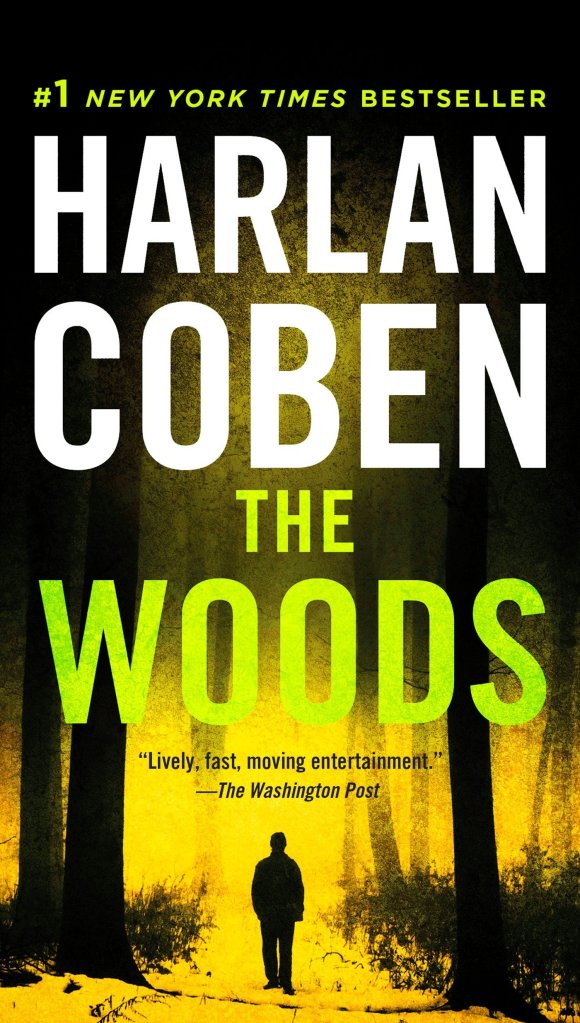
The Woods – Harlan Coben. This is one of my all time favorite novels. It follows the story of Paul Copeland, who lost his sister 20 years ago when she went missing from the summer camp they attended. Now, he is a prosecutor in New Jersey and goes by Cope. However, just as he begins to move forward from his sister’s death, a homicide victim comes forward that could be linked to his sister. As he works again to solve the mystery from 20 years ago, shocking new discoveries about the case are made. This novel is full of suspense and it is a true page-turner. With a plot twist that is absolutely mind blowing, I always recommend it to people who want to read a crime novel. Netflix even adapted it into a series (with only minor changes!). To this day, it is one of the best and most creative novels I’ve ever read, and I highly recommend everyone to pick up a copy!
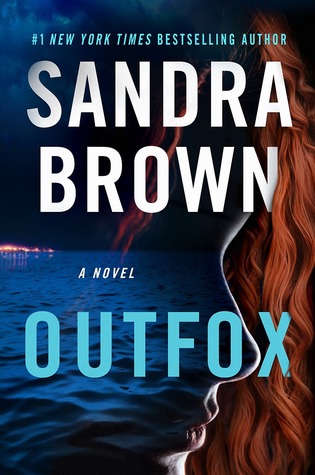
Outfox – Sandra Brown. This is a splendid novel for someone interested in a crime story mixed with a little bit of romance. It follows Drex Easton, an FBI agent who has been on the hunt for the same man for 30 years. This man, formerly known as Weston Graham, becomes close with wealthy women, and then murders them in ways that appear to be accidents, taking their money after. Each time, he changes his appearance and name completely, leaving no trace. Drex finally gets a lead on a him, but, in the process begins to fall in love with his wife. This novel perfectly intertwines a suspenseful chase with a heartwarming love story. As with any crime novel, it also includes an unanticipated plot twist. It is a definite read for anyone looking to enter the world of crime/mystery novels.
The Girl on the Train – Paula Hawkins. This novel is a little bit more well known, and also an excellent read. It follows the story of Rachel Watson, an alcoholic who grieves the end of her marriage with her husband Tom after he has an affair and marries the woman he cheated with. Rachel rides the train every morning and observes a seemingly perfect couple who lives on the street she used to live on. She becomes enchanted by the couple, reminiscing on the life she used to live. One day, she sees the wife kissing another man and days later, the woman has disappeared. Rachel remembers snippets of a night where she interacted with the missing woman, but has blacked out on most of the rest. The story progresses as she tries to piece together the true story of what happened, with a twist I did not see coming. This is a great crime/mystery novel for anyone who already loves the genre, or, for people starting to get into it. It was also made into a motion picture, but I recommend reading the book first to really get into the story!
Something in the Water – Catherine Steadman. This novel is another favorite of mine, however, it has a slightly different setup than the above novels. It primarily follows Erin Locke and her husband, Mark, after they find a mysterious bag floating in the water on their honeymoon filled with a bundle of cash, a gun, a flash drive, a bag of diamonds and a phone. They try to return the bag to the front desk, but it continues to appear in their room. Eventually, they decide to do some investigating themselves to see if they can maneuver their way into keeping the prizes. The interesting thing about this novel is that it starts months after they find the bag, at the height of the story and then goes back in time from there. This plot line gave some foreshadowing to the story and made my desire to unfold the mystery even stronger. This novel kept me flipping the pages and airs more on the side of suspense than true crime. I definitely recommend giving it a read.
The Tucson Festival of Books takes place next Saturday and Sunday, March 14 and 15, from 9:30 a.m. to 5:30 p.m. This event includes panels from over 350 visiting authors, as well as countless activities and performances. If you are interested in attending but want to avoid a cumbersome drive, Changing Hands Bookstore is offering a bus ride to the festival on Saturday, March 14!
Tickets can be purchased any time from March 1–14 for $65 per person. Those looking to attend this event should arrive at either Changing Hand’s Phoenix location at 6:45 a.m. or the Tempe location at 7:15 a.m. Tickets also include a continental breakfast, coffee, water, and a goodie bag with advanced reader copies of books! Participants will arrive in time for the festival’s opening and will be able to spend the day as they please, reconvening with the bookstore group at 5:45 p.m.
For more information about this event, and to purchase tickets, click here, and to learn more about the Tucson Festival of Books, click here.
Meet Jenny Irish, an Assistant Professor of English at Arizona State University and the author of the new short story collection, I Am Faithful, published by Black Lawrence Press. Staff writer Edward Dolehanty had a chance to talk to her about her new book, names characters, dogs, and more!
1. How would you describe I Am Faithful to a potential reader?
First, thank you so much for these wicked smart questions. I love what you all are doing with The Spellbinding Shelf!
Second, that’s a big first question! Okay! Buckle up!
I Am Faithful is a collection of stories about the experiences of the working, lower class. As a writer, I want to challenge stereotypical representations of Americans living at the edge of poverty and engage the complexities of human experience and the effects of multigenerational poverty. These are stories posing questions about privilege, power dynamics, and the consequences of the choices and compromises people make when attempting to improve their conditions. And I also try to ensure that every story avoids simplifying things that are knotty and entangled.
Across the stories in I Am Faithful, there’s also a focus on the experiences of girls and women. It’s common for girls and women find themselves preyed upon because they’re physically desired, because of the body they inhabit—but that same physical desirability, in a certain context, also gives them a degree of power. What happens, then, when a woman who is dependent on being desired—who commodifies her sexuality out of necessity or choice—becomes a mother, her body altered and her freedom encroached? What happens to the children of these women, especially their daughters, who may become viewed as competition?
2. One of the things that I most enjoyed while reading I Am Faithful is the way that a lot of character’s emotional ranges are shown through their relationship to dogs. How did you come up with the idea to so creatively incorporate dogs into your work?
*whispers* I wanted to be a Rottweiler when I was little.
I think for many writers there are things that appear in their work consistently. Whether these elements make it into the “final” version of a piece or not, the majority of my writing will have dogs, snow, and PBS in it. Some of it is because of familiarity, some of it is because of curiosity, and some of it is because it’s what feels right in the particular piece.
I love dogs. With the exception of a sad, short stretch in graduate school, when it wasn’t financially possible, I’ve always had dogs. My first favorite book was the AKC Complete Dog Book, with all the pictures of breeds, and diagrams, and descriptions of temperaments. And dogs are amazing because they direct back the energy that they feel from a person. In that they’re a kind of magic mirror that can show what’s inside someone.
I also think it’s incredibly telling how people treat things that are dependent on them: children, seniors, strangers they could help, animals in their care. So, I try to address this in my work. I also think that it’s important to recognize that there are different motivations for similar actions. The story “I Am Faithful” is very much about this.
3. So many of the stories in I Am Faithful feel delightfully uprooted from time through the use of flashbacks to inform the present moment. Does this relationship to time come naturally to you in your writing or is it something that you think about a lot in the drafting process?
This is just the way that I tend to write, without thinking about the work or having a plan. Most of the stories don’t follow a straight path, chronologically. Instead, they’re moving associatively. I think there’s a relationship between how elliptical stories can be “uprooted” from chronological time and the operation of memory. Associations carry us from one place another, and that movement isn’t necessarily be linear.
4. Something that stuck out to me about I Am Faithful is how most of the narrative characters go without a name. For me, as a reader, this allowed who the characters are to shine as opposed to highlighting what they are called. Could you discuss your relationship with naming characters in your writing?
There is something entirely mortifying to me about naming characters. In I Am Faithful, I think there’s only two characters with names, girls who have the same name, and much of the story is dependent on their shared name because of the comparison it invites between the two.
For me, characters are representative of real people, experiencing things that happen in the world, but they could be anyone. These things, or things like this, they happen to a lot of people.
5. One of the themes that resonated most with me in your collection is the sacrifices so many of the characters make in the name of independence. How they are willing to put themselves into compromising situations physically, socially, and morally, for the satisfaction of having something to call their own—no matter how small. In the story, “Worry,” the opposite is true of the narrative character, who is willing to make these sacrifices in the name of dependence. Did you find that the process of writing this story differed greatly from the others in I Am Faithful?
Thank you for telling me you appreciated this story. I’m proud it, but it hasn’t been particularly well received.
In “Worry,” a young girl disappears, and her mother is largely unconcerned. The mother’s smitten boyfriend—who is the narrative lens—was witness to the hostile relationship between his girlfriend and her daughter. He desperately wants to believe the woman he worships wouldn’t have harmed her child, but struggles with what he’s seen. This is a story, for me, about how complicated sexual commodification is and how powerful a motivator loneliness is. It’s also one of the longest stories, because it needed to be.
Love is complex and love isn’t always healthy. I think, when we talk about sacrifice, we often link it to punishment, but sacrifice can be a true act of love. In the collection, there are mothers who experience the sacrifices that parenthood demands—whether they choose to make those sacrifices or not—as a punishment and their relationships with their children reflect that feeling. I hope that there are other examples who see love in the sacrifices they make, and in that have the potential to be affirmed by their choices, even as they’re struggling.
I’ve already said a version of this, but I think it’s worth repeating: I hope to always avoid good/evil binaries, which I think are dangerously simplistic and generally false. Though there is one unquestionably “bad mother” in the collection—the mother in “Worry”—I think there are more people who are trying to be better than their circumstances, but making uncomfortable compromises along the way.
6. Each one of these stories strikes me as authentic and true even though they are fiction. I think that this in large part to the way in which the characters are presented as they are and, unless intentional, without the prejudice for impoverished people that is quite prevalent in society. Is this something that you were conscious of while writing this collection?
The very first rule of fiction, or, the very first rule of fiction workshop, is that we never ever conflate author and story. That said, like many writers of fiction, I do draw on my own experiences in writing.
When I was child, I always had an awareness of my class positioning. The reminders of it were constant. I always had an awareness that my mother was struggling to make ends meet. There was a perpetual anxiety about how to scrape things together in a way that would allow a precarious situation to keep going. I watched the people around me beg, borrow, and steal, and I understood that it was my job to conceal that. Hiding how bad things were was huge part of my childhood.
So yes, a goal of I Am Faithful is to be authentic and in that, capture the anxiety and varied forms of violence, desperation, and hope that come with living a life scraped together from scraps. Too often, I feel like these experiences are grossly simplified and fetishized. I’d rather they be honest and as ugly as they need to be.
7. A question we love to ask of our guests here at The Spellbinding Shelf is, what are you currently reading?
Ahhhh! I love books! I just finished We Will Tell You Otherwise by Beth Mayer, and re-read The White Book by Han Kang, and right now I’m reading By Grand Central Station I Sat Down and Wept by Elizabeth Smart and Blood Box by Zefyr Lisowski.
Thank you so much for reading I Am Faithful and this conversation!
For more information about Jenny Irish, click here. Buy I Am Faithful locally here.
Thank you to Black Lawrence Press for providing an ARC and making this interview possible.



 The Spellbinding Shelf