Publisher: Doubleday Genre: Literary Fiction/ Historical Fiction Pages: 224 Format: Hardcover Buy Local My Rating: 5/5 stars
Summary
In this novel, Whitehead examines the potential of youth and shows how corruption and injustice can so easily crush that potential. By all accounts, Elwood Curtis is a formidable young man—smart, curious, hardworking, and determined—he is even enrolled in college courses while he is still in high school. When Elwood is sent to the Nickel Academy for stealing a car to get to those classes, he finds that he will have to adapt to a harsh new reality if he wants to survive. Elwood discovers the strength to do so through his dedication to the works of Dr. Martin Luther King Jr., which has engrained a deep sense of moral justice within him. At Nickel, however, injustice is bred into the very fabric of the institution.
Thoughts
What most entranced me with this book is the way in which Whitehead masterfully intertwines personal history with the history of an institution. Many chapters of this novel start like the slow panning of a camera until it zooms in on the narrative focal point. No words are wasted, though at times it can feel to the reader as if they are far from the places that the book has previously taken them. Many times I did not think that what I was reading could have anything to do with the Nickel Academy, and then the book would whisper in my ear “trust me.”
I did not feel the full weight of this book’s emotional impact until the epilogue. When I closed the book’s final chapter I was ready to give it a four star rating because I felt somewhat confused and dissatisfied. I could not have felt more different when I turned the final page of the novel. Hold on, this is an emotional and tumultuous ride worth seeing through to the very end.
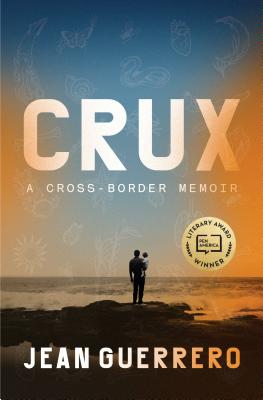
Publisher: One World Genre: Memoir Pages: 320 Format: Hardcover Buy Local My Rating: 5/5 stars
Summary
Sometimes, the only way to find yourself is to go back to your roots. In Crux, Jean Guerrero travels back four generations to understand her father, Marco Antonio, who has been absent most of her adolescence. She starts with her mother, Jeannette, and paternal grandmother, Abuelita Carolina, and proceeds to climb further up the family tree.
Diagnosed with schizophrenia, Marco sees sinister shadows that pursue him around the world when he tries to escape them by leaving his family behind.
Jean is shaped both by her mother’s unwavering dependability and her father’s desertion. She searches for answers in Mexico, her father’s birthplace, a country that holds as much enigma for her as an adult as it terrified her as a child.
Through a series of life-changing experiences, she finds herself at the edge of an age-old chasm and preparing for the crossing: the crossing across country borders, the crossing into lunacy, the crossing between life and death—amalgamated into one flickering fence.
Thoughts
Stretching as far back as the Spanish invasion of Mexico, it is a memoir that reads like a novel owing to the poetic symmetry of the events and characters. Guerrero captures quite a few of her unique experiences in this book along with an element of mysticism—presented with a commendably unbiased view.
Crux is clearly a product of meticulous research and a highly perceptive mind. It uses interviews and historic documents among others as its sources. The compilation of these into a coherent narrative could not have been easy, as first-hand accounts of the family’s lives in or before the early twentieth century were hard to come by. It is a fascinating read and I would recommend it to anyone with an interest in human psychology and/or ancient philosophy.
Thanks to Changing Hands Bookstore for providing an ARC in exchange for an honest and unbiased review.
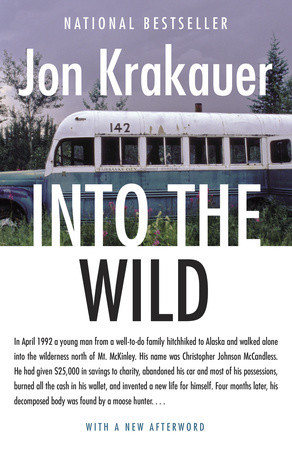
Publisher: Anchor Books Genre: Nonfiction Format: Paperback Pages: 240 Buy Book My Rating: 4.5/5 stars
Summary
In this nonfiction book, journalist Jon Krakauer uncovers the story of Chris McCandless, a young man from a successful family who donates his money, abandons most of his possessions, and adopts the name “Alexander Supertramp” on an adventure across the States and into the Alaskan wilderness north of Mt. McKinley.
Four months after his descent into the wilderness, a moose hunter found his body, and several news stories follow, stirring up public criticism about his supposed reckless behavior.
Krakauer follows clues to discover more about McCandless’ adventure and to answer the questions he has about this young man. What exactly was McCandless’ motivation? How should we understand his surprising death? What can we learn from his story?
Thoughts
My first interaction with the true story of Alexander Supertramp was not from Krakauer’s bestseller, nor was it from the 2007 award-winning movie adaptation. Instead, I learned about his legendary travels through my older sister Jessica, who adores this story so much that she begged our parents to stop by the famous Slab City and Salton Sea (which Chris McCandless visited on his journey) on the drive home from a vacation. 11 years old at the time, I hadn’t read the book or watched the movie, nor did I appreciate this lengthy detour in our already long drive. However, it proved extremely memorable, filled with bizarre creations and interesting caricatures, including Leonard, an artist of the desert.
Jessica and Leonard Knight, the artist behind Salvation Mountain who crossed paths with Chris McCandless
Now, almost a decade later, I’ve returned to the story with Krakauer’s book for a proper explanation of Chris McCandless…and a new understanding about why Jessica dragged us out an hour and a half into the middle of nowhere. (Jessica, I might not have been grateful for this detour at the time, but thanks for urging us to take this mini adventure while Leonard was still around!)
I enjoyed reading this book, not only for an explanation of this Slab City visit, but also for Krakauer’s excellent, detailed storytelling and writing style.
Krakauer’s Into the Wild is a book about a journalist’s interest in a young man’s adventure as much as it’s a story about McCandless’ travels into the wild. While it details clues about McCandless, it also provides a deep look into Krakauer himself as he reflects on why Chris’ story resonates with him so much. He even reserves two chapters to discuss his own story and the connections he feels it might have to Chris’ life.
Throughout the book, the author includes pieces of evidence to explain how he constructed an understanding of the Alexander Supertramp adventure: postcards, letters, a journal, photographs, book annotations, and several eye witness and family interviews. Later, when he tries to pinpoint the cause of Chris’ death, he even describes his encounter with researchers and critics as he explores different possible explanations. Since Krakauer unravels little pieces along the way, it sometimes reads more like a mystery than nonfiction, adding intrigue and a need to continue reading.
Each chapter begins with a passage, either from Krakauer’s own choosing or, in some cases, a passage highlighted in one of the books McCandless carried into the wild. Krakauer points out these highlighted passages to show a progression in the traveler’s ideology, ending in his famous scribbled annotation: “HAPPINESS ONLY REAL WHEN SHARED.” I found this detail extremely interesting, and, being a bookworm at heart, it makes me wonder if Chris would have drawn the same conclusion if he were carrying a different set of books with him into the wild. That is, was this revelation a discovery bound to occur from his life experiences, or were these books essential to creating this understanding?
Now that I finally took the time to appreciate a more concrete telling of McCandless’ story, I’m excited to watch the film, which gives more details about Leonard himself, to learn more about the Supertramp adventure.
If you’re not much of a nonfiction reader, it’s worth noting that the author’s prose often reads more like fiction than dry facts, which made Chris’ story beautiful and enjoyable to read. I’d recommend this book to any lover of nonfiction, adventure, or mystery.
I’m sure most, if not all of us, are familiar with the Harry Potter series. They have taken the world by storm ever since Harry Potter and The Philosopher’s Stone was published in 1997. It’s safe to say even if you love them all, there are probably some you love more than the others. Here, I have compiled my ranking of the novels ending with my all-time favorite. (Warning: spoilers ahead!)
7. The Chamber of Secrets. Starting the list at number seven is The Chamber of Secrets. I put this here because although it contains a multitude of catalysts for the rest of the series, I just don’t find myself drawn to it as much as I am to the others. It is chalked full of adventure and clues which I love, but I can’t see myself choosing it off the shelf first.
6. The Philosophers Stone (AKA The Sorcerers Stone). Next we have The Philosophers Stone, which, for obvious reasons, is a classic. This is the first in the series and the Harry Potter world would be nothing without it. There is something magical about meeting all the characters for the first time and learning about magic with them. That being said, the other books have more dynamic qualities surrounding the characters—and even Rowling’s writing—and so due to that, The Philosopher’s Stone comes in at number six on the list.
5.The Prisoner of Azkaban. The fifth novel on the list gives us further insight into the creatures of the Wizarding World. I love the symbolism of the patronus and it’s contrast with the dementors, and of course, meeting Harry’s godfather, Sirius Black for the first time. This book does follow the traditional pattern of time that I grew to love in the first two, but the excitement of switching that pattern up in the other novels ranks this one just a tad lower on my list.
4. The Half-Blood Prince. Now I know the order of this list is a little chaotic, but stay with me. The Half-Blood Prince is a staple in the series, with the discovery of the first horcrux and of course the death of Dumbledore. A lot happens in this book to set up the last one in the series, but, I placed it here on the list because I feel it has just a little less excitement and character growth than the following three books on the list. It is still full of enchantment and moves the plot effortlessly, however, I find myself gravitating towards these next three novels the most.
3. The Goblet of Fire. The next book on my list is a fan favorite. Almost everyone I know favors this book and I can see why. The Goblet of Fire is the fourth book in the series and at this point, most of the readers are in a routine where Harry goes to Hogwarts and something out of the ordinary happens throughout the school year. This book switches up the routine with the Tri-Wizard Tournament, which adds a new and exciting element to the traditional pace of the story. It is also the catalyst for the next three novels with the return of Voldemort and the first “real” death of the series (RIP Cedric Diggory). Overall, this book is full of adventure and excitement, making it a very fun read and great addition to the series.
2. The Order of the Phoenix. My second all-time favorite Harry Potter book tends to be a bit controversial, but there’s a few reasons why The Order of the Phoenix has always been one of my favorites. First, my favorite relationship throughout the novels is Sirius Black and Harry Potter’s. It’s the first time that Harry has a father figure and feels truly happy, and I love seeing that development between the third and fifth book. That being said, this makes his death in this novel all the more emotional. The first time I read it, it was entirely unexpected and 100% made me cry, making it very memorable for me. I also strongly dislike Umbridge, so a lot of different emotions came out of this—and I think that is the marking of a good book.
1. The Deathly Hallows. It may seem cliché for the last book in a series to be my number one pick, but in my opinion this novel ends the series perfectly and shows the most growth in all of the characters. Throughout the series, most of the audience grew with both the characters and Rowling. We saw them find their voices as she found hers. Every character was their most dynamic in this novel and it was heartwarming to experience. Even Neville Longbottom came out of his shell, which I’m sure we were all waiting for. It has emotional deaths, suspense, and a satisfying end with a look at the future. I don’t think the series could have ended any better.
This list was incredibly hard to make, I mean how do you rank literary genius? However, I went with my gut and thought about the novels I re-read constantly and am generally drawn to, and thus this list of rankings emerged. Feel free to comment your list and let us know what you think! If you’re interesting in purchasing any of these, you can find them all on Changing Hands’ website here.
Are you a student writer at Arizona State University who is seeking out a small, but growing, community of writers who are as passionate about writing as you are? A place devoted to helping you further your craft and generate ideas? Then look no further than The Sun Devil’s Writing Network, an online creative writing workshop that meets online using Zoom on the second and fourth Monday of every month. The Sun Devil’s Writing Network seeks to develop member’s craft through peer review, honing their eye as critical readers, and fostering a sense of community.
Date: The 2nd and 4th Monday of every month, starting January 27th Time: 3:00-4:30 p.m. Location: Online using Zoom meeting code 802-685-7310 or by clicking this link. Cost: Free
For more information about the Sun Devil’s Writing Network, click here.
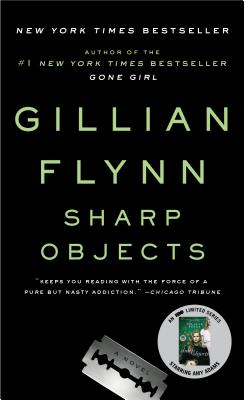
Like any lover of books and cinema, I’m always excited to watch a film adaptation of a book I’ve finished reading. Most recently, I’ve been interested in the literary miniseries trend, where producers transform a book into several television episodes, often adding complexity to the story with additional characters and storylines. The HBO miniseries Sharp Objects, based on the book by Gillian Flynn, does exactly this.
Both the book and miniseries follow Camille Preaker, a mediocre reporter who is sent on an assignment to cover the murders of two preteen girls in her tiny hometown, Wind Gap. Camille’s editor, Curry, senses a compelling story is waiting to be uncovered in the southern town, but he also believes sending Camille to her hometown could be healing for her since she recently had a brief stay at a psych hospital after self-harming. Once in Wind Gap, Camille receives a chilling, unwelcoming greeting from her mother, meets her half-sister for the first time, and struggles to find any information on the case from townsfolk, the police, or the dapper detective from out of town. Amidst her own troublesome memory and trauma, Camille feels she must unravel the story of her town and her own past to make sense of this mystery.
While I think the miniseries was excellently cast, I think actress Patricia Clarkson (as Adora, Camille’s mother) was particularly accurate. From her appearance, to her mannerisms, costume, voice, and acting, Clarkson’s portrayal of Adora felt spot on. Clarkson captured the Adora I had imagined while reading the book, and it was amazing to see her acting on screen in this series.
While there were several changes made in the miniseries—including an additional storyline about Camille’s rehab roommate, a scene about Calhoun Day that created a toxic Southern Gothic atmosphere, and more town drama in general—I think the most substantial change between book and television was the removal of the first person narrator.
In Gillian Flynn’s novel, we receive all of our information through the mouth of Camille Preaker. On the other hand, in the HBO series, we lack this narration and are not limited to one perspective. I think this cinematic choice made Camille’s alcohol abuse much more apparent in the story. While there were certainly murmurs of alcoholism in the novel, the first person narration did not emphasize this self-medication issue as seriously as the miniseries did.
The choice to remove the first person narrator also makes it harder for the viewer to access Camille’s complex mental states. In the book, the reader gets to see Camille’s thoughts and trauma unveiled—or, at least, as unveiled as Camille is willing to let her thoughts be. In the miniseries, the viewer must rely on fairly chaotic flashbacks to Camille’s haunting memories to understand her mind instead. This reliance on flashbacks to explain Camille’s mind seems to downplay Camille’s sexual trauma, which was more apparent in the book. It also makes Camille’s mental illness more mysterious since the viewer is left to fill in his or her own conclusions.
Of course, most obviously, the miniseries’ removal of the first person narrator also allows the viewer more information to which Camille is not privy. For example, the miniseries provides much more insight into the out-of-town detective and Camille’s editor, making them both more likable characters.
Another (albeit less significant but still interesting) change was the miniseries’ inclusion of music. The soundtrack is entirely diegetic, so whenever a song is featured, it’s because a character turned on a radio, pulled out an old iPod, or started a record. In order to accomplish this feat and avoid creating a dull soundscape, the miniseries gave Alan (Adora’s husband and Camille’s stepfather) a strange obsession with music. In much of the series, the viewer finds Alan tinkering with his stereo system, turning a blind eye—and ear—to the more sinister things happening around him. The miniseries also gave Camille a cracked iPod, which belonged to her old roommate from her stay in the psychiatric hospital. These two additional items provide most of the soundtrack for the series.
In large part, I think the television series and original novel both use their literary and cinematic advantages to highlight the dangers of denial. Throughout this suspenseful story, we see both young and grown characters deny traumatic memories of rape, abuse, and bullying. We see Camille struggling to accept herself and denying vulnerability, pain, love, healing, and truth. We see a townswoman named Jackie who denies a horrible truth she has uncovered about a lifelong friend that she refuses to reveal. And we see the town denying the reality of the two murders as they place more importance on maintaining their own social reputation and standing.
I usually say the book is better than the film adaptation, but I think this HBO miniseries gave Sharp Objects a run for its money. All the same, I recommend starting with the book so you have the opportunity to see dreary, ominous Wind Gap through Camille’s own eyes first.
Miniseries
Network: HBO No. of episodes: 8 Rating: TV–MA Main actors: Amy Adams (as Camille Preaker), Patricia Clarkson (as Adora Crellin), Eliza Scanlen (as Amma Crellin)
Each year, Arizona’s Maricopa County Library District kicks off the summer with a reading program designed to encourage literacy in young students with reading challenges and prizes.
This winter, the library district has created its very own reading program just for adults! Targeted at helping foster a lifelong habit of reading daily, the library challenges adults to log at least 20 minutes of reading daily through February 16.
By meeting reading goals and logging reading time online, adult readers can earn points, unlock badges, and win prizes. And, if you log at least 60 minutes each week , you have a chance to win an awesome weekly prize. Or, if you log at least 500 minutes before February 16, you have a chance to win tickets and a suite for a Spring Training game at Camelback Ranch-Glendale or a Maricopa County Parks Annual Day-Use Pass.
The reading program also offers a selection of unique reading challenges to earn reading points, like the Audiobook challenge, Books to Film in 2020 challenge, and the New Year, “New” Book Challenge.
To register for the reading program, visit your local Maricopa County Library, or click here.
For as long as stories have been being told on our screens, novels have been mined as source material. While often the product is far from the original text, adaptations can breathe new life into a story and illuminate a new aspects of some of our favorite fictional worlds. With the advent of popular streaming services and ever increasing production budgets, now more than ever books are being turned into films. Here are some of my favorite television shows based on books.
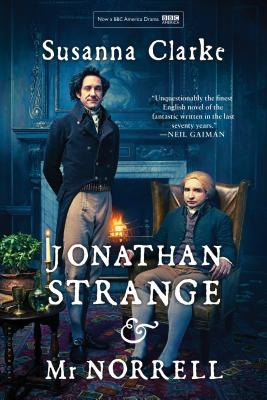
Jonathan Strange & Mr Norrell – Susanna Clarke. This book has it all—intricate history told against the backdrop of the Napoleonic wars, political intrigue, battle scenes, magicians, fairies, and books—so it is no surprise that it would be adapted into a stellar TV show. This seven episode mini-series produced by BBC One boasts an impressive cast with actors Bertie Carvel and Eddie Marsan in the titular roles. Of all of the adaptations on this list, Jonathan Strange & Mr Norrell stays as close to the story portrayed by the book as it can.
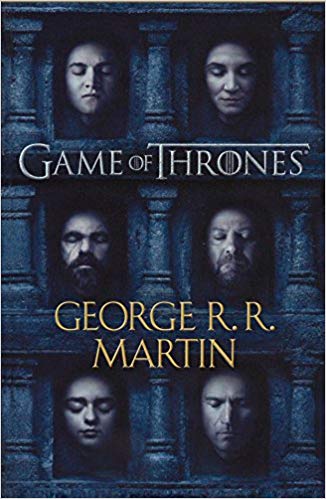
Game of Thrones – George R.R. Martin. It seems like a given that Game of Thrones would be on this list. HBO’s mega-hit series has changed everything I thought possible when it comes to creating a TV show—especially a fantasy TV show. While the response to the last few seasons of this show was not as enthusiastic as when it was originally released, there is no denying the cultural impact it has had. This show is full of slow burning plot lines, unexpected twists, and makes for an experience that cannot be described as anything less than entertaining.
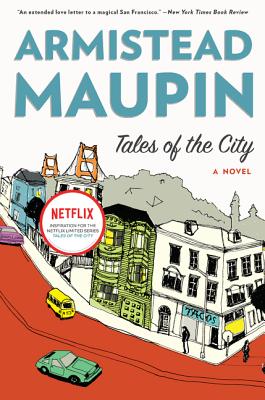
Tales of the City – Armistead Maupin. In 2019 Netflix released a star studded revival of Armistead Maupin’s popular series Tales from the City. This miniseries is a continuation of three previous miniseries based on Maupin’s work and features some of the same characters. This incarnation of the show goes even further by way of diversity and inclusion and gives a voice to many characters who are extremely underrepresented by the media. All the while, a riveting and emotional mystery unfolds that will have viewers hooked until the end.
The Handmaid’s Tale – Margaret Atwood. In 1985 when Margaret Atwood published The Handmaid’s Tale, there was no way of knowing that the story would draw so many parallels to the coming world. In 2017 when season one premiered, it seemed as if there was no show that the world needed more. The Handmaid’s Tale shows just how fine the line is between freedom and a strict totalitarian regime. It emphasizes the danger of discrimination and valuing one type of human life over another. Most importantly, in my opinion, this show highlights the danger that some women face every day simply for existing.
The Haunting of Hill House – Shirley Jackson. I started this list with an adaption that stayed fairly true to its source material, and so it feels only natural that I end it with something that deviates from the original in a big way. Like so many adaptions of Shirley Jackson’s The Haunting of Hill House, the 2018 Netflix show is a far cry from the novel. This fresh take on the Hill House, however, is one of those cases where the story is given new life. As terrifying as it is compelling, this show will suck you in until its final episode. I only have two pieces of advice about how best to watch it: with the lights on and not alone!
Publisher: Algonquin Books, 2014 Genre: Contemporary Fiction Format: Audiobook Time Length: 7 hours, 2 minutes Narrated by Scott Brick Buy Book My Rating: 5/5 stars
Summary
With pitiful book sales, the theft of his most prized rare book, and the loss of his beloved wife, irritable A.J. Fikry begins to dread his life as the sole bookstore owner of Alice Island.
Soon though, a mysterious woman leaves a toddler in Fikry’s bookstore with a simple note: “I want Maya to grow up in a place with books and among people who care about such kinds of things. I love her very much, but I can no longer take care of her.”
As A.J. searches for Maya’s mother, befriends a local cop, and reaches out for childcare help, Fikry begins a journey of transformation that catches the attention of his local book readers as well as the eccentric Knightley Press sale rep, Amelia Loman.
Thoughts
I picked up an audiobook version of this novel after a good friend from our Spellbinding team recommended it to me. (Thank you, Payton, our lovely Managing Editor!)
Listening to this audiobook during my long commutes made me excited to drive to and from school. If you are not a local reader, I can assure you that traffic in the Phoenix area isn’t exactly a pleasant experience. Side effects include grumpiness, checking the time incessantly, boredom, and annoyance. While I might be dramatizing the state of Phoenix’s rush hour traffic, claiming that The Storied Life of A.J. Fikry made my commute enjoyable is, without a doubt, some high literary praise.
Aside from the immediate entertainment value, I adored this book for its narrator’s unabashed quirkiness and love for books. I felt as if I could befriend both A.J. and the book’s narrator, and I could see them fitting in well with the college and literary community here in Phoenix. There were murmurs of bookish preferences throughout the entire novel, from small praises of authors like Flannery O’Connor to an abrupt and hilarious quip about a well-known thriller author using a ghostwriter. Zevin is even comfortable and masterful enough to playfully poke fun at her story’s own intentional cliches.
On top of winning me over for its clear focus on books and the reading life, I easily fell in love with the novel’s main characters. When lovable characters were in pain, my heart sank; and when they triumphed, my heart soared.
I will say, some of the plot was fairly predictable, but certainly not in a disappointing way. It was more a mark of good craftsmanship, as Fikry might suggest.
This book is absolutely perfect for any bookworm with a hunger for literary references and a good story. Any book lover will feel right at home in the cozy bookstore of A.J. Fikry with its stacks of ARCs, Moby Dick-themed restaurant, and both disastrous and successful literary events.
And since I can only imagine A.J. Fikry himself would be appalled at my choice to include an audiobook (Heavens! At least I didn’t include information for an ebook!), I’ll include a link to a locally-sold paperback as well.









 The Spellbinding Shelf