
Interview with YouTuber Phil from That Dang Dad

What’s it like being a YouTuber? What does it mean to be a writer on a video-sharing platform? How can writers use the medium of videos for social justice?

I was able to sit down with Phil who operates the YouTube channel called That Dang Dad. Phil has always been a writer and creator—poetry, essays, film reviews, music—and has since focused his writing on creating video essays on topics like racial justice, accessibility, toxic masculinity, and more. His work is radical, but also funny and approachable.

He talked with me about how he came to create his channel, his writing process for a video, and what is unique about writing for YouTube.

  1. What was the motivation behind beginning your channel and the framing of your channel name That Dang Dad? Are your intentions for your channel for fun expression, to solve a problem, or something else? 

I’ve always enjoyed discussing big ideas with people and sharing new things I’m learning. As I got plugged into the YouTube community of people talking about radical social, economic, and racial justice, I found myself really energized to keep learning and making connections between pop culture, academic scholarship, and my own life experiences. I decided to start a YouTube channel as a way for me to continue to share my findings with others as well as just to generally put more kind, thoughtful, and inclusive content on the platform. YouTube is famous for platforming thousands of harmful hucksters fomenting violence and exclusion, so I wanted to do my part to cancel out some of that noise.

My first and foremost intention with my channel is to express an idea I’m wrestling with in a way that will stimulate and delight others. So, not necessarily to teach (although that does happen), and not necessarily to entertain (although I hope that happens), but more to… feed a sense of curiosity about the world. I personally find it exhilarating to see things in new ways and my desire for my channel is to give my audience that same exhilaration.

2. What is your writing process like for creating a new video essay? 

Typically, it starts with an idea stimulated by something I’ve read, seen in TV or movies, or an idea sparked from an incident in my real life. I’ll spend anywhere from a week to a month just letting the idea rattle around my skull and seeing what kind of noise it makes, whether it’s “A Thing” or not. Once I’m satisfied that I have something that’s worthy of a 20 minute discussion, I open up a blank document and start writing a script from the top. 

Generally, my approach to a script is a quick introduction that entices an audience, two or three big chunks that explore my idea, followed by a “So what?” section in which I attempt to take what I’m talking about and explain what I think it means, why I think it’s important, and how I think it should impact my (and implicitly my audience’s) life.

Typically, it takes me 2–5 hours to write a 20 minute script, including rereading, rejiggering, and revising. Research-heavy videos can take twice that as I hunt for relevant passages in books and essays. I always read a script out loud to myself to see where I stumble over my own words, or where I lose my own train of thought. Once it reads comfortably to me, I’ll wait until my daughter has gone to bed and then record myself performing the script in my home office late at night. When I have all the video and audio recorded, I’ll open up my video editing software and add the files in, and then I start carving it up to make sure it flows well, taking out long pauses and cutting around flubs. This is when I start searching for supplemental images and footage, like charts, graphs, news articles, clips from shows, and the like. 

Depending on the subject matter, I always like to make sure I have some jokes and cutaway gags to break up the video and add some places for an audience to catch its breath. I don’t try to write full-on humorous videos, I just let my natural sense of timing and playfulness come out from time to time.

3. What are the strengths or unique considerations for sharing writing and essays via a video platform like YouTube? What is it like to write for YouTube versus for other mediums?

YouTube is a really interesting platform because its ecology is so enmeshed with the modern Attention Economy. In order to have your work succeed on YouTube, you have to get people to click on your videos and watch them in a single sitting without clicking onto another tab. What’s worse, you are competiting with 3 minute long meme videos, 30 minute long incendiary clickbait, videos of people playing video games, videos of raccoons being cute, and food porn, all pre-curated to steal each viewer’s attention.

So, if you’re trying to win over an audience that isn’t extremely niche or loyal to you, you often don’t have the luxury of long introductions or careful, exhaustive table-setting. You have 10–20 seconds to pique their interest or their eyes will float down to the suggestion column for something else. Everything from your video thumbnail to your opening line to your audio quality to your general demeanor has to come together in service of your point. 

This means writing for YouTube requires you to have a very strong value proposition up front, and by that I mean, you have to know why a viewer a) wants to hear this, b) will understand it, and c) should trust you to deliver it. You have 10 seconds to make an idea appealing, make it clear, and make yourself credible. 

On the flipside, YouTube is amazing for niche topics from voices on the margins because the audience is, for all intents and purposes, infinite. There are vibrant communities for people who are, for example, asexual and aromantic. There are communities of people who document dying malls. There are communities who interview people about daily struggles that society doesn’t know about. There are communities built around support for incarcerated individuals. And there are communities that film themselves playing games and talking to their friends, creating a party atmosphere even during quarantine.

I say that to say, your value proposition doesn’t have to target everyone on YouTube. You just need a strong value prop for the specific people with whom you’re trying to build a community. 

4. What is your most popular YouTube video and how do you think it came to be so widely experienced? What impact do you think it created/is creating?

My most popular video is “How Law Enforcement Taught Me to Dehumanize.” I wrote it during the Black Lives Matter protests in the spring of 2020, and it was picked up and promoted by a popular YouTuber and has been very successful since. 

If we go back to my explanation of value propositions, this video has a very strong one: a) it’s appealing because we are living during a time of highly visible police misconduct disturbing a nation, b) the topic of dehumanization is something that many people intuitively feel from law enforcement but may not fully be aware of, and c) I’m credible because I’m a former police officer. 

Now, would this exact same video have been successful in, say, 2004? Of course not: in the wake of 9/11 and the start of the Iraq War, American reverence for armed forces was at an all-time high. My video just happened to be written at the right time to ride in the wake of a large movement. This isn’t to say the only successful videos are anchored to specific times and politics, only that, for me, the time period was part of the value prop.

The impact I see the video creating is one that is contributing to a slow, increased skepticism about law enforcement in general. Many people take the existence of the police as a given, as a default. Many commenters on my video expressed shock at my experiences and told me it made them see law enforcement a different way. Many said they were sharing it with family and friends to “open their eyes” about how law enforcement really is. To steal from Mark Fisher a little, I think my video is helping to dislodge the modern conception of the police from occupying the horizon of the thinkable. 

5. What video(s) of yours are you most proud of? Tell me about how it/they came to be. 

I should be proud of my most successful video (and I am), but the two videos that are actually my personal favorites are “You Are Alienated” and “Why You Should Care About Designing For Accessibility.” The former is a kind of spoken word/music video format discussion our modern alienation from our money, our labor, and our communities. It’s very different from my other videos, much more “artsy,” much more audacious—but when I watch it, I feel like my music, my words, and my visuals all harmonized perfectly to create the feeling I wanted to create. Alienation is often subtle, often scary, often demoralizing, and I wanted to give that a voice for people who felt it but couldn’t articulate it. I think I hit it exactly right.  

As for my accessibility video, I created it to share lessons I’d been learning about how disabled people are excluded from work, from wealth, and even from democracy. I was so shocked to learn these lessons that I felt I had to amplify them. If they blew my mind, I knew they would blow other minds. I’m super proud of it because my abled commenters told me they had never encountered many of these concepts about disability and disabled access, whereas many of my disabled commenters told me I was one of the first YouTubers they’d seen treat these issues as important. Many disabled commenters told me that even other left-wing or social justice oriented channels seemed to ignore the disabled community and that my video made them feel seen and feel included. That video has a fifth of the views of my dehumanization video but it’s the one that makes me the happiest. 

6. For people who may be interested in sharing their own work on a video platform like YouTube, what wisdom might you share with them about the experience? 

Practical first: audio is more important than video, believe it or not. If people can hear you clearly, a fuzzy camera image isn’t as big of a deal, especially since you can always supplement with free stock video, free stock images, or footage of you playing Dark Souls. 

Also, when you’re finding your voice, I would advise trying to err on the side of being too short instead of too long. Like I said, you’re competing in the Attention Economy and unfocused rambling is a great way to lose eyeballs. Find the core nug of your message and stay focused on it. As you grow your channel and find your sea legs, you’ll start to get a sense for what your audience is willing to stick around for, but when you’re an unknown, people may not invest two hours into someone they’ve never heard of before. I have never done a video longer than 30 minutes and I’ve never felt like I didn’t fully explore the topic I wanted to. 

On that same wavelength, there is a concept in user experience called “information scent,” which posits that people click links on the Internet almost like they are foraging for sustenance. If they want to know about a topic, when they click a link they are going to decide within seconds whether they are still on the trail of the topic they want to know about. If they think they’ve lost the scent, they will hit the back button and try a different link. So if you want to make content for people researching a topic, make sure that within a few seconds, your video is clear about what you’re going to cover so that you reinforce the information scent for your famished visitors. 

With that out of the way, my big piece of advice is that passion will build an audience. Maybe not a big one, maybe not one you can monetize and replace your income, but one that is authentic and engaged. If you are passionate about mathematical paradoxes, trans liberation, labor relations, young adult horror novels, weird history, cosplay, recipes from ancient cultures, or queer themes in 80s television, you have something to offer on YouTube. 

And passion doesn’t mean bombastic speeches, loud talk, or an in-your-face demeanor. More, the passion to do a subject justice, the passion to do the research, to explain a concept people haven’t thought of, or to show them the interesting side of something they thought was mundane. I once watched an hour long oral history of the Super Mario Brothers world record speedrun. I once watched an hour long video about the ten year history of a Japanese professional wrestling rivalry. Passion is infectious. YouTube is full of people trying to make a buck by gaming the algorithm and trying to coast on whatever is trending. My advice is to not worry about the algorithm and instead of focus your energy on getting people excited about what you’re excited about. 

Lastly, if you’ve done work you’re proud of and passionate about, don’t be afraid to share it! Promote it on Reddit, share it on the socials, text your friends, and don’t feel selfish about talking about your stuff. If it comes from a place of passion and authenticity, you’re not being greedy or egotistical telling others to see it. And always ask your audience to share your videos. Word of mouth is huge on YouTube.

7. A question we like to ask folks: what are you currently reading?

I am currently reading Postcapitalist Desire and The Weird & The Eerie, both by Mark Fisher, as well as 99% Invisible Cities by Mars & Kolstedt. I also read from Gore Capitalism by Sayek Valencia once a month, but I am as a mewling baby before this text and the only thing I fully understand from it is the concept of “the precariat” and basically nothing else. Normalize👏 not👏understanding👏books👏!


Subscribe to That Dang Dad here. Follow That Dang Dad on Twitter here, or Phil’s main account here.
Book Review

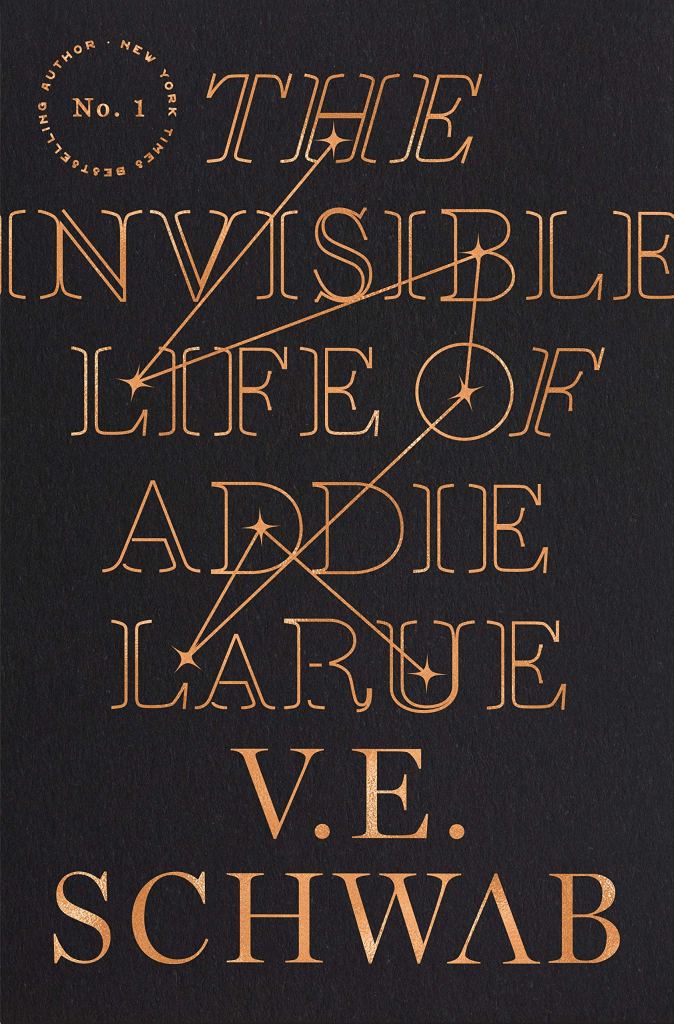
The Invisible Life of Addie LaRue by V.E. Schwab

Publisher: Tor Books
Genre: Fantasy/Historical Fiction
Pages: 448
Format: Hardcover
Buy Local
My Rating: 5/5 stars

Summary

Adeline “Addie” LaRue was born in Villon-sur-Sarthe, France in 1714. She prays to the New God and the Old ones, but is warned to never pray to the God who answers after dark. However, in a moment of desperation, she accidentally does—and so begins the next 300 hundred years of her life.

In this life, she cannot die, but is remembered by no one once she is out of sight. She can’t even tell anyone her name. She lives her life alone, learning languages and watching the world as we know it evolve. Until, in New York City in 2014, she meets someone who remembers her, and everything changes.

Thoughts

This book continued to pop up everywhere I looked, so finally I caved and bought it. From what I had gathered, the book had a surprising twist and left a lot of people in tears—which is my kind of novel. It’s safe to say I had no idea what I was getting myself into. From the first chapter, I was drawn to Addie’s character, rooting and feeling sorry for her at the same time, while contemplating what I would do in her position. Schwab has created incredibly complex characters who pull at your heartstrings in every direction.

The story itself takes you through history as Addie watches events all around the world take place, with only the darkness to truly keep her company. Schwab has effortlessly weaved fantasy elements and historical events together, making the reader feel as if they were there too, walking the streets of Paris in 1750 or watching the Opera in Italy in 1870. The reader is just as much a part of the story as Addie, and I found myself furiously turning every page, and staying up until the wee hours of the morning just to find out more.

Just as I was warned though, the ending was like a knife to the heart. I kept wondering what it was going to be, what everyone was getting so worked up over, and then it happened. Of course, I won’t spoil it—but get your tissues ready. Not only is the turn of events shocking, but you will find yourself so invested in these characters and their relationships that when you do experience the ending, it breaks you.

I can honestly say I have never read a story like this; it is truly a unique experience. I cannot recommend this book enough, (I have already told all of my friends about it). This is one story I look forward to reading again and again.

Book Review

The Night Circus by Erin Morgenstern

Publisher: Anchor
Genre: Fiction, Fantasy
Pages: 528
Format: Paperback
Buy Local
My Rating: 4/5 stars

Summary

The Night Circus tells the story of a mysterious circus that arrives without warning. Le Cirque Des Rêves (The Circus of Dreams) is only open at night, and the wonders inside seem truly magical. From the delectable treats to the performers and tents, every aspect of the circus seems to delight and defy reality at every turn. Of course, few know what is really occurring behind the scenes.

Celia and Marco have been engaged in a duel for most of their lives. Entered into a competition by their vindictive guardians when they were children, they know little about the contest—including the rules, the goal, and against whom they are competing. All they do know is the venue, a circus wherein they can showcase their abilities as illusionists and magicians.

Thoughts

One of the first words that comes to mind when I try to describe this book is enchanting. Morgenstern weaves a narrative that seamlessly blends what appear to be unrelated storylines with an elegance that seems to reflect the winding paths of the circus itself. A large cast of characters are introduced right off the bat, and it seems impossible that all of their stories can be treated with the same level of importance. Doing the impossible, however, is a specialty of the titular circus, and the book makes a serious (if not entirely successful) attempt to bring you deep into these characters’ lives. An especially captivating touch comes from the occasional passages in the second person: you truly become the person experiencing the wonders housed within Le Cirque Des Rêves. The descriptions of the circus itself is also deeply captivating: from the intoxicating smell of apple cider to the wonderfully-disorienting layout of the circus tents, you’ll find yourself mesmerized and, like the Rêveurs—the self-dubbed devoted followers of the circus—eager to explore more.

It’s worth noting that the actual plot of the book can be a bit slow to progress in some places, but the aforementioned descriptions do much to keep the reader’s attentions during these stagnant moments. One drawback of the large number of characters included in the story is the subsequent lack of characterization as a whole. Aside from the main duo of the novel, Celia and Marco, many characters are not given special attention or notice. A notable exception to this rule is found in the character of Bailey and the young circus twins he befriends, Poppet and Widget. It is also worth noting that the book is divided into many (many) chapters—each segment is only about a few pages long. While this division makes the book easy to read in pieces during a busy time (midterms, anyone?), I cannot stress enough the importance of noting the identifying information at the beginning of each chapter—namely the year. The contents of the story span a few decades, from the inception of the circus to the conclusion of the competition between Celia and Marco.

Perhaps my favorite thing about this story comes from the family created by everyone involved in the circus. As a close-knit community formed by the performers themselves, it’s touching to see the circus grow to something greater than itself, something that makes dreamers everywhere feel seen and understood by. This is perhaps most clearly seen in Bailey, who sees the circus as an escape from his dull life on a rural farm, and Herr Friedrick Thiessen, the clockmaker who creates a cult-following from his captivating publications about the circus. At its core, beyond the magic and mystery, The Night Circus is about family, and the bonds that we form when we are allowed to truly be ourselves. The love shown by the characters to one another—and to the circus itself—is the true magic at work, and serves as an inspiration to dreamers everywhere.

4 Books Turning the Big 5-0 in 2021

Birthdays are a funny thing. As I turn fifty this month, I realize that half a century is a big deal, and not just for people! As the years go by, books come and books go—but the really great ones stick around. So, to celebrate my birthday, I look to some novels and books that have truly stood the test of the time.


Our Bodies, Ourselves—Boston Women’s Health Book Collective, Judy Norsigian. In 1969, some women met at an Emmanuel College conference to discuss women and their bodies. From this gathering grew a group that eventually formed a collective that left nothing off the table when it came to women, their bodies, their sexuality, and even reproductive rights. “Women and Their Bodies,” a 193 page pamphlet, was published in 1970 and in 1971 was renamed Our Bodies Ourselves to reaffirm the ownership that women need to take in regards to their physical selves.

Several other niche editions have appeared as well, tackling menopause and pregnancy and birth. It has been updated every three to four years, but unfortunately due to some financial pressure the group’s last edition was in 2011. However, the information and spirit of Our Bodies Ourselves still holds on strong!


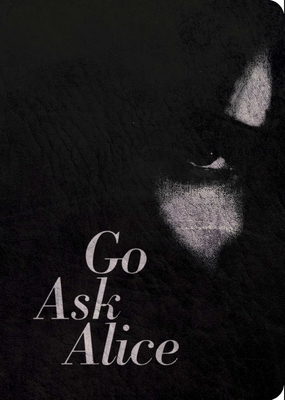
Go Ask AliceAnonymous. Promoted as a real-life account of a teenage girl’s disturbing foray into the world of drugs, the authorship of Go Ask Alice has been called into question for quite some time. It has been suggested that the book is actually the combined efforts of several authors and not a true account at all.

Be that as it may, that does not negate the powerful story of “Alice,” who is never named in the novel, as she descends into a life of drugs and sexual abuse. Go Ask Alice is a cautionary tale that—despite its age—still holds up today, as proven by the 50th anniversary edition that was published in late December.


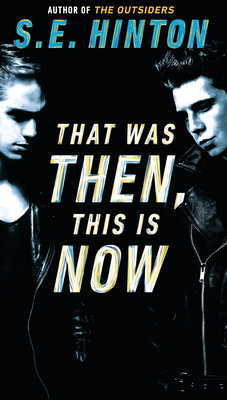
That Was Then, This Is NowS. E. Hinton. While novelist Hinton is best known for The Outsiders, you cannot discuss groundbreaking young adult fiction without including That Was Then, This Is Now.

Set in what would be referred to now as the same “universe” as The Outsiders, the novel features some of the same characters, but focuses mainly on two close friends, Mark and Bryon. As a coming of age story, it explores the inevitable growth and tensions that come with being not only being a teenager, but the specific challenges of the 1960s.


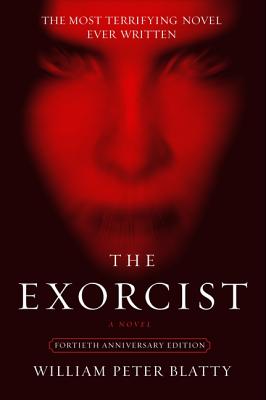
The ExorcistWilliam Peter Blatty. Terrifying then, terrifying now, Blatty’s novel continues to define the horror genre with its disturbing imagery and details.

The novel explores themes of religion, faith, and death through the story of Regan, an 11-year-old who suffers possession at the hand of a demon. Her shocking journey is laid out graphically, and ultimately becomes a battle of good versus evil and a test of faith. The Exorcist has not only held up as a novel but it spawned a critically acclaimed film, and a recent television series.


Good books are like a fine wine, they only get better with age, so give one of these oldie-but-goodies a try!

5 Books Entering the Public Domain in 2021

The start of this new year brought with it a collection of books entering the public domain. So many fascinating tales are now available for the public to adapt, share, and create with—from compelling dramas, to absurdists allegories, to tragic tales of love and loss, this year’s batch is truly extraordinary. To celebrate the arrival of these classic stories, I’ve complied a list of my favorite books that have entered the public domain this year! May they continue to inspire for generations.


The Great Gatsby—F. Scott Fitzgerald. You may remember this story of greed and love from your high school English class. Set in the early 1920s, young businessman Nick Carroway rents a home in New York for the summer and finds himself entangled with an eccentric ‘new money’ millionaire named Jay Gatsby who assists him in his quest to win the heart of Daisy Buchanan. There’s only one problem; Daisy is married to a rich (and unfaithful) husband. The death of the American Dream in the face of unfettered ambition is an idea that still rings true today, and I, for one, cannot wait to see what stories come from this book’s entry into the public domain.


In Our Time—Ernest Hemingway. If you love stories of the trials of war, this collection of short stories is right up your alley! Set around the First World War, In Our Time is a collection of tales surrounding all aspects of wartime—from scenes of evacuations, to the experiences of soldiers, to life after the war, this book showcases the ever present humanity behind one of the world’s bloodiest wars.


The TrialFranz Kafka. (German Version) Much like Alice In Wonderland or The Hitchhiker’s Guide to the Galaxy, The Trial by Franz Kafka follows the story of the ‘every man’ thrust into a world of madness and confusion, where the rules don’t matter, except when they do, and chaos runs rampant. It follows a man named Josef K. who is awoken late one night by two officers informing him that he has been accused of a crime and that he must prepare his case. The problem? Josef has no clue what he’s been accused of, nor does he know where these men came from or for whom they work. From then on it only gets more complicated for poor Josef as he desperately tries to navigate a world of increasingly intricate bureaucracy to prove that he is innocent of a crime that he knows nothing about. With a world as bizarre as our own criminal justice system, this story will have you entranced till the end as you too try to understand the peculiar world of Franz Kafka’s The Trial.


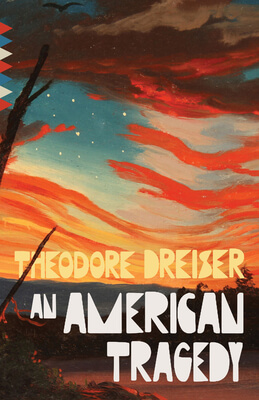
An American Tragedy—Theodore Dreiser. The 1900s era of storytelling is best known for being about the “lost generation,” which refers to the feeling of displacement that many young men felt after returning from war and finding it difficult to believe in the American Dream again. Theodore Dreiser’s An American Tragedy perfectly encapsulates the sorrow that was often synonymous with this theme. This book tells the story of Clyde Griffiths, a factory worker who becomes entangled in a love triangle between a wealthy socialite and a fellow factory worker whom he got pregnant. Based on the murder of Grace Brown in 1906, this story is perfect for those who enjoy a look into the darker side of love and ambition.


Mrs. Dalloway—Virginia Woolf. In yet another perfect example of the ‘lost generation’ theme of the 1900s, Mrs. Dalloway follows the life of Clarissa as she prepares for a party that she plans to throw that night. Throughout the day, she interacts with various people and ponders her life and whether she will be happy with her choices as she continues to grow old. Running parallel to her story is the life of Septimus Warren Smith, a World War I veteran who struggles with his past and relives the horrors of war. Mrs. Dalloway, at it’s core, is a story of choice and the effects they can have—even years down the line. I related greatly to Clarissa Dalloway’s insecurities regarding her choices, as I know what it’s like to worry that you one day you will harbor regrets. Overall, Mrs. Dalloway shows the joy that can come from embracing one’s choices and living in the present, and the despair that can come from clinging to the past.

Book Review

Fantastic Fungi: How Mushrooms Can Heal, Shift Consciousness, and Save the Planet

Publisher: Earth Aware Editions
Genre: Nonfiction, Ecology, Spirituality
Pages: 184
Format: Hardcover
Buy Local
My Rating: 5/5 stars

Summary

Can mushrooms change the world? Can they heal the planet? Can they repair your body? Can they realign your spirit?

Simply put, yes. In Fantastic Fungi, legendary mycologist Paul Stamets offers a beautiful collection of essays from the director of the Arizona Center for Integrative Medicine at the University of Arizona Dr. Andrew Weil, food science journalist Michael Pollan, professor of Forest Ecology Suzanne Simard, and nature and food writer Eugenia Bone. Along with the essays are visually arresting photographs of fungi and mushrooms. Organized in three sections, these essays explore what mushrooms mean for the planet, our bodies, and our spirits. Reading the collection is a transformative experience where learning about issues like the mycelial internet, mushrooms as therapeutic intervention, and the stoned ape hypothesis will leave you seeing the world and your place in it from a totally new perspective.

Thoughts

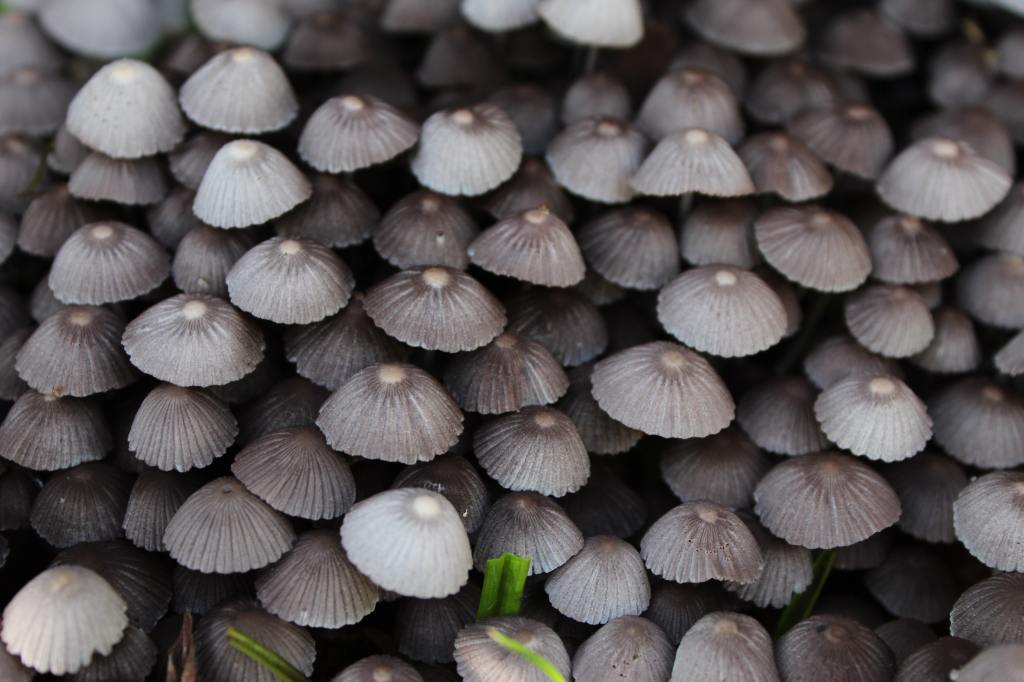
That mushroom you see peeking up out of the mulchy forest floor? That’s only the tip of the fungal iceberg. A mushroom is only the fruiting body part of the organism, a way to release spores and reproduce when conditions are right. But below the surface? In the soil, branching out into a vast network of interconnection lies the vast entirety of the fungus, the mycelium stretching out—sometimes for miles. Mushrooms are much more complex than you may think.

Paul Stamets’ Fantastic Fungi accompanies a documentary of the same name. Both can be enjoyed alone or explored together in a complementary way. They are truly a fantastic journey into the big and tiny, micro and macro beautiful world of fungi, mushrooms, and our human relationships with them.

Did you know fungi are not plants? They’re not animals, either. Rather, they comprise their own kingdom. Stamets’ documentary suggests that perhaps fungi are the dominant species on earth. The biggest organism on earth is no whale, elephant, or giant squid, but a honey fungus that spans 2.4 miles in Oregon and is perhaps almost 9,000 years old. Fungi are the most common species on earth and are literally everywhere, “under every footstep that you take…all over the world.”

“Take a breath. You’ve just breathed in 10 fungal spores”

Grief, anger, and depression about climate change are normal, but at times reversing environmental destruction can seem hopeless. However, Fantastic Fungi is optimistic, and you can help. Become involved in fungi activism with organizations like The Radical Mycology Mycelial Network, which seeks to increase community resilience, support local ecologies, and recompose organic waste. The documentary and book offer a promise of hope about our environment. Mushrooms can save bees from extinction. Mushrooms can safely break down and recompose hazardous waste and industrial pollutants. Mushrooms can repair soil that has been over-tilled and damaged by pesticides. To quote Stamet: “Nothing lives alone in nature, and communities are more likely to survive than individuals. What a beautiful inspirational model for how human beings might live: in a shared economy based not on greed but on nurturing relationships and mutual cooperation.”

Fantastic Fungi calls us to action—as amateur mycologists, naturalists, and ecologists, citizen scientists, and change agents. Anyone can appreciate, learn from, and heal with mushrooms and fungi. We can—and should—work with fungi for the betterment of the planet.

5 Highly Anticipated Young Adult Novels of 2021

With every new year comes new books, and here at The Spellbinding Shelf we are always looking forward to new publications! No matter how old I get, I always find myself gravitating towards YA novels—there is something about coming-of-age stories that just comfort me. So, I’ve compiled a list of YA novels I am particularly stoked about for 2021.

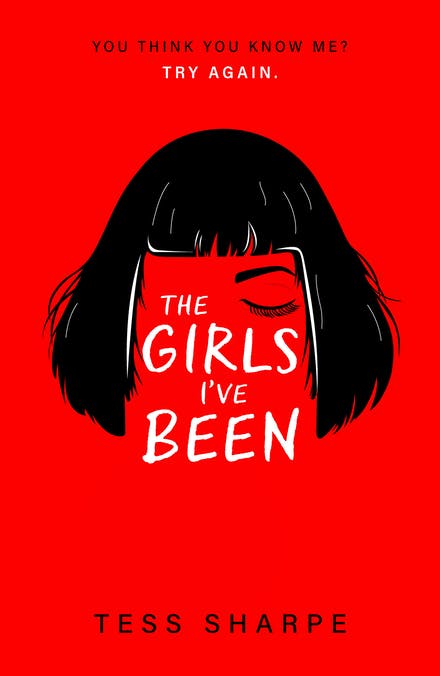
The Girls I’ve Been—Tess Sharpe. This novel follows the daughter of a con-artist who escapes from her mother, only to end up as a hostage in a bank heist. This novel is so highly anticipated, that they already have a film planned for it starring Millie Bobbie Brown. However, I am a firm believer in reading the book before seeing the movie and I am looking forward to picking up this one on January 26th!

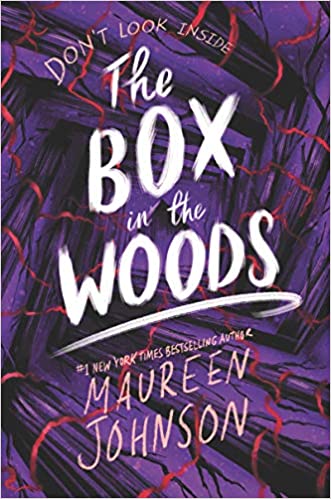
The Box in the Woods—Maureen Johnson. If you loved the Truly Devious stories, then you will be stoked for this release. Stevie Bell is back in another installment. Before kicking off what she thinks will be a normal summer, Stevie gets a call about the Box in the Woods Murders. Naturally, she can’t refuse and thus her investigating begins.
This one won’t be available until June 15th, but you can always read the other three novels from the series in the meantime!

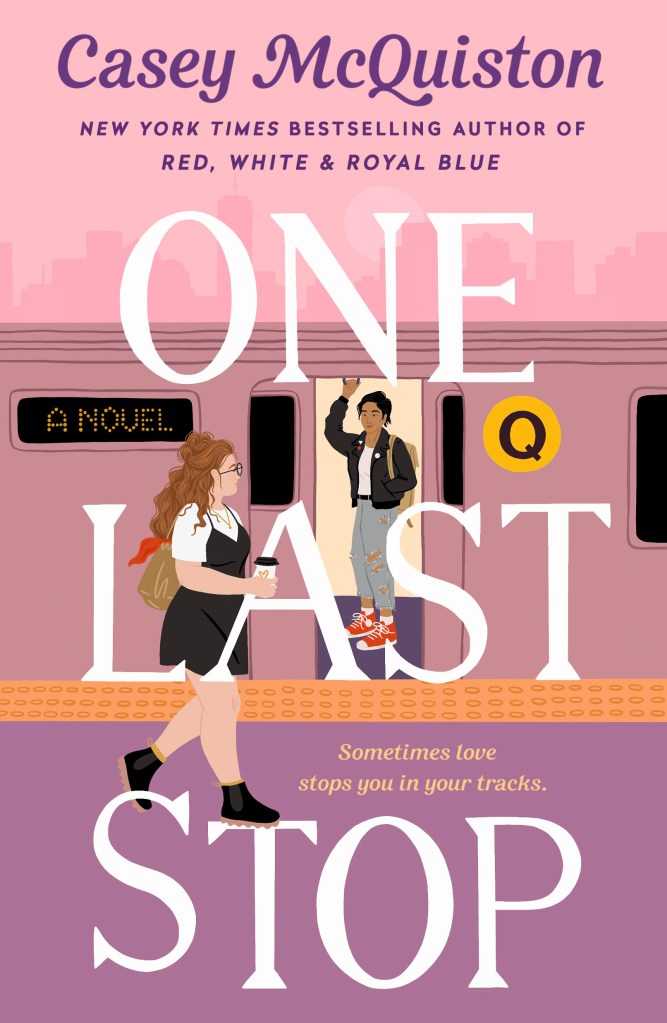
One Last Stop—Casey McQuiston. Red, White & Royal Blue was everywhere this summer, and Casey McQuiston is back with another novel that is sure to steal your heart. Twenty-three-year-old August finds out that her subway crush is from 1970’s Brooklyn, and now she must figure out how to help her. I am super excited about the representation in this book and can’t wait for it to be released on June 1st!

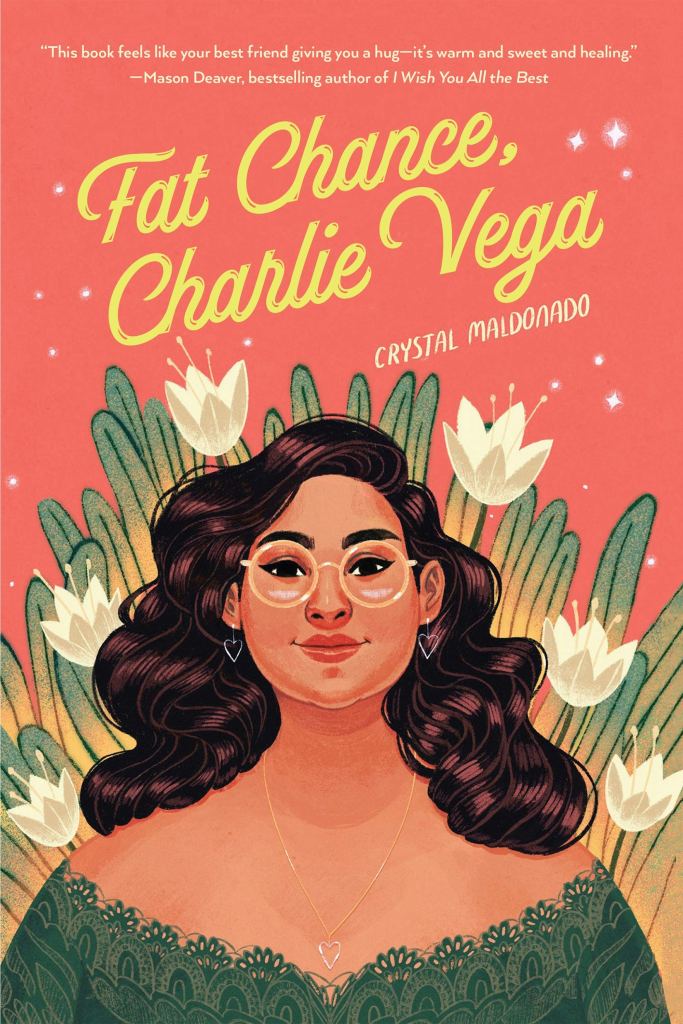
Fat Chance, Charlie Vega—Crystal Maldonado. This book follows Charlie Vega, a young girl navigating the scary world that is high school. Additionally, her own mother is pushing the skinny, white narrative onto her—despite the fact that she is neither of those things! When the boy who asked her best friend out asks Charlie out, she can’t help but wonder if people truly see her.
I am especially excited for this book because I think the world of YA books needs more diversity in it’s main characters. You can check the shelves for this one on February 2nd!

Somewhere Between Bitter and Sweet—Laekan Zea Kemp. This novel was pitched as I’m Not Your Perfect Mexican Daughter meets Emergency Contact, which sounds fantastic to me. It follows the story of a young girl named Penelope who dreams of opening her own pastry shop next door to her father’s taco shop. When her father hires a new boy to work in the shop, Penelope can’t help but get close to him. So, when his immigration status and the shop are threatened, Penelope has to come up with a plan to save them both.
This novel sounds like an absolute tearjerker and I cannot wait to pick it up on April 6th.

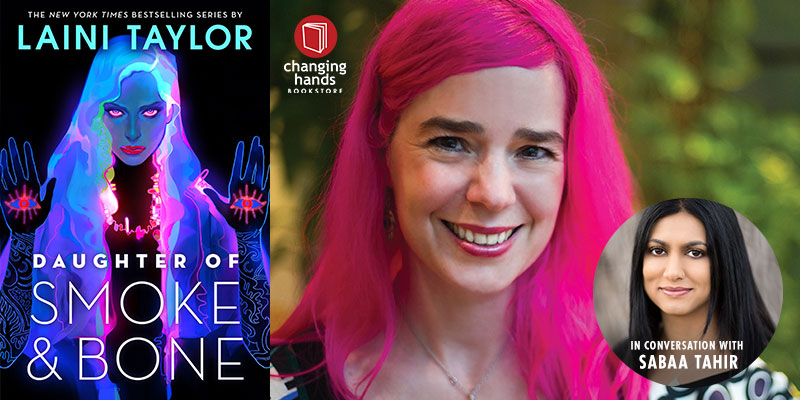
Literary Event: Laini Taylor in Conversation with Sabaa Tahir

Changing Hands Bookstore will be hosting a virtual conversation with acclaimed author Laini Taylor as she celebrates the tenth anniversary of her Daughter of Smoke and Bone trilogy. The National Book Award finalist will be in conversation with Sabaa Tahir, author of A Sky Beyond the Storm, the final book in the Ember in the Ashes quartet.

This event will take place next Thursday, January 28 from 6:30 p.m. to 7:30 p.m. Attendance is free, and the first 50 people to purchase a book with their ticket will have their bookplates personalized by Ms. Taylor. For more information about this event, and to purchase tickets, click here.


Location: Online

Date: Thursday, January 28, 2021

Time: 6:30 p.m. – 7:30 p.m.

Price of Ticket: Free (optional VIP tickets available)

Book Review

Paris for One & Other Stories

Publisher: Penguin Random House LLC
Genre: Fiction, Short Stories
Pages: 274
Format: Hardcover
Buy Local
My Rating: 3/5 stars

Summary

Jojo Moyes, best known for her novel Me Before You and the film by the same name, waxes optimistic in Paris for One, a collection of nine short stories all told from the female perspective. Offering up relatable and recognizable female characters in the midst of change, Paris for One takes the reader on journeys of self-discovery, relationships gone wrong (and right), and the life-changing power of a pair of Louboutins.

Thoughts

Worn out from life in quarantine, and never ending political and civil strife, Paris for One is part female empowerment, part escapism, and could be just the distraction you have been looking for. I am a sucker for anything Parisian, and impulsively tossed this book into my online shopping cart without even bothering to read the reviews. My instincts ended up being right on, as this collection is a series of delightful, breezy reads that will help take the edge off a tough week of scrolling through social media and wondering where we all went wrong. 

Moyes seems fully aware that sometimes all you need is a little mental escape. She fills her stories with relatable, “every woman” type characters—which excuses her a little for placing some of them in pretty predictable situations. An excellent example of this comes in the form of the titular story where Englishwoman Nell’s failed Parisian getaway turns surprisingly into just what the doctor ordered for her overly stable existence. It’s a familiar theme, but who hasn’t dreamed of throwing caution to the wind, boarding that flight, and facing adventure head on with a brooding Frenchman on a scooter?

Another playful entry is the sweet and funny “Christmas List,” where a day of shopping leads to something you just can’t buy—a change in attitude. Neither story pushes the envelope in the genre, but they made me smile, and just because they are familiar doesn’t make them any less fun!  

Wisely though, Moyes does switch gears by adding a little drama and introspection into the collection with “Bird in the Hand” and “Love in the Afternoon.” Exploring the complexities of married life, these stories ground the collection from flying off into a Parisian cotton candy cloud filled sky. In both, Moyes reminds us that sometimes things do happen for a reason, and the grass may not be greener on the other side when it comes to life and love.

Moyes’s writing style is straightforward and uncomplicated, which makes this the perfect easy read for a lazy Sunday afternoon…or Monday through Saturday given the current state of the world! While these aren’t stories you will be pondering days later, it’s clear that they weren’t meant to be. So curl up in your favorite chair with Paris for One and indulge yourself with a few life-changing fantasies. My guess is you deserve just that! 

Taylor Swift—The Poet of Our Generation

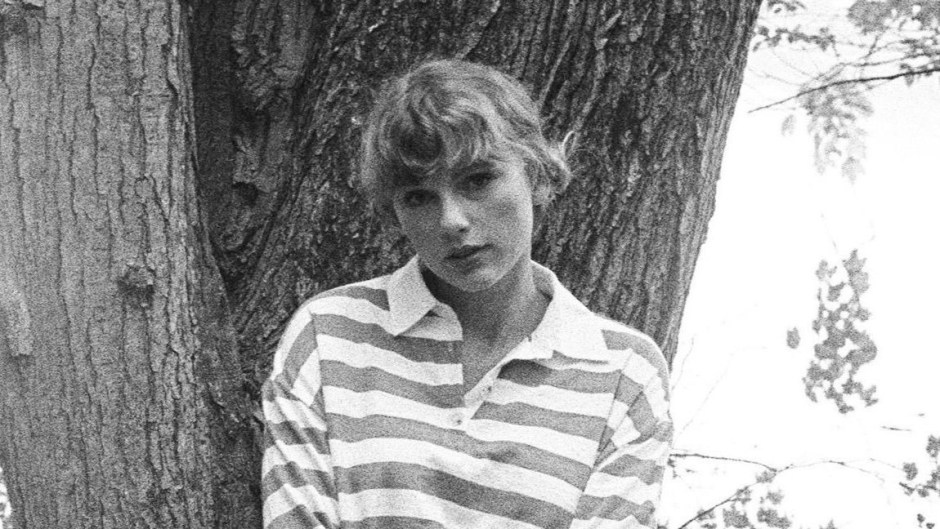
In case you missed it, Taylor Swift has been very busy during the pandemic. Within the span of five months, she released two studio albums—Folklore and Evermore—bringing her to a grand total of nine studio albums. Now you may be wondering, why is a book blog telling me about Taylor Swift? Well the truth is, whether you love or hate her music, her poetic songwriting ability rivals that of some of the best poets to date. She started by creating stories within 3–4 minute songs and now creates love triangles by connecting individual songs. If you still don’t believe me, let’s look at some of her best lyrical work. There is a multitude of ways to analyze her work, but I will be breaking it down into three different categories: literature references, powerful lines, and storytelling.

Literature References

Taylor loves her literature references—and so do I. Some of them are very obvious, such as “Love Story,” (which I won’t include for that reason) but a lot of them are more subtle, which just adds to her genius. This list is not exhaustive and doesn’t include every album, but let’s look at a few of my favorites:

  1. “Wonderland”: Taylor took it up a notch on her fifth album, 1989, by creating an entire song based on a literary reference. The song “Wonderland” is a reference to Alice in Wonderland and the idea of getting so lost in love that you don’t realize you fell down a rabbit hole and now you have to figure out how to escape or spend forever where “life was never worse but never better” (Swift, 2014). Taylor directly references the beloved tale with lines such as “Took a wrong turn and we / Fell down the rabbit hole,” and “Didn’t you call my fears with a Cheshire Cat smile?” (Swift, 2014), meaning the subject of the song wrote off her fears with a wide grin, causing her to feel falsely assured. This song is a prime example of the strengthening of Taylor’s literary references.
  2. This is Why We Can’t Have Nice Things”: All of Taylor’s albums are an era in their own right, but Reputation took that to the next level. A number of the songs on this album allude to various classics, from A Tale of Two Cities to Slaughterhouse Five, but I am just going to talk about the most thorough reference on the album, which is “This is Why We Can’t Have Nice Things.” This song is basically The Great Gatsby explained in three minutes and 27 seconds. It details a friendship that was extravagant and wild—much like the way Gatsby would party—that ends due to secrets and lies, much like the way friendships and relationships ended in Gatsby’s world. The first verse reveals this idea immediately with the lines, “It was so nice throwing big parties / Jump into the pool from the balcony / Everyone swimming in a champagne sea / And there are no rules when you show up here / Bass beat rattling the chandelier / Feeling so Gatsby for that whole year” (Swift, 2017). If that doesn’t sound like a Gatsby party, I don’t know what does.
  3. “Invisible String”: I am going to break my “explaining one literary reference per album” streak here, because Folklore is an English major’s dream. “Invisible String” contains a nod to the popular line from Ernest Hemingway’s The Sun Also Rises, “Isn’t it pretty to think so?” (Hemingway, 1926). In the chorus she sings, “And isn’t it just so pretty to think / All along there was some / Invisible string / Tying you to me?” (Swift, 2020). Personally, I think this is one of her most beautiful songs and I love the way she slipped this reference in there.
  4. “The Lakes”: Before Taylor started writing in quarantine, she must have been reading, because this song immediately took me back to my English Literature class. In this song, Taylor references what I guessed to be the five Lake Poets from the late 18th to early 19th century. The chorus opens with “Take me to the lakes where all the poets went to die” (Swift, 2020), which, if I remember correctly, were the big five romantic poets. Upon further listen, I noticed an interesting line which I believe is a further nod to them. In the second verse she sings, “I’ve come too far to watch some namedropping sleaze / Tell me what are my words worth” (Swift, 2020). William Wordsworth was one of the five Lake Poets, so I can’t help but to think that the last bit of that verse is meant to continue the allusion to the poet. It could be a coincidence, but most of us know by now that Taylor doesn’t do coincidences.
  5. “Happiness”: Moving into her most recent album, Evermore, we have the song “Happiness.” When I first heard this song, I nearly died. Not just because it’s one of her saddest songs ever, but because the literary references in it made my nerdy heart swell. Once again, Taylor has alluded to The Great Gatsby, but in an even more poetic way. In the second verse, she sings “I hope she’ll be a beautiful fool” (Swift, 2020), which is an obvious nod to Daisy’s famous line from the novel and I audibly gasped on my first listen. Towards the end, there is also a line that says, “All you want from me now / Is the green light of forgiveness” (Swift, 2020), which I also took to be an allusion to Gatsby. It may just be me, but I am trained to think Gatsby when I hear green light, so I think this is the perfect subtle nudge towards it.
  6. “Tis the Damn Season”: By now, we’ve probably noticed that Taylor has taken to referencing phrases and lines from famous works and that’s exactly what she does in “Tis the Damn Season.” In the chorus of this song, she makes a direct reference to Robert Frost’s beloved narrative poem, “The Road Not Taken,” with the line, “And the road not taken looks real good now” (Swift, 2020). This poem was engrained in my head as early as middle school, so naturally I was extremely excited about this reference.

Powerful Lines

Taylor may be the queen of literature references, but some of her best lines have nothing to do with allusions and are simply poetic in their own right. I consider music and songwriting to be a form of poetry, therefore most of her songs themselves read as a poem. Honestly, I could pick a line at random and it would probably be beautifully written, but then we would be here all day. So, in no particular order, I’ll just go through a few of the ones that really strike a cord with me.

  1. “And you come away / With a great little story / Of a mess of a dreamer / With the nerve to adore you”—”Cold as You” (Swift, 2006). Taylor wrote her first album at 15 and she has grown a lot since then, and as such most of my favorite lines won’t be from her debut album. However, I think it is important to look at her old lyrics to help see how far she has come, and these lines from “Cold as You” still get me even after all these years.
  2. “So I’ll watch your life in pictures like I used to watch you sleep / And I feel you forget me like I used to feel you breathe”—”Last Kiss” (Swift, 2010). This song, particularly this line, always hits me even now—despite the fact that I was 12 when it was released.
  3. “You call me up again just to break me like a promise / So casually cruel in the name of being honest / I’m a crumpled up piece of paper lying here / ‘Cause I remember it all, all, all too well / Time won’t fly, it’s like I’m paralyzed by it / I’d like to be my old self again, but I’m still trying to find it”—”All too Well” (Swift, 2012). Unfortunately, I cannot paste the entirety of “All too Well” but this bridge speaks for itself.
  4. “Cause you can hear it in the silence / You can feel it on the way home / You can see it with the lights out / You are in love”—”You are in Love” (Swift, 2014). By itself, this doesn’t seem like much, but the song is about saying you’re in love without saying it directly, and I absolutely love the way she chose these lines to depict that.
  5. “Please don’t ever become a stranger whose laugh I could recognize anywhere”— “New Years Day (Swift, 2017). Even though this is just a one liner, it gets me every time. Taylor has a way of describing scenarios in one line that packs a punch, and this is one of those instances.
  6. “I don’t wanna keep secrets just to keep you / And I snuck in through the garden gate / Every night that summer just to seal my fate / And I screamed for whatever it’s worth / ‘I love you,’ ain’t that the worst thing you ever heard?”—”Cruel Summer” (Swift, 2019). The beginning and end of this verse are my absolute favorite, but I also love Taylor’s allusion to gardens throughout so many of her songs. It gives them such a whimsical feeling. Also, it was a cruel summer so it seems fitting.
  7. “You drew stars around my scars / But now I’m bleedin”—”Cardigan” (Swift, 2020). “Cardigan” is one of my favorite songs off of Folklore, because there are so many lines like this one that pack a punch but also tell a story, which is something she consistently does beautifully.
  8. “But I’m a fire and I’ll keep your brittle heart warm / If your cascade ocean wave blues come / All / these people think love’s for show / But I would die for you in secret”—”Peace” (Swift, 2020). This song is another one of my favorites off of Folklore (honestly, I love every song on this album). There is something undeniably poetic about this line in particular, with the metaphoric language and symbolism. I get the chills every time.
  9. “I don’t like that falling feels like flying ’til the bone crush”—”Gold Rush” (Swift, 2020). This is another one liner, but it does such a good job capturing a feeling that we all probably know in just a few words. Even though it’s short, it’s extremely descriptive and really shows off her talent.
  10. “While you were out building other worlds, where was I? / Where’s that man who’d throw blankets over my barbed wire? / I made you my temple, my mural, my sky / Now I’m begging for footnotes in the story of your life”—”Tolerate It” (Swift, 2020). I had a hard time picking just one line from this song, to the point that I considered pasting the whole song in. It’s honestly a very underrated addition to Evermore, but from a poetry standpoint is absolutely beautiful. If I read this in a poetry anthology I wouldn’t blink an eye.
  11. “There’ll be happiness after you / But there was happiness because of you too / Both of these things can be true”—”Happiness (Swift, 2020). I’m including this one as a bonus, because I couldn’t not talk about it. Not only is “Happiness” ironically the saddest song ever, but the emotion she captures is astounding. This is one of my favorites from the album because it is so mature and really shows how she’s grown as a person and writer.

Storytelling

Finally, we move into the last category, which is the storytelling she does in some of her songs. Like any good songwriter, Taylor knows how to tell a story. She writes about her experiences, but also creates characters in her songs. These are five of my favorite stories she has told, in no particular order.

  1. The Betty, Augustine, and James love triangle from Folklore. This Taylor original is one of my favorites because she gives us a presumed cheating scandal, but from the perspective of each person involved. There is no blaming the other woman or anything like that, and we get to see how each person may feel in a situation like this. It is a really interesting story and each song, “Betty,” “August,” and “Cardigan,” is different but equally fantastic.
  2. The failed marriage proposal in “Champagne Problems.” The phrase “champagne problems” means an issue that in the grand scheme of things may not seem like a big deal, but matters a lot to the person. In this song, Taylor effortlessly tells the story of a person who has turned down a proposal due to their own problems. Each verse adds to the story, hooking you from the beginning. It is heartbreaking and beautiful and I absolutely love it.
  3. The wedding being crashed in “Speak Now.” This song is great for a number of reasons. It tells the story of a girl who decides to crash her ex’s wedding by choosing to “speak now” rather than “forever hold their peace.” The imagery is so detailed it feels like you are watching the events unfold. Each verse gets closer and closer to the action until it unfolds, and they run away together (presumably). It is a lot more lighthearted than the previously mentioned storylines, but very well done nonetheless.
  4. The story of a young girl growing up and appreciating her mom in “The Best Day.” This song goes through a young girls life, presumably Taylor’s, and all of the small things that make growing up hard. Throughout it, she reflects on how the one constant was her mom. This song is extremely nostalgic for me. I used to listen to it on family road trips and I would think about how I wasn’t even close to the age she was by the end of the song. It made me appreciate my mom a lot more and how she was there for me through everything.
  5. Handling the illness of a loved one in “Soon You’ll Get Better.” In this song, Taylor tells the story of someone who has to deal with someone close to them being sick. It goes through all the motions of going to the hospital with them and watching them get worse and better and worse again. I don’t listen to this song often, simply because it is honestly so sad and it makes me think about what I would do if my mom got sick. However, as heartbreaking as it is, its extremely well written and never fails to pull on my heartstrings.


If you’re still here, thank you, and I hope you enjoyed analyzing the inner-workings of Taylor Swift’s music and songwriting abilities with me. Between her literature references, undeniably poetic lyrics, and strong storytelling, I think it’s safe to say she is truly the poet of our generation.