Chaos Walking: Book-to-Movie Adaptation

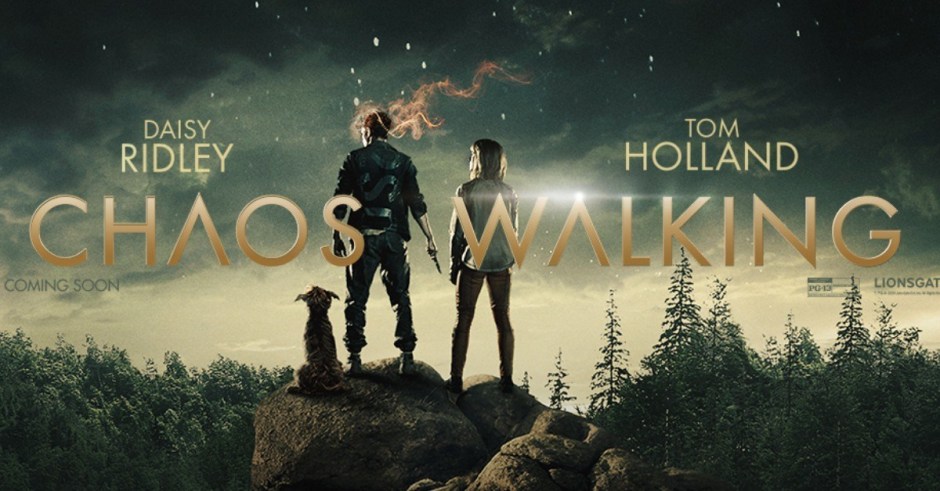
When I first heard that The Knife of Never Letting Go by Patrick Ness was going to be made into a movie, I was cautiously optimistic. This book seemed like an odd choice for a movie adaptation, as it was filled with dark themes and had a very complicated setting that would be hard to translate into a movie. However, if done right, I could absolutely see this adaptation becoming something like The Hunger Games, where the dark themes and complex world were translated almost seamlessly to film. And seeing as they cast two of my favorite actors to play the leads, Tom Holland and Daisy Ridley, I knew that I at least needed to give this movie a chance. However, after finally getting to watch this adaptation, I have to admit that I am disappointed. While it was by no means terrible, the movie sanded down a great deal of what I loved about this book, leaving behind a movie that just felt underwhelming. In this reflection I will detail the things I enjoyed, and the things that let me down, in Chaos Walking.

Before I begin, however, a quick spoiler warning. Since I will be comparing the book and the movie, there will be spoilers for both. If you wish to view either of them unspoiled you can find the book here and showtimes for the movie here.

The Good

First off, what I enjoyed about the movie. One of the areas where I was most skeptical when it came to adapting this book to a movie was the concept of the Noise. Basically, in the book, the humans live on a planet where the men are all able to hear each others thoughts all of the time, an ability which they call the Noise. This would obviously be very difficult to do in a movie, as the voices would eventually become overwhelming. Much to my surprise, however, the movie actually managed to portray this not only in a way that didn’t overwhelm the viewer, but also led to some of the best moments in the movie. The Noise is portrayed as an iridescent fog that whispers, which allows for the viewer to differentiate between spoken and thought dialogue, and only gets louder when it’s necessary for the scene. My favorite scene where this occurs is when Todd, the main character, learns that the town murdered his mother and all the other women in the town. Todd’s panic and his subsequent struggle to hide his thoughts leads to a wild hurricane of competing voices that expresses the turmoil of the scene perfectly. I would even argue that this was better than how it was handled in the book.

Another way the Noise is improved from the book is its ability to create illusions. In the book you can only hear the disembodied voices, but in the movie the Noise will periodically take the form of people and things that look real enough to fool several characters. This is used in my favorite scene in the entire movie, where the main antagonist is fooled into thinking that the ghosts of all the women he killed are confronting him. It creates a powerful moment where the movie finally addresses the darker themes of the book in a direct way, and if the movie had featured more moments like this I would’ve enjoyed it a lot more. Instead, the movie shied away from these themes, so I’m only left with a small handful of moments that I remember fondly.

The Bad

Sadly, the occasional good scene wasn’t able to save this movie—and for every good choice the movie made there were far more missteps that just didn’t work.

The first misstep in Chaos Walking was the age of the characters. The two main characters were 13 years old in the book, but in the movie their age seems to be somewhere in the 18–19-year-old zone. While I understand why movies age up characters, especially when the movie is rated PG-13 and contains a great deal of swearing and violence, this change damages a large portion of the movie. Todd, the male lead, is often treated like a child and behaves in a manner that would make sense if he was 13. He is also treated like a child by the adults in the movie. However, while Tom Holland is an actor that can often play younger characters, he’s still too old to fit in with the attitude and the treatment he receives. This problem also happens with Daisy Ridley’s character. She is treated and behaves like a frightened little girl, but she still comes off as a young adult and it creates a jarring disparity that is never really addressed. As much as I love Tom Holland and Daisy Ridley, they weren’t the best pick for a story about children, and the confusion over their age and the way they behave follows them throughout the entire film.

The movie also removed Todd’s entire character arc—his struggle with what it means to be a man. In the book, Todd is repeatedly taught that in order to be a man he must be able to kill, and when he finally leaves his town, he is confronted with many opportunities to do so, some more justifiable than others. Todd struggles with his desire to prove himself a man to his society and his innate humanity, inevitably questioning what it even means to be a man and if he really wants to be one. This arc is helped by Todd’s age, as he is regarded by his entire town as a child whom they don’t take seriously, and he is frustrated over this treatment. This is completely absent in the movie. Todd has no hangups about killing; he says one line about being a man in the beginning but it never comes up again, and for all intents and purposes he doesn’t struggle at all with his identity. This wouldn’t be an issue if the movie added another aspect of Todd’s character to replace it, but instead Todd is just portrayed as a doe-eyed kid with very little substance to him. This is a shame, because his struggles with manhood would’ve been an unique arc, but instead Todd is left a very bland character.

Where the movie really drops the ball, in my opinion, is the removal of the religious themes. The main focus of the book was how religious extremism can lead to violence and evil, especially when faced with the unknown. This is shown in two ways: first, how the humans treat the natives of the world, known as the spackle; and how they treat women. Without giving too much away, The Knife of Never Letting Go shows just how dangerous fear of the unknown can be, and how opportunistic people can use fear combined with religion to manipulate the masses for their own selfish ends. However, this is not the case in Chaos Walking. While religion does occasionally make an appearance, it is limited to one character who is generally dismissed by others. The power that fear has is glossed over entirely, with only slight moments where people behave irrationally. The violence and death driven by fear is completely dismissed as well. The animosity between the humans and the spackle only makes one very brief appearance, and could honestly have been left out of the movie entirely. While the movie does address how they subjugated and murdered all the women, it is only focused on occasionally, and the movie pins most of the blame on two men (rather than acknowledging that it was done by the entire town). At times it feels like the movie is afraid to delve too deeply into these ideas and risk alienating movie watchers, which is a real shame seeing as, like I said before, the times where this movie shines is when it embraces the themes of the book. If Chaos Walking had taken the risk and addressed these themes head on, it would’ve been a much better movie, but instead it only went halfway and left a lot to be desired.

Final Thoughts

In conclusion, I was pretty disappointed by this movie. I don’t necessarily blame anyone involved in the film, because this book was bound to be hard to make into a mainstream movie. It’s a book that is jam-packed with themes and ideas, and the movie struggled to include them and ended up feeling incomplete. As someone who read the book, I can’t say whether someone new to the story would enjoy the movie. I did watch this movie with my father, who hasn’t read the books, and he was often lost and confused, so I can’t imagine this movie being a good introduction the the world of The Knife of Never Letting Go. That being said, I can’t say that I completely regret watching it. The scenes where the movie really embraced the original story, though few and far between, were incredible to watch. Ultimately, I don’t see myself watching Chaos Walking again. It just lacked the spark I felt when reading The Knife of Never Letting Go that made me fall in love with the series.

5 Books to Liberate You From Dieting and Diet Culture

Photo by Gabriel P on Pexels.com

Have you heard that old bit about goldfish and water? Two young goldfish are swimming around and they pass an older goldfish who says to them, “Water’s great today!” After, one of the young goldfish says, “What the heck is water?” Diet culture is like the water around us; we swim through it everyday and it seems so normal and commonplace that we don’t even recognize it’s there.

Diet culture is a system of beliefs that equates thinness to health and a higher moral and social status, that promotes weight loss and shrinking one’s body, and perpetuates fatphobia and oppresses people in non-normative bodies, especially people of color, disabled people, queer people, and trans people. Seventy five percent of women exhibit disordered eating or thoughts about food or their bodies. Ninety one percent of women try to control their weight with dieting and 22% are “always” dieting. Are you tired of the shame we put on diverse bodies? Are you sick of the constant diet cycle and shame of “failing” over and over when actually 95% of diets fail you?

Making peace with our bodies, with eating, with taking up space figuratively and literally, is a radical act while living in a culture steeped in dieting, diet culture, and oppression, and while dieting is a multi-billion dollar industry. To reject dieting, to fight diet culture, and to treat people living in larger bodies with dignity and respect is to live better in our personal lives and to make change socially and culturally. These five books will illuminate the myths surrounding equating health with thinness, challenge your assumptions about fat and size, educate you on the unethical treatment of fat people, and teach you how to live differently—and better—when you reach for liberation from dieting and diet culture.


Anti-Diet: Reclaim Your Time, Money, Well-Being, and Happiness Through Intuitive Eating— Christy Harrison. As a registered anti-diet dietician and journalist, Harrison offers this incredibly well-researched manifesto on rejecting dieting once and for all.

She uncovers how the blame of dieting failures and weight stigma is not the fault of individuals, but rather the fault of the diet industry, creating victims for profits, and unethical science and attitudes.


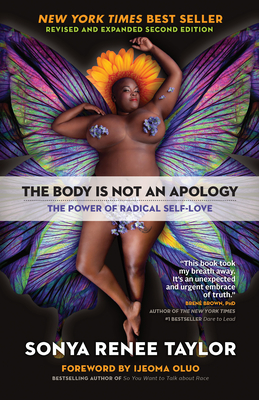
The Body is Not an Apology: The Power of Radical Self-Love—Sonya Renee Taylor. Read this book. Just read it. Taylor offers one of the most valuable gifts: radical self-love.

Radical self-love is about healing the wounds of oppression, body terrorism, and systems that perpetuate racism, sexism, fatphobia, queerphobia, and ableism. Taylor invites us to dismantle those systems—with love and with a brand new chapter of tools and exercises published in this second edition.


Intuitive Eating: A Revolutionary Anti-Diet Approach—Evelyn Tribole and Elyse Resch. If and when you’re ready to leave dieting behind forever, learning about intuitive eating offers a detailed road map for how to do it.

Based on 10 principles, intuitive eating is about everything from rejecting diet mentality to respecting your body to relearning how to honor your hunger and respect your fullness. If this how-to guide is useful to you on your journey, consider their accompanying workbook or their recently published book of daily exercises.


The F*ck It Diet: Eating Should Be Easy—Caroline Dooner. This is not another diet book; it’s not even another diet book masquerading as a “lifestyle change.” There are no rules. F*ck it.

As both a comedian and a former chronic dieter, Dooner’s anti-diet diet book is both funny and scientifically accurate. Are you still hungry after lunch? F*ck it, eat when your body is hungry. The lesson you’ll learn by the end of the book goes way beyond the irreverence or rebellion you might assume it teaches, but goes way deeper and down to relearning intuition and trusting our bodies again.


What We Don’t Talk About When We Talk About Fat— Aubrey Gordon. Did you know housing and job discrimination because someone is fat is legal? And what if I told you that fat people received worse healthcare, not simply because half of all doctors describe their fat patients as “awkward” and “ugly” but also because fat people are regularly told to “lose weight” as treatment for things like ear infections or broken bones?

Gordon walks readers through the world of anti-fatness and the systems that keep it in place. This must end. As she says, “We can build a world that doesn’t assume fat people are failed thin people, or that thin people are categorically healthy and virtuous.”


Liberating yourself from dieting and diet culture is not easy, but it is important. These books will help you see differently, love yourself and others more, and ultimately live better. They will help you see the water around you—and you can’t clean up dirty water if you can’t see it.

If you are seeking support or resources for an eating disorder or disordered eating, call or text the National Eating Disorders Association helpline at (800)-931-2237 or chat with them online.

Twilight Books Ranked

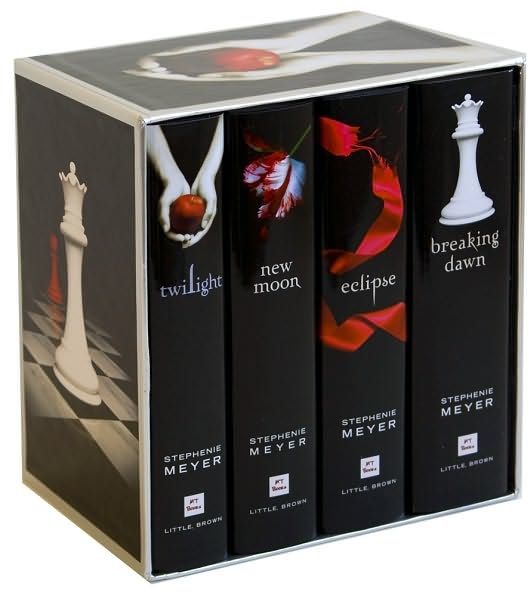
Most of us are likely familiar with the Twilight Saga from Stephanie Meyer. If you were a teenager in the late 2000s–early 2010s, you probably saw the series everywhere. Meyer’s vampire versus werewolf world had us captivated. Like with all series, I’m sure each of us has our favorite installment. Here, I have compiled my ranking from least to most favorite. (Warning: spoilers ahead!)

4. New Moon. Starting out the list at the bottom is New Moon. I loved this series for the better part of my young adult life, and while I do appreciate this installment in the series, it does fall at the bottom of my list. This may seem counter-intuitive as I was Team Jacob growing up and we see the most of Jacob in this novel, but I can’t fully handle lifeless-adrenaline-chasing Bella. I definitely understand where her emotions were coming from, but it doesn’t exactly make for the most riveting read. That being said, I do love how we learn about the werewolves here and see Bella’s friendship with Jacob evolve.

3. Twilight. As the book that began the whole series, it didn’t feel right to put it last. This book is important to me for a lot of reasons. I had seen the name being thrown around but wasn’t sure what to think. Eventually, the movie came out and I watched it and immediately fell in love. At that point, I picked up all of the books and read them immediately. So in that sense, it was this one that kicked it all off for me. That being said, I have always been a big fan of sequels in stories, which is likely why I am more drawn to the later installments in the series. I also think it’s fair to say that Meyer’s writing improves greatly across the series, therefore the others are just slightly better.

2. Breaking Dawn. Now this one may be controversial, as Breaking Dawn is a universal fan favorite. There are a lot of reasons to love this one—we get to see Bella as a Vampire, we learn about a new type of “magic,” and there is the ultimate vampire showdown. A lot of momentum has been building for this book, and it played out really well. It can be hard to end off a series and I think Meyer did a good job rounding everything out. The ranking of Breaking Dawn as 2nd is mostly due to what it lacks compared to Eclipse, which I will get into next.

1. Eclipse. There is a plethora of reasons that Eclipse takes the gold as my favorite installment of the Twilight Saga. One of the best parts of learning about any world is seeing world building while also getting to know more about the characters, and this is something Meyer’s does beautifully here. We learn about the newborn vampires and how they’re used for armies while getting to know more about Jasper. We also get Rosalie’s backstory as well as the backstory for the Quileute tribe. All of these are important pieces to the puzzle of the Twilight world and it makes for an extremely satisfying read. The love triangle between Bella, Jacob and Edward really comes to a head here as well. I remember reading this for the first time and finishing it within four days. Whenever I want to re-read or watch a part of the series, I always choose this one.


This list was not as hard to make as my list for The Harry Potter Books, however the amount of novels in the series played into that. Eclipse has been my favorite ever since I first read the series, but the rest I wasn’t sure about until I sat down and went through each of them again. Feel free to comment your list and let us know what you think! If you’re interesting in purchasing any of these, you can find them all on Changing Hands’ website here.

4 Binge-Worthy Escapism Reads

Now more than ever, many people are finding their way to books. As the real world becomes progressively more and more like a dystopia, books provide a welcome escape to the turbulence of our everyday life. If you’re anything like me, this past year has made you even more dependent on fictional worlds to help make sense of the real one. While this escapism if often found in books, it’s also commonly found in the world of film and TV shows. In the spirit of fueling your next binge-reading and binge-watching experiences, I thought I’d provide some escapism series that have a film counterpart (or, at least one in the works). These selections are all made up of at least three books in the core series, and many include spin-offs or related works.


Shadow and Bone—Leigh Bardugo. Soon to be a Netflix series, now is the perfect time to read the Shadow and Bone series. The first book in the trilogy follows orphaned soldier Alina Starkov, who unwittingly reveals dormant and powerful magic to save her best friend when her regiment is attacked. She begins training with the Grisha—the magical military elite—under the guidance of their infamous leader, the Darkling, who believes that Alina’s power might be the key to saving their war-torn country. As Alina trains, she makes a dangerous discovery that threatens those she loves and her entire nation.

In addition to the Shadow and Bone trilogy, the Grishaverse also includes the Six of Crows duology and the King of Scars duology, whose final book was just released last month!


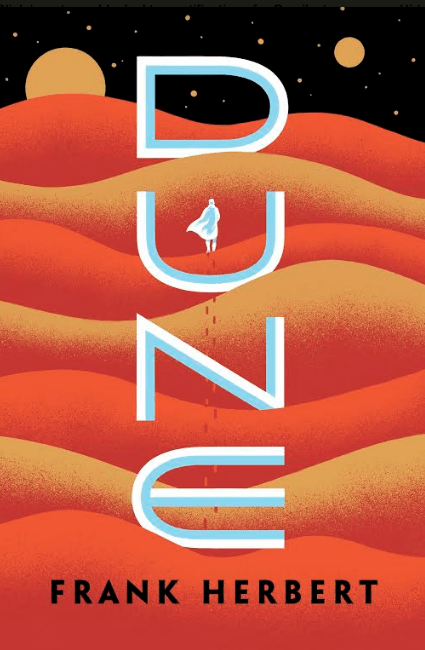
Dune—Frank Herbert. Lauded as one of the best science fiction novels of all time, you’ve likely heard about the adaptation starring Timothée Chalamet and Zendaya set to be released later this year. Dune tells the story of Paul Atreides, heir to a noble family on the desert planet Arrakis, who is tasked with ruling the desolate land and safeguarding the melange—a drug that is highly-coveted for its abilities to extend life and enhance consciousness. When Paul’s family is betrayed and destroyed, he goes on a journey to avenge his family and bring to fruition humankind’s most ancient and unattainable dream.

As an added perk for those looking to escape in the barren deserts of Arrakis, the Dune series contains many prequels and sequels written by both Frank Herbert himself as well as his son, Brian Herbert. For a complete list of the books in the Dune series (both novels and short stories) in chronological order, check out the Dune website here.


A Darker Shade of Magic—V.E. Schwab. For those who have recently read The Invisible Life of Addie LaRue and have fallen in love with Schwab’s magical writing, I’d draw your attention to her older fantasy series, A Darker Shade of Magic. Schwab crafts a world of four parallel Londons: Red London, where magic and life are celebrated; Gray London, a poor land without magic; and White London, a city slowly losing its life force due to constant magical warfare. As for the fourth London, Black London, nobody speaks of it anymore. Almost nobody can travel between the Londons, as the magicians capable of teleporting between the worlds (the Antari) are all but extinct. One of the last remaining Antari, Kell, acts as a messenger between the Londons—as well as an unofficial smuggler of valuable artifacts, a side gig that often gets him into trouble. His misadventures cause his path to collide with Delilah Bard, a cutpurse looking for adventure.

The Shades of Magic trilogy, while not as well-known as some of the other series on this list, is also slated for a film adaptation in the (hopefully) near future by writer Derek Kolstad.


Outlander—Diana Gabaldon. Outlander follows Claire Randall, a former British combat nurse, as she returns home from the war in 1945. While on a second honeymoon with her husband, she walks through a standing stone in one of the ancient circles of the British Isles and finds she is suddenly an outlander in a war-ravaged Scotland in the year 1743. As Claire attempts to navigate this violent world, she finds a companion in the young Scottish warrior Jamie Fraser. As their lives become more closely intertwined, Claire finds herself torn between two different men from two irreconcilable lives.

The Outlander series is currently eight books long, with a ninth set to be released sometime this year and a tenth promised after that. The series has also been adapted into a TV show, with 12–16 episode seasons for each book. The show just aired its fifth season—based on The Fiery Cross—last year, and has been renewed for a sixth and seventh season.

Real Life Magic

Reflecting on Maggie Steifvater’s The Raven Boys

As an avid book reader, I’d never been able to pick a favorite book. It had always felt like this unimaginable, impossible choice, like a mother picking her favorite child. I’d had favorites, of course—books I more than enjoyed (rated five stars on Goodreads enjoyed), and books that were quick to come to mind when asked for recommendations. But ask me for my favorite, my top pick, my if-I-were-stuck-on-a-deserted-island-and could-only-have-one-book-to-read read…I’d have nothing. So, to say that Maggie Steifvater’s The Raven Boys snuck up on me would be an understatement.

I first discovered The Raven Boys through Tumblr in 2015. My dashboard had been full of bloggers reposting quotes and character art and fancasts, all for a series that I’d never even heard of before. With such a dedicated fanbase that had seemingly come from nowhere, I’d decided to give it a try and bought a copy…

And didn’t like it.

Which sounds crazy, I know, for a book I’m claiming to be my favorite book. Shouldn’t it have been love at first page? But it took a little longer than that for me to start feeling the magic that Maggie had been building up to in those beginning chapters. In all honesty, it took me until about halfway through the book (roughly 200 pages in) to decide that it was something worth continuing. Once I got there, though—once it clicked—I was all in, devouring books one through three in a little more than two weeks. 

Looking back on it, what I considered to be slow pacing—my biggest issue with the beginning of the book— was actually careful building. There’s five characters that make up Blue and her Raven Boys: characters who’d been complete and utter strangers to one another in the beginning of the book. Characters that are so fundamentally different from one another, each with such different dynamics, personalities, backstories—if Maggie had simply thrown them together in the beginning, what would’ve been sacrificed were the moments that made them come to life before our very eyes. The moments that slowly but surely guaranteed that before you even realized it, you too had become part of the group (affectionately referred to by fans as the Gangsey).

More than Maggie’s ability to create such strong individuals, The Raven Boys truly does have something for everyone: romance, history, friendship, adventure, magic…but a different kind of magic than I’d ever felt before. 

Other fantasy novels, such as Harry Potter, make magic feel like real life. Like at any given moment, we too could receive our Hogwarts letters and be whisked away to a world of patronuses and magic wands and talking sorting hats. But The Raven Boys makes real life feel like magic, and that’s not something you feel by picking just any book off a shelf. It wasn’t even a distinction I was aware could be made until I felt it for myself. Don’t let the small town setting fool you: there is magic to be found in Henrietta, Virginia. Just maybe not in the places you’d expect.

Literary Event: Megan Whalen Turner in Conversation with Shannon Hale

Join Megan Whalen Turner, author of the New York Times bestselling Queen’s Thief series, and Shannon Hale, author of Kind of a Big Deal in conversation virtually on April 8th at 5:30pm.

Turner’s long-awaited Return of The Thief marks the conclusion of a twenty-years-in-the-making story of thief Eugenides. Hale has published over 30 books including the fantasy novels The Goose Girl and Book of a Thousand Days.

This event, hosted by Changing Hands Bookstore, has free admission tickets plus ticket and book bundles that are still available! For more information, and to register for this event, visit the Changing Hands Bookstore site here.


Location: Online

Date: Thursday, April 8th, 2021

Time: 5:30 p.m. – 6:30 p.m.

Price of Ticket: Free (with optional book and ticket bundle available)

What I Learned About Misogyny Through Reading The Phantom Prince: My Life With Ted Bundy

Elizabeth Kendall’s The Phantom Prince: My Life With Ted Bundy recounts her long-lived romance with one of America’s most prolific serial killers, Ted Bundy. The firsthand account is terrifying, but not for the reasons you might think. Elizabeth doesn’t spend time detailing the killings themselves, but instead tells the story of Ted Bundy from her perspective: that of a lover. Haunting is the tale, as she slowly realizes that a person she loved and trusted was capable of such horrendous crimes.

However, upon reading this novel, there was a component I found to be far more chilling: the power that Bundy held as a man in the 1960s and ‘70s, that allowed him to more easily manipulate his relationship with Kendall. In turn, she was led to believe her instinct was wrong, which manifested in her strong feelings of guilt for suspecting him of murder. 

First, Bundy was able to begin to manipulate Kendall by agreeing to marry her, only to break off the engagement numerous times. Even as he began to betray her trust and pursue affairs with other women, she was coerced into believing he was going to marry her. This was especially important given the context of the times, because she was pressured into marriage by both her peers and parents. This allowed Bundy to wrap her around his finger and keep her looped in for years, even after she had reason to end the relationship beyond reasonable doubt.  

In addition, Bundy used her naivete and lack of self confidence to feed her sense of self-doubt. In her novel, Elizabeth often expressed that she felt ugly—especially in comparison to other women with whom Bundy was involved. These ideas were enforced often throughout the relationship, as Bundy would often tell her she was the love of his life, only to tell her she was clingy and desperate days later. This vicious cycle continued to instill doubt into Elizabeth, and contributed to her beliefs that she was inferior to her male counterpart. 

Perhaps the most crucial example of misogyny in the novel occurred outside of Elizabeth’s personal relationship with Ted Bundy. Instead, it took place when she initially attempted to speak with detectives about her concerns regarding Bundy’s involvement in local murders and kidnappings. Despite the evidence Elizabeth provided, she was often written off by male detectives as a ‘crazy’ girlfriend who was accusing her partner of a crime without any form of evidence. This, however, proved to be wildly untrue, as Bundy was eventually convicted of all the crimes Elizabeth tipped off detectives about. Even more disturbing is the fact that the male detectives seemed more concerned with Kendall’s sex life with Bundy than they were about her thoughts on his involvement in the crimes themselves. This was, without a doubt, one of the most striking examples of misogyny in the novel.

In conclusion, I feel that Kendall’s novel was very important, even in today’s political climate. Although her suspicions may have been taken more seriously in the present day, there are still parallels due to the leverage Bundy took advantage of by being the male in the relationship, and the lack of influence Elizabeth had over detectives because she was perceived as a woman with little self-confidence. The Phantom Prince is a worthwhile read for those who are seeking to reflect on gender roles and their unfair impact both within personal relationships and outside them.

Elizabeth Kendall, Getty/Netflix via esquire.com

Book Review

A Taste of Honey by Kai Ashante Wilson

Publisher: Tor.com
Genre: Fantasy
Pages: 160
Format: Paperback
Buy Local
My Rating: 4.5/5 stars

Summary

In this queer fantasy romance, Aqib bgm Sadiqi, son of a lesser noble in the court of Olorum, falls hard for Lucrio, a Daluçan soldier in the city as part of a trade delegation. Their love burns quick and bright, both knowing that each moment together is precious. All too soon the treaty will be signed, and Lucrio will be called back home. But they must also be careful, for the religion of Aqib’s forefathers does not approve of their union.

While kings and gods negotiate the future of their nations, Aqib and Lucrio negotiate their own futures in a treaty no less monumental for all that it defines—not relations between kingdoms and empires, but only between their two hearts.

Thoughts

The wonderful thing about short books is that you can read them in one sitting, and ever since Tor.com decided to start publishing novellas (one of the most underappreciated literary forms, in my humble opinion) I’ve been on the hype train.

A Taste of Honey is Wilson’s second novella from the imprint, set in the same world as his debut The Sorcerer of the Wildeeps. Tonally, however, the two books could not be more different. Sorcerer was a tour de force of experimental fantasy: a traditional sword-and-sorcery story with a non-linear narrative structure, and a masterful use of layered, naturalistic dialect. Imagine my surprise upon picking A Taste of Honey to discover an aching summer romance, full of queer longing and forbidden love.

Honey is in many ways a more casually approachable work than Sorcerer. This was a purposeful decision on the part of Wilson, who wrote in his essay “A POC Guide to Writing Dialect in Fiction” that “Many people won’t read even gorgeously written dialect—cannot, in the first place, perceive the beauty in it.” Therefore he toned-down the dialect in his second work, though he notes that Honey is still “deeply although subtly spiced with it.” His experiments with form, on the other hand, have been—if anything—heightened. The warp and weft of interwoven past and present give the book an almost dreamlike quality, imbedding the reader into a diachronic character study of Aqib bmg Sadiqi.

Aqib’s personal turmoil takes center stage in Honey. I’m not ashamed to say this book made me cry as Aqib’s thorny relationship with his family tore its way through my heart. (Don’t worry though, Ashante knows better than to violate romance’s sacred trust of the happily ever after).

And Lucrio—sweet Lucrio—is just about the best Prince Charming I’ve ever encountered in print. If you fall hopelessly in love with storybook characters (as I do), be prepared to go head over heels for this strong and gentle Daluçan soldier.

I recommend this book whole-heartedly. You would be hard pressed to find a more intimate portrait of tragedy, romance, and longing in a smaller package than A Taste of Honey. Come spend a chilly winter evening warmed by love and the light of the Olorum summer sun.

6 Podcasts for Aspiring Authors

Podcasts are quickly growing as one of the most popular online storytelling mediums. One genre that has developed (thank the book gods) are ones that inspire, encourage, and inform you about the ins and outs of the writing world and help jumpstart your creativity. Below, I’ve compiled six amazing podcasts for writers who hope to one day share their creations with the world—or maybe even just their closest friends. These podcasts share everything from ways to make that story just a little extra special to the best ways to get a story published, giving you insider tips and tricks for whatever writing journey you’re on. I encourage you to check these ones out anywhere you get your podcasts (Spotify, Apple Podcasts, and Google Podcasts, just to name a few), and to explore what other book-ish podcasts are out there.


88 Cups of Tea—Yin Chang. 88 Cups of Tea is a great podcast if you’re looking for that “just sat down with my friend that gives the best advice while drinking a relaxing chamomile tea” vibe. I recommend this podcast for anyone who is looking to find out more about crafting advice, lifestyle habits that nurture creativity, and overcoming rejections in a gentle, encouraging delivery. This nurturing and supportive environment is great for any writer that might be scared to take that first step into the writing community. Don’t worry, the host Yin Chang will be delighted to have you, and already has a cup of tea waiting.


Write or Die—Claribel A. Ortega and Kat Cho. If you’re more of a tough-love-gets-the-job-done kind of a person, the Write or Die Podcast hosted by authors Claribel A. Ortega and Kat Cho will definitely push you outside your writing comfort zone by spilling all of the dirty, insider secrets of what it actually takes to become an author. The authors take you through the many challenges of what it takes to get published—time, energy, thousands of rejections, and many, many tears. However, they also talk about how many authors pushed through that and are now living their dreams. This podcast answers the question: Do you have what it takes to become an author?


Pub(lishing) Crawl—Various Authors. Pub(lishing) Crawl is led by a group of authors and industry professionals who dive deep into all things “reading, writing, books, and booze.” You get an insider perspective on industry secrets such as crafting a pitch, characters, publishing relationships, and many other techniques that publishers are specifically looking for. You know how you’re supposed to do a crazy amount of research on the company you want to work for? This podcast takes all the guesswork of knowing what publishers want and simply tell you the nitty-gritty inner workings of publishing companies.


The Happy Writer—Marissa Meyer. I may be a little biased on this one, but The Happy Writer with Marissa Meyer—my favorite author, by the way—is one of my go-to podcasts. It is by authors for every writer, whether pro or beginner. Meyer and her guests join together for a fun chat about rejection, imposter syndrome, writer’s block and how to overcome all of it so that you can be…a happy writer! This podcast is great for talking about how writers can bring more joy to their writing process. Not only should writing be about getting published, but also about releasing stress, imagination, and writing about what makes you inspired.


Helping Writers Become AuthorsK.M. Weiland. WARNING: Information Overload! K.M. Weiland has a straightforward, no-nonsense kind of attitude that is perfect for an information dump about “summoning inspiration, crafting solid characters, outlining and structuring novels, and polishing prose.” She educates her audience about writing and editing something that is good enough to see the light of day. The name of the podcasts speaks for itself, and anyone who listens to this will gain helpful knowledge about making your creations the best they can be.


Deadline City—Dhonielle Clayton and Zoraida Córdova. Sit down with Dhonielle Clayton and Zoraida Córdova to talk about things they’ve experienced in the time they’ve published 40 books. This podcast is incredibly fun as these New York City–based authors talk about “YA fiction, editing, reading reviews, and burnout.” Think of them as your two older sisters/best friends who just want the best for you and your writing endeavors. This is what I imagine each time I listen to them talk about love triangles or Hollywood adaptations of books. They’re young, fun and honest, but still know a thing or two about what lies beyond the industry curtain.

Book Review

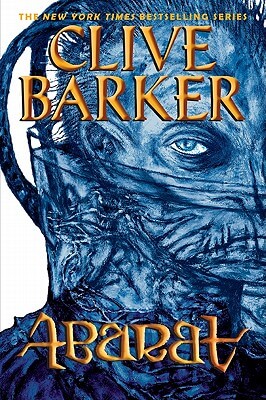
The Abarat Series by Clive Barker

Publisher: HarperCollins
Genre: Fantasy
Pages: 528
Format: Paperback
Buy Local
My Rating: 5/5 stars

Summary

Candy Quackenbush is sick of her life. She lives in Chickentown, the world’s most boring town, her father is a loudmouth drunk, and everyone except her soft-spoken mother views her as a freak. One day, however, Candy finds herself literally swept away by the magical sea to a place called the Abarat. The Abarat has 25 islands and each one is frozen at a specific time of day—for example, on one island the time is constantly midnight—and each island is filled with extraordinary creatures. Thrust into a world of magic and adventure, Candy is definitely no longer bored. However, Christopher Carrion, the fearsome prince of midnight, is dead set on capturing Candy by any means necessary. But why? What does the Prince of Midnight want with an ordinary girl from Chickentown? And furthermore, why is Candy so drawn to the Abarat?

Thoughts

Abarat is one of the most unique fantasy series I’ve read in some time. Rather than having traditional fantasy creatures populate the Abarat, Clive Barker filled the entire series with never-before-seen creatures. My personal favorites are John Mischief, a man with large antlers that has eight additional heads hanging from them also named John; and Squbb and Squiller, two tiny squid-like creatures that, when placed on your head, serve as binoculars. The introduction of these new creatures is aided by Clive Barker’s inclusion of elaborate paintings and drawings of his creations. If you’re considering reading this series I would highly recommend getting a copy that includes his art. Even though they are slightly more expensive, it is completely worth it. His artwork can only be described as eerily enchanting, and that, combined with the fact, this is the first time these creatures have ever been seen, it really allows you to relate to the wonder that Candy feels.

Speaking of Candy, she is a wonderful female protagonist. I often find that female characters in fantasy can sometimes be shoehorned into either being the damsel in distress or the ‘not like other girls’ archetype that completely rejects and looks down upon anything feminine. Candy Quackenbush subverts both of these effortlessly. She is a strange girl who is delighted to have found the Abarat and, despite its many dangers, is unafraid to rush headfirst into the unknown. She is also fiercely clever and kind, often helping those she comes across without a second thought. That being said, the author did not forget to give her flaws, and her fearless nature often leads to her attracting unwanted attention and putting herself into danger. Overall, she is an exceptional protagonist that I absolutely adored throughout the three books.

The most fascinating aspect of Abarat is how the book handles the themes of darkness and light. As stated before, each island on the Abarat is stuck in a particular time period, and throughout the book there is a prejudice towards the people and creatures that exist in the darkness. At first, we as the reader agree with these prejudices—especially since the creatures from the night islands tend to be horrifying—but as the story continues, we come to understand that looks can be deceiving. The creatures of darkness are fully capable of sincere love and heartbreak, while the creatures of light are also fully capable of unspeakable cruelty. Without giving too much away, this trilogy succeeds in having both an impressive villain redemption arc and a reverse arc where a beloved hero is revealed to be a bitter monster.

Going off of the themes of light and dark, Abarat is definitely not afraid to get exceptionally dark. After all, one of the characters keeps their pickled nightmares in a glass collar that they wear around their neck to remind them to never love again! The feud between darkness and light leads to many horrific acts being perpetrated by both sides—not to mention the dangers that eventually come from Chickentown once they learn of the Abarat. This book, though technically meant for all ages, does not shy away from death and suffering, and fully embraces the complexities of those themes.

With all my gushing about this series, you may wonder if there is anything negative I could possibly say about it. Unfortunately, there is one issue that may deter readers, and that is how the series has ended—or rather, how it refuses to end. Abarat is supposed to be a five-book series, but since the release of book three Abarat: Absolute Midnight in 2011 there have been no new books in the series. The author still occasionally posts about completing the series, but aside from that, there has been virtually no news. While I definitely do not regret reading this series I would warn those who don’t like cliffhangers that the final book leaves plenty of plot points up in the air. Despite this shortcoming, I honestly couldn’t bear to give this book any less than five stars. Even though I may never know how it ends, I still consider it one of my favorite book series and I cannot wait until the day I can finally read the last two books.

In summary, the Abarat series is absolutely fantastic. Clive Barker is an incredible author and the effort and care he put into every aspect of this series shines through. While I may never get to see the end of Candy Quackenbush’s adventures in the Abarat, I will always be fond of the fascinating three books I was able to read. I fully recommend this book to fantasy readers of all ages.