Every year thousands of readers across the nation celebrate the rebels of literature during Banned Books Week. September 26th–October 2nd marks the week for 2021, and the current list of books can be found here. These writers join the distinguished group of storytellers who have dared to tell the tales that invoke deep thought, invite change, and incite social justice.
Every year the list grows longer and longer as newer writers add their message to the mix. Here at The Spellbinding Shelf, we appreciate these writers’ ability to freely express themselves while challenging the status quo and pushing boundaries. Check out some of our staff’s favorite picks.
Staff Writer Paul Stanton
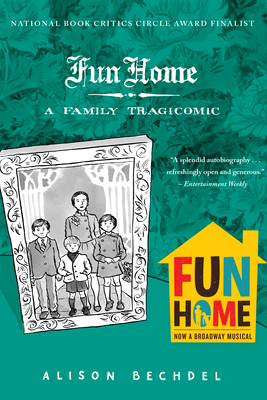
My favorite banned book is Alison Bechdel’s Fun Home. A non-fiction graphic novel about Bechdel’s childhood relationship with her father, Fun Home is one of my favorite memoirs, but it has often been challenged and banned because it deals with the queerness of both Alison Bechdel and her closeted father.
The Comic Book Legal Defense Fund has an excellent legal history of the challenges against the book here. Bechdel is famous for her comic strip Dykes to Watch out Forand for coining the “Bechdel-Wallace Test”—a feminist media criticism tool.
Editor-in-Chief Sharon Enck
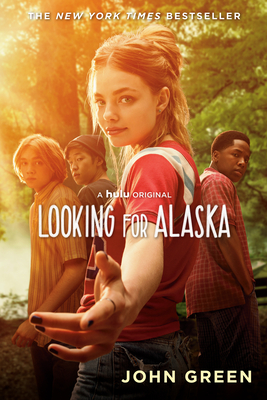
While some of my favorite banned books are classics such as The Handmaid’s Tale and Fahrenheit 451, I have recently added a new favorite. John Green’sLooking for Alaska is a heartbreaking tale of grief, and the search to find one’s self. It has been banned for being too sexually explicit (a scene describing oral sex) as well as offensive language and drug/alcohol use.
Green, whose talent lies in tackling the complexity of young adult lives, responded to his challengers, “If you have a world view that can be undone with a novel, let me submit that the problem is not with the novel.”
Staff WriterLauren Kuhman
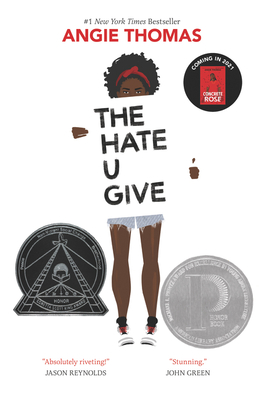
I think there can be a perception that banned books are a thing of the past but books, articles, and the written word are constantly being censored. One of my favorite books is Angie Thomas’ The Hate U Give. Published in 2017, the young adult novel follows a 16-year-old Starr Carter as she witnesses the murder of her best friend Kahlil in a police shooting. The novel addresses police brutality and racism and was banned by school officials in Katy, Texas for “pervasive vulgarity and racially-insensitive language…not its substantive content or the viewpoint expressed” (as cited in Gomez, 2018). However, the book was eventually reinstated (with the caveat of needing parental permission to check it out) when a local student petitioned for the book’s return.
Managing Editor Jade Stanton
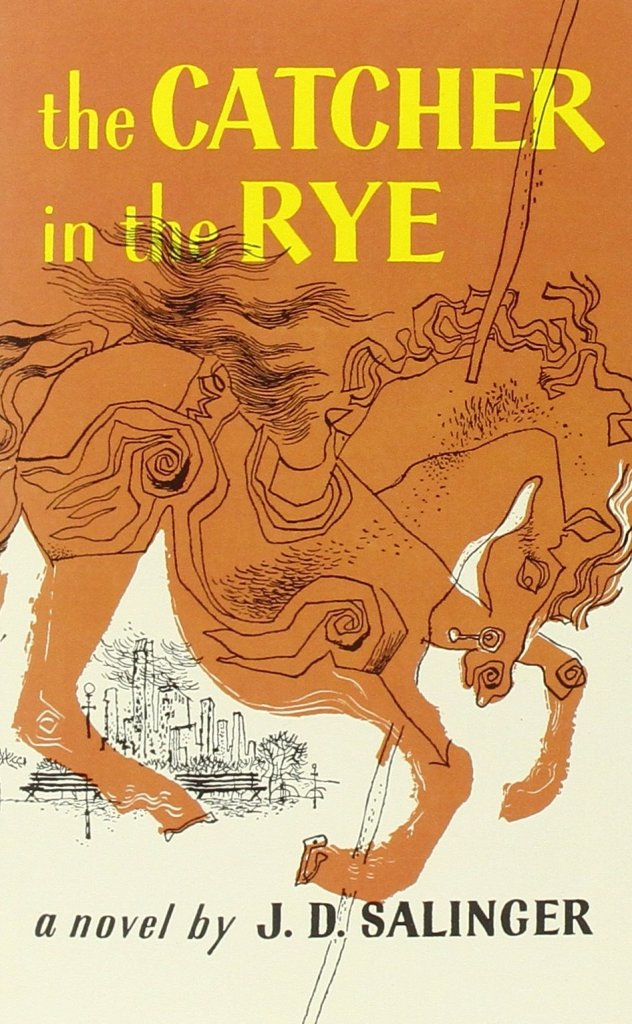
While there are many great classics that have found their way to the banned books list, my personal favorite is J.D. Salinger’s The Catcher in the Rye. This well-known novel follows Holden Caulfield on his two day trip home after being expelled from prep school. Throughout his journey, Holden rails against the phoniness of the adult world and the inevitable corruption that comes from being a part of adult society.
This book is often banned and challenged for its adult themes—namely cursing, alcohol abuse, and sex. It strikes me as especially ironic that a book about preserving innocence while becoming aware of the harsh realities of the world is often challenged and considered inappropriate for high schoolers. Despite its adult themes and controversies, The Catcher in the Rye is lauded for its relatability among high school audiences.
Rebellious writers and readers of the world unite on this last day of Banned Books Week!
Publisher: Gallery Books Genre: Fiction Pages: 320 Format: Paperback Buy Local My Rating: 5/5 stars
Summary
Still Alice is a story about Alice. And her family. And her diagnosis of early onset Alzheimer’s disease.
Alice, a happily married college professor with a family, is only fifty years old when she develops the neurological disease. She begins to forget things, to lose her memory, and to experience cloudy thinking.
Alice’s story is about her struggles and triumphs in dealing with the disease and how it feels to navigate the heartbreak.
Thoughts
Every portrait is really a mirror for others to see themselves in. Still Alice is not a story about Alzheimer’s; it’s a story about Alice, her family, her career, her life, and also her struggles with Alzheimer’s dementia. Research on dementia often tells a story that is essentialized to a medicalization, forgetting the person, the biography, the daily life. Says the book’s author Lisa Genova, “Five million people have Alzheimer’s, and each has family and friends who know them and care about them.” Alice’s story is a portrait for others with dementia or with loved ones with dementia—to see themselves in.
Still Alice serves as evidence for promoting a person-centered approach to researching dementia and caring for those with it—a holistic approach seeing the whole person and not just their illness. The story is unique in that it is told from the inside looking out, from the point of view of Alice, the person with dementia instead of being told by a caregiver or family member. It’s her story.
Lisa Genova has a Ph.D. in neuroscience from Harvard, and after she graduated, her grandmother was diagnosed with Alzheimer’s. Still Alice is the result of a rigorous research process. She emailed daily and met with people with early-onset dementia. “They let me in and shared with me their most vulnerable selves.” She shadowed neurologists and social workers, she watched neurological testing with patients, she role-played with doctors, and she volunteered with the Dementia Advocacy and Support Network.
Her research endeavors culminated into a novel, the best way she thought to reach people with the truths about dementia she had uncovered. Publishers initially rejected Lisa Genova’s manuscript, arguing both that it would only appeal to people with dementia and given her academia background, she should stick to writing non-fiction only. But fiction may be a powerful tool in creating empathy, especially for people with illnesses.
This novel offers a portrait of a person with a real illness and is a catalyst for developing empathy for people with those illnesses. Reading Alice’s story “can show us what it is like to be another person.” Fiction creates empathy for others through identification with a character, seeing yourself in their portrait. Because Still Alice is a story about Alice, what do you see in the mirror of Alice’s portrait?
Every day exciting new stories are released to eagerly awaiting, book-loving masses. This October is no exception, and while it is impossible to know just how good these books will be, there are several that have caught my eye. Watch your bookstore shelves this October, because these 7 books sound like they will be worth a read.
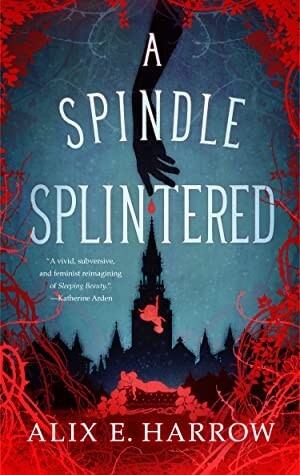
A Spindle Splintered—Alix E. Harrow. In the first book of her new series, Alix Harrow tells the story of Zinna Gray, a girl infected with an illness that kills all who have it before they turn twenty two. On her twenty-first birthday, her friend Charm decides to throw her a Sleeping Beauty themed party for her last birthday, complete with a spinning wheel to prick her finger on. However, once she pricks her finger, Zinna is sent to another world and meets another sleeping beauty who’s just as eager to escape her fate.
This story sounds like it will be a fascinating addition to the growing collection of fable retellings we’ve seen recently, and the author has said there will be some wlw themes included. Sleeping Beauty is a fairytale that has been largely forgotten within the retelling trend, so I’m looking forward to seeing this classic re-imagined.
Release Date: October 5, 2021
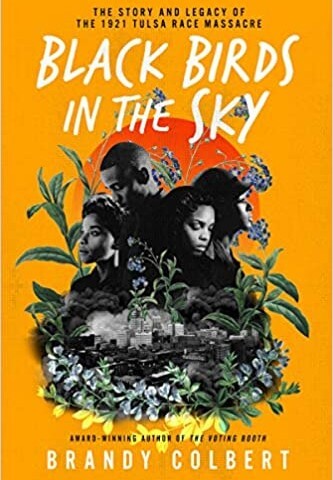
Black Birds in the Sky—Brandy Colbert. Black Birds In The Sky is a nonfiction book that covers the Tulsa Race Massacre when, in 1921, a mob of white people burned down a thriving black neighborhood. It strives to answer the many burning questions surrounding this wildly whitewashed blight on American history, and ensure that the injustices that occurred are remembered.
As someone who has only recently begun to learn about the horrors that permeate American history, this book immediately caught my eye. We have experienced a major racial reckoning this year, and it is incredibly important that we learn from our past as we move forward. This book will undoubtedly shed light on this shameful corner of American history, and will be an enlightening read for all.
Release Date: October 5, 2021
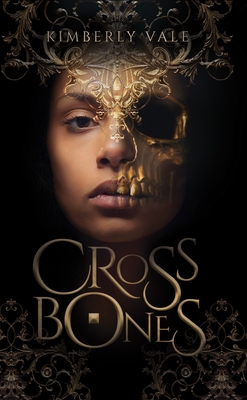
Crossbones—Kimberly Vale. The recent death of the pirate king marks the beginning of an ancient contest where three competitors will risk everything they have to win the coveted bone crown and island throne. Csilla Abado, a young captain who must face those who doubt her and her sister’s desire for her position; Kane Blackwater, a young man who wishes to escape the dirty trades he’s made to keep himself captain of his father’s ship; and Lorelei Penny, a young stowaway who wishes to avenge her mother. All fighting to win, but something is brewing. If they’re not careful, they’ll be nothing left of them to bury.
This book reminded me of Six Of Crows as it also has a multiple perspective story told by morally grey characters. This, along with the delightful grim pirate anesthetic, sounds like a delightful fantasy read this October.
Release Date: October 5, 2021
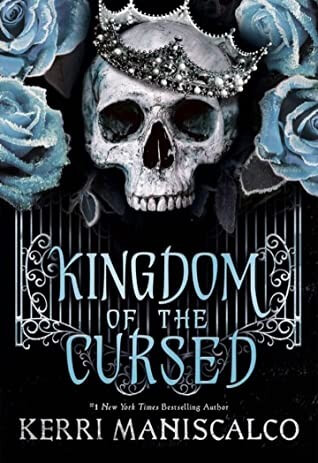
Kingdom of the Cursed—Kerri Maniscalco. The sequel to Kingdom Of The Wicked, Kingdom Of The Cursed follows Emma, having just sold her soul to become the queen of the wicked, as she enters the seven circles of Hell with the Prince of Wrath in the hopes of avenging her sister’s murder. She soon finds, however, that navigating the sinful world of Hell is dangerous. Between sinful princes, stunning palaces, and a mystery to be solved, Emma has her work cut out for her as she begins to unravel her past and the truth behind her sister’s death.
This is the second book in a series, but the plot sounded far too intriguing to pass up for this list. With its Cruel Prince vibes and hints of romance, this series sounds like it will be the perfect book binge this October.
Release Date: October 5, 2021
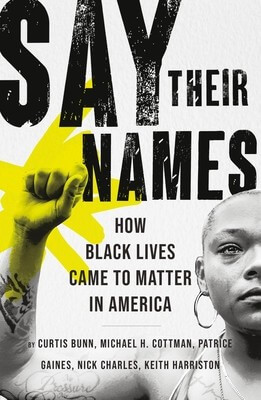
Say Their Names: How Black Lives Came to Matter in America—Curtis Bunn, Michael Cottman, Patrice Gaines, Nick Charles, and Keith Harriston. The summer of 2020 shook the nation—from the horrifying video of George Floyd’s murder to the ensuing protests, conversations regarding race and the disadvantages and prejudices that come with being black in America were widespread, and the message ‘Black Lives Matter’ was broadcast across the country. Now, five journalists detail what it took to get to this moment in history. From mass incarceration to over-policing to the protests in Ferguson, they detail the systemic problems in our society, how they came to the forefront of public consciousnesses, and, crucially, what to do now.
This movement is often misunderstood and misinterpreted by society. This due in large part to the general public’s lack of knowledge of the issues being discussed, as they aren’t commonly taught in school. This book is a must-read for people still struggling to understand the BLM movement and what must be done to move forward.
Release Date: October 5, 2021
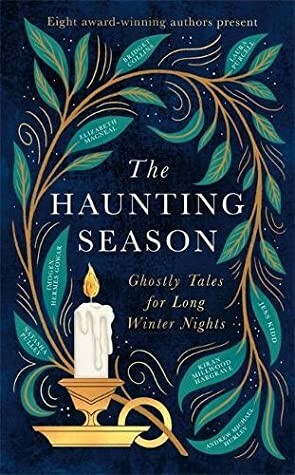
The Haunting Season: Eight Ghostly Tales for Long Winter Nights—Various Authors. Eight authors worked to create this collection of spooky tales all set in the dark cold of winter. From a girl frozen in death, to a bustling Christmas market, to an estate with a deadly secret, these tales will give you chills for two entirely different reasons.
With Halloween right around the corner and the Arizona heat in full force, these stories are perfect for creating a chilly, spooky atmosphere this holiday season.
Release Date: October 12, 2021
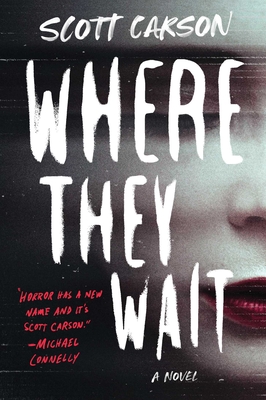
Where They Wait—Scott Carson. Nick Bishop, a down on his luck journalist, takes a job reviewing a new mindfulness app, Clarity. This app contains “sleep songs” that are designed to help the user sleep. The songs are haunting ballads sung by an unknown women and they seem to work perfectly—that is, except for the nightmares. Every night, Nick dreams of a haunting woman who calls his name and whispers to him. As his dreams start to seep into his waking life, Nick realize that the people behind Clarity are interested in more than just his writing.
Another perfect tale for Halloween, Where They Wait is perfect for anyone looking to get into the spooky spirit this October.
Publisher: Atria Books Genre: Non-fiction Pages: 256 Format: Paperback Buy Local My Rating: 5/5 stars
Summary
Have you ever procrastinated until the last minute and felt guilty? Or beat yourself up for missing a deadline? Maybe you lamented how “lazy” you’d been.
Dr. Price argues in their recently published book that the “lie” we’ve been told about laziness is wrong. What we call “laziness” might more compassionately and more accurately be described as burnout, rest, being overworked, not having access to resources, facing inaccessibility or discrimination, or not having your needs met.
With roots in Puritanism and capitalism, the “laziness lie” as Dr. Price calls it, makes us push ourselves past our abilities and into distress or even illness when our bodies beg us to rest.
Thoughts
Dr. Price drove themself to illness and burnout after overworking for years and years, constantly chiding themself for not working hard enough, not achieving enough, needing any rest or breaks. They share their story and also the stories of dozens of others finding themselves tired and guilty for it. You can see yourself in these stories because we all share in the “laziness lie.”
“We expect ourselves to achieve at a superhuman level, and when we fail to do so, we chastise ourselves for being lazy.”
But this book is permission to rest: it’s a comfort for burnout, it’s a treaty against so-called “laziness.” These sentiments are more valuable now than ever as we face unprecedented climate disasters, environmental collapse, political unrest, and a seemingly endless global pandemic. Things are hard. And yet we are expected to keep working, keep pushing, keep hustling like nothing has changed. We need this book.
Even as a reader already critical of capitalism and productivity, I learned from this book and saw so many insidious ways the “laziness lie” finds its ways into our lives. As radical as this book may be, my only criticism is that it’s not radical enough. Dr. Price urges we take sabbaticals, say no to side hustles, and drop extra responsibilities, but that’s not possible for everyone. Personally, living between paychecks, I cannot say no to work responsibilities no matter how burned out I may be. The arguments from Laziness Does Not Exist must be paired with activism and social action to change the structures that allow the “laziness lie” to exist and thrive.
“If your life has value no matter how productive you are, so does every other human life.”
Part memoir, part interview series, part activism, part self-help, Laziness Does Not Exist is permission to opt-out of the lie. Maybe you’re not lazy for missing that deadline—maybe you were burnt out after working through a year of a global pandemic. Maybe you’re not lazy because you waited until the last minute on a project—maybe you didn’t have access to the resources you needed. As Dr. Price encourages, it’s okay to rest. It’s okay to take a break. Maybe you’re not lazy after all.
Spoiler Warning: Mild spoilers for both the 14th century poem and the 21st century movie adaption of Sir Gawain and the Green Knight
(700) Years of Chivalry
Sir Gawain and the Green Knight is a 14th-century Arthurian Romance in verse written by an anonymous author known as the Pearl Poet. It tells the story of Sir Gawain, the youngest knight of the Round Table and the strange game he begins one Christmas Day.
A mysterious knight, green of both skin and attire, enters King Arthur’s court and challenges any who dares to strike him one blow with his great axe if, in return, they will allow him to strike them in the same manner at his Green Chapel one year hence. Gawain takes up the challenge and in a single blow severs the Green Knight’s head from his shoulders.
Unfazed, the Green Knight picks up his head and turns to leave. “At my Chapel, one year hence!” the severed head calls out as it’s body carries it out the door. So begins a tale of honor and doom.
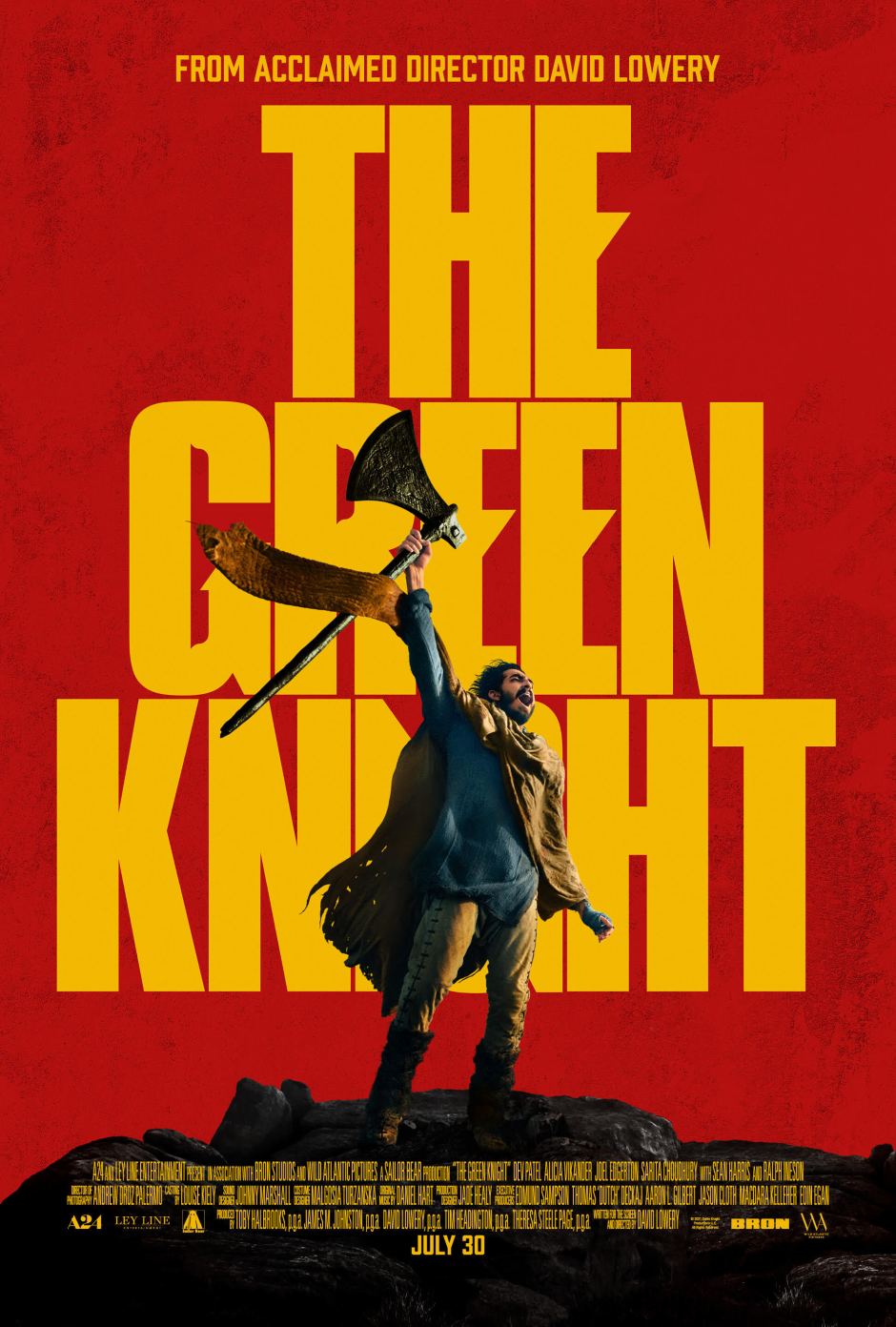
On July 30, 2021, David Lowery released The Green Knight, his adaption of the classic poem, starring Dev Patel as Gawain. As a massive fan of the poem and Arthurian literature in general, I was extremely excited for this adaption. Now, having seen it, I was struck both by how faithful and how remarkable different Lowery’s adaption is.
The Armor Makes the Knight
In the poem, before Sir Gawain departs on his quest to the Green Chapel, both he and his horse Gringolet are arrayed in finery. Among Gawain’s accoutrements are a damask doublet from Tharsia and golden spurs. Gringolet wears a crimson horse-breastplate (called a poitrel) studded with gold and a saddle fringed in golden tassels.
The Pearl Poet makes explicit that this finery is not merely fashion, but represents the inner fineness of Gawain’s soul. Gold in particular is a metaphor for moral purity.
This scene from the poem is lovingly rendered in Lowery’s Green Knight. Particularly beautiful is the prop design of Gawain’s shield. As in the poem, the shield has as its device a pentangle (five pointed star knot) representing the five knightly virtues, and on its interior a painting of the Virgin Mary that Gawain may look at for courage when he is sorely tested.
But there is one key difference in both this scene and the rest of Lowery’s adaption. While the Pearl Poet tells us from an omniscient perspective that the clothes represent Gawain’s true inner virtue, in the movie Queen Guinevere merely prays that the armor represent the truth of Gawain’s character, a prayer that will go unanswered. A scant handful of scenes later, the beautiful shield is sundered, splitting down the center of the Madonna’s face.
Gawain the Impetuous Fail-Son
Lowery’s Green Knight replaces the chivalric hero at the center of the poem with a rather self-centered character who Lowery describes as a “cad.” According to Lowery in an interview with SlashFilm, he cast Dev Patel to play his hero in part because Patel was so charismatic an actor that he could make the audience like his pathetic protagonist.
The Gawain of Lowery’s adaption is not even a knight at the film’s beginning, and spends most of the movie wandering aimlessly through a quest meant for a nobler, less human hero. Patel does a truly marvelous job of playing a living embodiment of imposter syndrome: an overgrown boy who should have been a knight but cannot even manage to be a man.
I couldn’t help wondering if this was how I would perform, if thrust suddenly onto a hero’s journey. Very few real people would walk a path towards certain death with the self-assured honor of the Pearl Poet’s Sir Gawain. To be a person, I think, is to be somewhat dishonorable, at least when compared with the hero of an Arthurian Romance.
Final Thoughts & Critiques
Lowery’s Green Knight is a more complicated and fraught retelling of an ancient Romance. I thoroughly enjoyed and was routinely surprised both by its detailed faithfulness to the original text and its stark deviations at key moments.
Perhaps my only criticism of the film was its choice not to explore the gay subtext of the poem. Sir Gawain and the Green Knight is a famous for its queer undertones: Gawain exchanges no less than six kisses of increasing intensity with one Lord Bertilak de Hautdesert as part of a strange game. In the film, this section of the story is much reduced in scope. And while this choice makes perfect sense in the context of Lowery’s overall shift in narrative focus, I hope to one day see another adaption which explores this fascinating element of the original work more fully.
Almost a year ago I was sitting in a staff meeting for The Spellbinding Shelf and mentioned that I had never read Harry Potter. *gasp* It gets worse—not only had I never read any of the books, but I had never seen any of the movies, paid no attention to any of the references, or experienced any of the fan culture. *double gasp* I’m not joking: the only thing I knew about the series was that it was about wizards. My fellow writers were astonished—a book lover and blogger who has never read one of the most iconic literary series of all time?!
It wasn’t necessarily my fault—my younger self enjoyed dystopian-themed novels and by the time Harry Potter was “a thing” I felt the time had passed for me to jump on that train. However, this staff meeting was the catalyst that pushed me to finally commit to reading the series. I jumped in headfirst and took one of the most risky literary gambles any reader will understand: buying the box set. Of a previously unread series. When I later described this new journey, my fellow bloggers were excited as well as interested: I was basically a case study of how readers still respond to the books without the pressure of pop culture and a now multi-billion dollar industry.
After seven months of reading I am here to give my reflection and opinion on the “Wizarding World of Harry Potter.” It is worth noting that while the series is surrounded in controversy due to J.K. Rowlings’ problematic comments in recent years, this reflection does not condone her actions in any way. Rather, I endeavor to share my experience as a reader with the story, for which I can say it is amazing.
Words cannot express my deep attachment, love, and appreciation for this series. I loved everything from the character development to the intricate spells. The experience was so immersive that from the first page I wished I lived in the world presented by the series and was thankful for the chance to imagine I was in such a world. There is too much to behold to accurately capture the seven book series that is Harry Potter, so I’ve decided to describe some of my favorite moments, thoughts, and reactions—including some choice texts I sent to my friend that I feel best captures my emotions during and after each book. So without further ado: The Brief Account of a Harry Potter Virgin’s Literary Experience. (Warning: spoilers ahead!)
Harry Potter and the Sorcerer’s Stone. A fantastic beginning to fuel the long and turbulent journey of Harry Potter. I felt all the emotions a reader and fan of the series should feel: absolute contempt for the Dursleys, the excitement and nervousness of Harry on his first day, and the promise of a journey filled with mischief and wonder. TheSorcerer’s Stone really helped introduce Harry’s thoughts and emotions which aids in the reader’s emotional attachment to the characters and their development. It is also worth noting that I shipped Ron and Hermione from the very beginning.
Harry Potter and the Chamber of Secrets. I liked TheChamber of Secrets because it had all the promise of what being a second year student feels like in any situation. Harry was more confident in his abilities and his joy in being a wizard emanated from the pages as he, as well as the reader, began to connect and discover more of his past. Additionally, what I love about the series as a whole is that while the books are individually read with a typical literary arc, the series does as well. This fluidity aids in the literary experience and creates a unique and immersive atmosphere any reader will love.
Harry Potter and the Goblet of Fire. Now, this book was insane in all the best ways. I could not believe it when Cedric died, and one thing I determined (and had reaffirmed throughout the rest of the series) was that authors are cruel, sadistic people who want their readers to suffer. After reading this book I texted my friend, “…it’s just playing with my emotions on a whole new level.” This comment adequately describes how much this book (and series) roped me in and how ignorant I was to the pain that would come.
Harry Potter and the Order of the Phoenix. On almost every page where Umbridge made an appearance, I wrote some form of grievance because I could not stand her character—it got to the point that I was going to throw the book at the wall. I really liked the Order of the Phoenix because of the leadership Harry, Ron, and Hermione assumed as well as the number of questions it began to ask and answer. Whereas TheGoblet of Fire was one of the last books where Harry experienced a “childhood,” TheOrder of the Phoenix began introducing the intricacies of the magical war in which Harry would take part. I was also so incredibly proud of Fred and George (two of my favorite Weasleys) for their amazing mischief and success—I love them so much. However, amidst this triumph, TheOrder of the Phoenix was the first book in the series that made me cry because of Sirius’ death. When that happened I had two chapters left and messaged my friend the following:
“THEY KILLED SIRIUS/NO/NO/NO/NO/THAT’S NOT FAIR/AGHAGGAHGGAA ITS NOT FAIR/UGHHHH WHY DO THEY TRY TO MAKE ME SUFFER”
Harry Potter and the Half-Blood Prince. Honestly, this book wasn’t my favorite out of the series but I can’t deny that it was incredibly needed. That might have been partly because “The Big Bang Theory” spoiled Dumbledore’s death or because I personally trusted Snape while Harry was still very much suspicious of his character. However, in the end I found myself doubting my own beliefs of Dumbledore’s trust in Snape and I became ever more worried about the fate of the wizarding world and Harry when the locket was found to be a fake Horcrux. I could once again feel Harry’s grief—as well as that of the others—and I knew in my heart that Harry, Ron, and Hermione would not be the same. On another note, I was extremely heartbroken when Harry broke up with Ginny but very happy when Ron and Hermione finally showed some flirtatious interaction. It became increasingly difficult to stay away from Harry Potter fan content so I went on a hiatus from most social media and television to avoid spoilers. Afterwards I noted:
“I’m a little worried about Harry too. He seems like he lost something inside him like happiness or I guess that childlike enjoyment and curiosity and it makes me hurt for him although considering he has to kill Voldemort I get why he’s anxious…”
Harry Potter and the Deathly Hallows. Nothing impacted me more in this series than the final chapters: when Harry walked solemnly into the forest during battle, I bawled. In those last chapters I had trouble reading the page (partly due to tears); the amount of emotion within the scene and the impact of being on Harry’s journey to get to this point hit me in full force. In the end, I was right to have faith in Snape, Ron and Hermione did end up together (yay!), and I was very pleased to see Harry and Ginny together. So in the end, at 10:48 pm on August 12, I texted my friend:
And those emotions continue today. I am so incredibly grateful for this journey and even more grateful that I could experience it (mostly) without spoilers and properly digest every theme and moment. While I didn’t get to grow up with Harry, Ron, and Hermione I will undoubtedly continue to experience their journey as I reread their stories and feel the impact that Hogwarts has left on my heart. Sometimes, ironically, words cannot express the feeling a book gives you—any reader will understand this impact and I am so lucky to have experienced this feeling. I know (as I have felt the last month) that I will continue to fangirl, obsess, and mourn the finishing of Harry Potter for a long time to come.
What if you could read a whole book in one day? In a few hours? In twenty minutes?
Are you interested in learning how to read faster? If so, let me introduce you to speed reading. Whether speed reading is even real is contested, and while there may be techniques you can try, the story and science of speed reading is well…complicated.
Speed Reading Is Real
There are some proponents of speed reading who argue that anyone can learn to speed read, that it’s a skill one can practice.
There are common techniques for learning to speed read. When most people read (even silently), they hear the words being said; this is called vocalization, and speed reading trainers will ask you to practice removing this voice. Doing so can increase reading speed. Other techniques include changing the ways your eyes move, including moving them bidirectionally (not just left to right but back and forth across alternating lines) or zigzaging diagonally across a page looking at chunks of texts rather than individual lines.
And there are numerous people who have practiced these techniques and celebrate advances in the speeds at which they read. Check out this person’s journey or this person’s. However, there are critics who believe that people learning to speed read aren’t actually technically reading.
Speed Reading Isn’t Real
Science tends to find a huge sacrifice that speed reading brings: decreased comprehension. The speed reading community joke about people who read War and Peace in only twenty minutes is that they know it’s “about Russia.”
Some speed reading experts and practitioners argue that reading speed and comprehension are inversely proportional, meaning if reading speed goes up, comprehension must always come down. There is a small window, however, of increasing speed to a certain threshold before one begins to sacrifice comprehension; that window differs for each individual.
Another criticism against speed reading are those who argue that it isn’t “real” reading, but rather just skimming. Skimming is “strategic, selective reading method in which you focus on the main ideas of a text.” Skimming isn’t technically reading—since, by design, it requires deliberately skipping large portions of text.
Speed Reading Is Real (Maybe)
After researching critics of speed reading, I was left with many questions because I was someone who believed they could speed read without losing comprehension. There is a site you can use that will test your speed and comprehension, and I was surprised by my results:
So I could read above average reading speeds with high comprehension. But does this mean that anyone can speed read too? Not necessarily. One issue is that people reading in languages that aren’t there first read slower, so speed reading is not accessible to everyone. A second issue is that speed reading might only be accessible to certain neurotypes or to some neurodivergent people. Research finds that autistic readers (like myself) are able to actually speed read.
So, maybe speed reading is real and possible but not in the ways we have thought about it previously.
What You Can Try
Can you actually learn to read 20,000 words per minute? Or read War and Peace in twenty minutes? Probably not. But whether you’re neurodivergent or not and willing to give it a go, here are what speed reading experts (and skeptics!) recommend based on real science that may actually work.
You can try software and apps designed to test or practice reading speeds that show one word at time in order to simplify eye movement. The following video is a quick example of such programs. The downside of these kinds of programs is that users tend to find success only in short bursts.
You can try skimming a text before reading it. While skimming and speed reading are different things, orienting yourself with text before reading may help you consume it both faster and with greater comprehension.
You can try reading a lot, especially new genres and styles. The more you read, the more you update your language banks, which can help you move through texts more quickly. Reading texts that are outside what you normally read can help familiarize you and assist in navigating the unfamiliar more readily.
So, it’s worth giving it a shot! Test your current reading speed and comprehension levels, practice the techniques, and see how and where reading faster might be of use to you in your life. The worst that could happen is you read a few more good books.
Publisher: Ruby Dixon, 2015 Genre: Science Fiction, Romance Pages: 188 Format: Paperback Buy Book My Rating: 5/5 stars
Summary
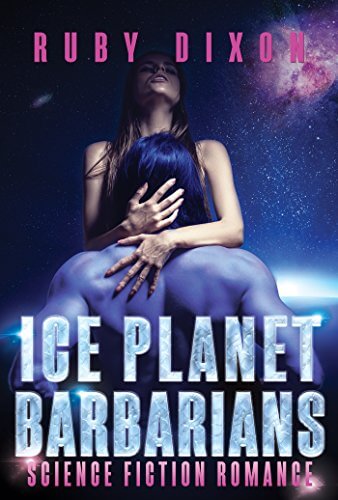
Georgie had a normal life here on earth. That is, until she was kidnapped by aliens who intended to sell her, and the other women they stole, as slaves. After a ship malfunction, Georgie and the rest of the women are dumped on an ice planet until the aliens can return.
Frozen and starving, Georgie sets out to find help and meets Vektal, a six-foot-tall blue alien with massive horns on his head and an instant attraction to her.
Together, they work to save the women from their captors and, maybe, fall in love in this spicy tale of fate and discovery.
Thoughts
The fun of Ice Planet Barbarians is the inherent lunacy of the story’s premise. The plot is insane, but Ruby Dixon’s willingness to embrace the madness allows the reader to do so as well, resulting in an adventure of a book where logic is abandoned and the reader can just enjoy the ride.
The book wastes no time getting to the story, opting instead to thrust the reader, along with the characters, right into the bizarre environment. This creates a fast paced and engaging narrative that draws you in almost as soon as you start reading. Not only that, it also forms a connection between the reader and Georgie as they are equally clueless to the world.
Speaking of Georgie, her and Vektal’s relationship is masterfully crafted. Ruby Dixon has a gift for creating romantic pairings that feel natural. Both Georgie and Vektal are remarkably similar and when paired together they strengthen each other, creating a positive and sincere romance. The book doesn’t shy away from steamy moments—in fact, it’s full of them—but they are well written and offset by scenes of casual affection and connection, creating a well-rounded romance that’s a delight to read.
While the book focuses on Georgie and Vektal, the other kidnapped women and the aliens are also well developed. Since this book is the first in series, each of the kidnapped women and aliens are fleshed out to some degree, to the point that observant readers may be able to determine the future pairings from their personalities alone. This not only sets up the future books, but also serves to create a really dynamic cast of characters who add another layer to the story.
Overall, I loved this book. It was a wild, outlandish romance with sincere and relatable characters. Ruby Dixon has a real knack for romance, and Ice Planet Barbarians is a perfect example of that. I have read six books in this series so far and, in my opinion, they only get better. If you’re looking for a racy romance, Ice Planet Barbarians is the book for you.
This year, for the first time in over ten years, I thought about not participating in the Maricopa County Summer Reading Program.
Normally, I would have no problem soaring over the program’s simple, 1,000-minute reading threshold. In 2020, I had nothing else to do with my time, so I read. In 2019, I was desperate for college preparatory advice, and I read. Before that, I had summer homework that occasionally involved reading 700 pages of Democracy in America—I was a shoo-in for the program. As a child, I would use the time my mom read to me before putting me to sleep as part of my minutes. In fact, I remember using a sticker book to log my time before the program was fully digital. For years, the summer reading program was part of my DNA. By the end of each summer, I would have read well over the requirements, and I would have my prize for completion: a free book shipped to my local library.
This year, however, I was tired. After two years full of literature and writing classes for both my degree in English and my newly added journalism major, I felt drained by the written word. Despite my love of reading and writing, the last few years were rough. I was coming hot off of a semester where I had read numerous student papers for my on-campus job, and I was knee-deep in investigations for my newspaper. With next semester’s schedule packed with 18 credits of English and journalism classes (in addition to some of my final prerequisites), I decided I had done my due diligence for the time being. I would read later, spending my precious summer months doing anything but looking at a book.
Instead of working on the completion of the summer reading program, I was on a reading hiatus. It seemed to be working well enough: I would write for my job, then watch a show or listen to music, distracting myself in a way that did not involve words. My brain felt nice and quiet, albeit a little empty.
The new summer plan went smoothly until my mother decided to move our massive bookshelf. The monstrosity is so large and full of so many books—we have attempted (and failed) to thin it out many times—that it is physically impossible to move without emptying it first. So my mother, reasonably enough, asked me to take out my share of books so we could move it.
Suddenly, I found myself staring at my old favorites: On Writing by Stephen King, Jane Austen’s Pride and Prejudice, and a Star Wars book called A New Dawn by John Jackson Miller that has been a longtime guilty pleasure.
Without making any promises to myself, I picked up A New Dawn and devoured it in two sittings. When I reached the last page, I was surprisingly disappointed that it was over.
The next thing I knew, I was back at my pile of books, digging for something that would take me far away from the struggles and burnout of the past year. I settled on a brief rereading of The Mysterious Benedict Society, a childhood favorite. This time, I pulled out my trusty iPhone timer so that I could keep track of my minutes. This reading quickly turned into me reading all four books of the series in one weekend.
Instead of being exhausted by the words, I was ravenous—and I could not have been more excited.
At this point, in mid-July, I’ve certainly exceeded the 1,000 minutes needed to complete the Maricopa County Summer Reading Program. More important to me, though, is that the feeling I’m chasing is not going away. I went to the library, bought a few books online, and am delving into a few fascinating nonfiction works that I never would have considered reading in the past. My mind is starting to think again, and I’ve even had the energy to work on writing for fun in addition to my job as a reporter.
Looking back on where I was a month and a half ago, I laugh at the thought that I could stay away from reading all summer. It’s okay to take breaks, but I know that sometimes you just need the right kind of push—and I also know that I have a bookcase and a steadfast summer reading program to thank.
I know what you’re thinking. “Who would choose to read a book based on a movie?!” Well, me! And hopefully after reading this defense, you will too!
It is well known that many novels are adapted into movies, but did you know that movies are often adapted into novels? They’re called novelizations.
What are novelizations?
A novelization is a novel derived from the story originally created for a film medium. Novelizations exist for many films ranging from Star Warsto a recent publication of Quentin Tarantino’s Once Upon a Time in Hollywoodto—my personal favorites—Alien.
Novelizations are often maligned: some people see them as hackwork, money grabs, or quickly produced junk. But I’m here to suggest to you that novelizations can be good, even very good!
“It’s always amusing to me, you take a book, say, To Kill a Mockingbird, throw away three quarters of it and win an Academy Award for best adapted screenplay, But if you take a screenplay and add three quarters of original material to it — which is a much, much more difficult piece of writing — well, that’s by definition ‘hackwork.’ And it’s much harder, having done both, to take a screenplay and make a book out of it than [to] take a terrific book and make a screenplay out of it.”
Alan Dean Foster, prolific novelization writer
Novelizations have existed for nearly as long as films. And before the existence of DVDs, VCRs, or even televisions in our homes, novelizations were ways that fans of movies could relive and enjoy the story again at home. They were a little souvenir to remind of you of the thrill of seeing Alien in theaters for the first time. But it’s 2021 now, so why do novelizations still exist?
Novelizations are good, actually!
They have more details, including deleted scenes or information that’s not in the movies. You can experience the same story you love in a deeper and more complete way. If you’ve wondered while watching Alien Resurrection why Larry Purvis’s chestburster grows so much slower than in others, the answer is explored in the novelization: he has a genetic thyroid dysfunction. This small detail raises more interesting questions in the Alien universe about the life cycle of the xenomorph and human disability.
They explore different angles than their movie counterparts. Because novelizations are derived, their writers do have some freedom in telling the story in a new way or even telling new stories entirely. Tarantino describes his recently published novelization of Once Upon a Time in Hollywood as “a complete rethinking of the entire story.” He explains, “It’s not just me taking the screenplay and then breaking it down in a novelistic form. I retold the story as a novel.” Alan Dean Foster says about writing the novelization of Alien, “As [a fan], I got to make my own director’s cut. I got to fix the science mistakes, I got to enlarge on the characters, if there was a scene I particularly liked, I got to do more of it, and I had an unlimited budget.”
They explore different truths. Novelizations tend to explore characters in more detail and give more individual attention to all characters in a story. We see new sides and nuances of the same characters. In particular, the novelization of Alien Resurrection gives the reader insider knowledge of smaller characters, especially DiStephano and Christie. You can see inside their minds and learn motivations never revealed in the movie. Even the main character, Ellen Ripley, is explored in deeper ways, including more tension on whether her loyalties are with the humans or aliens.
They can be more accessible for some people. In a novelization, you experience the story in different time. A two-hour film can be become a ten-hour novel—maybe experienced and read over weeks or months, giving you time to bask in the mythos. For some, films with flashing lights can be overwhelming, triggering, or impossible to watch, so a novelized version could be a preferred or necessary way to experience the story. Novelizations can be more accessible for people with disabilities, including those who have difficult focusing for the duration of a movie.
They let you linger in worlds you love. The different times you spend in a movie versus in a novel changes your experience of the story, letting you delight in a beloved story or franchise. The truth is: people who read novelizations tend to be the ones who loved the movies. As a huge fan of the beloved Alien franchise, it’s a joy for me to spend more time with characters I already know and love.
So, who would read a book based on a movie? Maybe you! Whatever your favorite movie, check out its novelization and enjoy the story you already love in a deeper, lingering, and more nuanced way.








 The Spellbinding Shelf