Author Interview with Novelist Stephanie Elliot

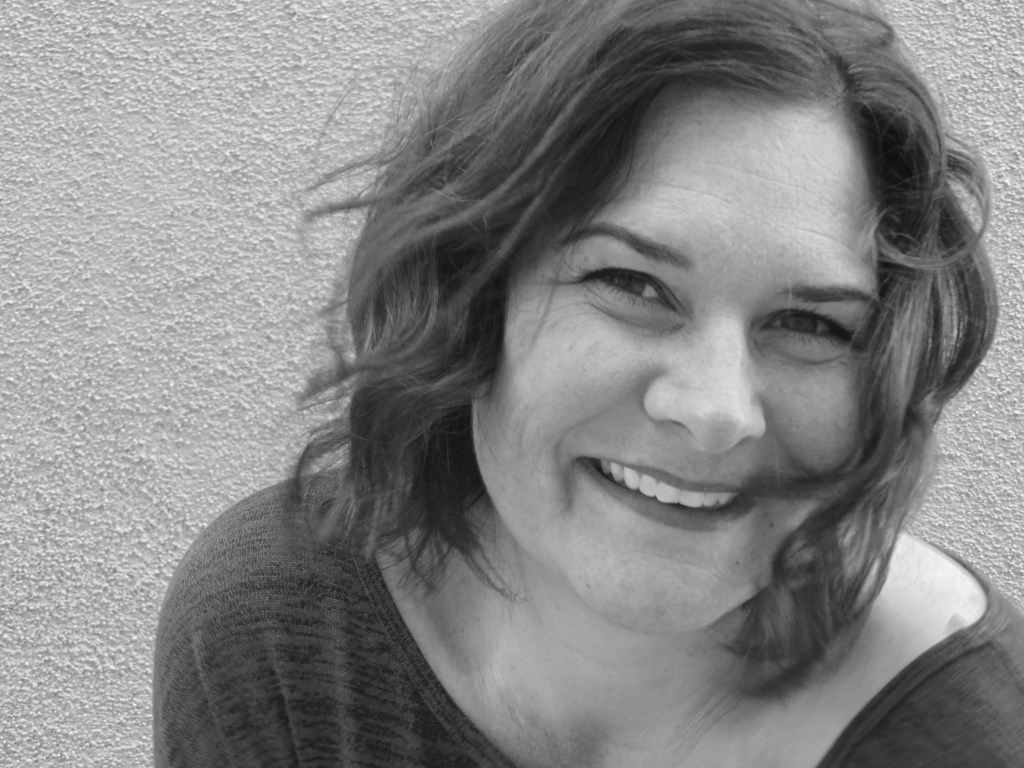
Meet Stephanie Elliot, local author of A Little Bit of Everything, and more prominently known for her recent novel, Sad Perfect. T/W, her novel is inspired by her daughter’s experience with ARFID (Avoidant/Restrictive Food Intake Disorder). I had the pleasure of speaking with her about the novel, her current read, and more!

  1. From what I understand, your novel, Sad Perfect, was written while your daughter went through treatment for ARFID. Where did the idea to write about the experience come from and how did it affect the way you handled the situation?
    Yes, I did write Sad Perfect as my daughter was diagnosed with ARFID. I didn’t anticipate ever writing a young adult novel; my others have been more along the lines of women’s fiction. But when she was diagnosed and in an intense therapy program, I spent a lot of time across the street at a coffee shop and started writing it. It was so therapeutic for me to write as I was dealing with certain feelings of my own as well.
  1. This novel is based on your real-life experience with your daughter. How did this experience translate to the novel? That is, how did you balance actual events and the fictitious elements?
    As for the balancing of fact with fiction—everything in the book that has to do with how ARFID affects the person and her family is true to what my daughter and our family experienced with her ARFID. However, there are many fictionalized scenes. The book might have been very boring without them. While it’s true that my daughter did meet a boy rafting on the Salt River, she didn’t have a long term relationship with him like Pea and Ben did. My daughter also did not get admitted to the pysch ward in real life. Some discussions in the book about ARFID (like the first meeting with Shayna, the therapist) are almost identical to the conversations my daughter had with her therapist in real life. I wanted to put a face on ARFID, to let others know about it and share the real aspects of this disorder, while also ‘inventing’ some other stuff to make it more interesting.
  1. Sad Perfect is actually your second novel and differs a bit from your first, A Little Bit of Everything Lost. Aside from your experience with your daughter, did anything else inspire this change?
    As I said above, I hadn’t set out to write young adult. I had written and self-published A Little Bit of Everything Lost and several other more adult books and had no plan for YA. My daughter was the sole inspiration for making the change to young adult novels. I had been stuck writing a couple other adult books and then when the idea of Sad Perfect came out, it just poured out of me and I couldn’t NOT write it.
  1. Going along with the previous question, how has your approach to writing changed over the years?
    I have a really really really HORRIBLE approach to writing. I don’t do it steadily. I wish I was more disciplined in my writing, but I haven’t written a big chunk of anything in a really long time. But I’m not being hard on myself. Other stuff has gotten in the way: family issues, now Coronavirus—but, I feel that when it hits me again, when I get a really good story idea and start it, then it will roll out of me. I just wait and anticipate that I will be able to do it again someday, hopefully soon!
  1. Do you have any ideas or plans for another novel at this time?
    Yes, I would like to write a novel about a teen boy with mental health issues and severe depression who overcomes a lot. That’s all I’ve got so far so I better start thinking or maybe if I start writing it, stuff will appear on the page! 
  1. What advice do you have to writers working towards being published?
    Connect with other writers in any way that you can. Ask them for advice. Sit down and write. Never throw away anything that you think is not good writing—you can delete it, but keep these ‘trashed’ scenes in a file on your laptop—it might inspire something later! Also, do the work. If you want to get traditionally published, you need to finish your book, edit your book, share your book with people you trust, write a query letter, find an agent who will then hopefully find you a publisher! Sad Perfect was about my fourth or fifth completed manuscript before I was traditionally published. It takes thick skin and a lot of work and a lot of rejection to become a writer. Anticipate and appreciate the rejections because they bring you closer to the YES!
  1. And lastly, we like to ask all of our featured authors to share their current read. Are you reading anything right now that you would recommend?
    I just read STRUNG OUT by Erin Khar which is an amazing and inspiring memoir about how she overcame addiction. And, I just got the advance copy of Emily Giffin’s THE LIES THAT BIND. I love, love, love everything Emily writes and usually drop everything in life to start her books when they come out!

I really enjoyed working and speaking with Elliot, she has a lot of wisdom to share! Prior to the COVID-19 closures, she was the Writer in Residence at Tempe Library, so definitely keep an eye out when things open back up! I highly recommend everyone read Sad Perfect if interested, it is deeply honest and beautifully written. You can purchase it from Changing Hands Bookstore here.

Edward’s Most Anticipated Sci-fi & Fantasy Reads of Fall 2020

Times might be strange right now, but the book publishing industry is still bringing forth promising reads. While the current moment likely has your TBR pile stacked to the ceiling, I say half the fun of being an avid reader is looking for future books to salivate over. With that in mind, and just needing a break for the stress of life moment-to-moment right now, I’ve curated a list of five science fiction and fantasy books that are forthcoming in the fall of 2020.


Beowulf: A New Translation, by Maria Dahvana Headley (08.25.20)

While August might not technically be the fall, that does not make me any less excited for this book! Maria Dahvana Headley is the author of The Were Wife, a modern retelling of Beowulf from the perspective of Grendel’s mother; and this new translation seems like it will be equally tantalizing. This translation is said to have an eye gear toward gender, genre, and history, and I can’t wait to revisit this classic tale through the scope of the twenty-first century!


Piranesi, by Susanna Clarke (09.15.20)

It is hard to believe that it has been sixteen years since Susanna Clarke’s debut novel, Jonathan Strange & Mr Norrell, was published! That book has remained in my heart since the first time I read it all those years ago, and is one that I go back to often. So, maybe I am being dramatic, but I feel like I have waited my whole adult life for Susanna Clarke to publish another novel. While Piranesi is said to be much shorter than Clarke’s debut, it does not sound any less enchanting. It is a tale of a man who lives in an endless magical house that contains countless corridors, an infinite amount of statues, and even an entire ocean, and is about a newfound truth turning his reality upside down.


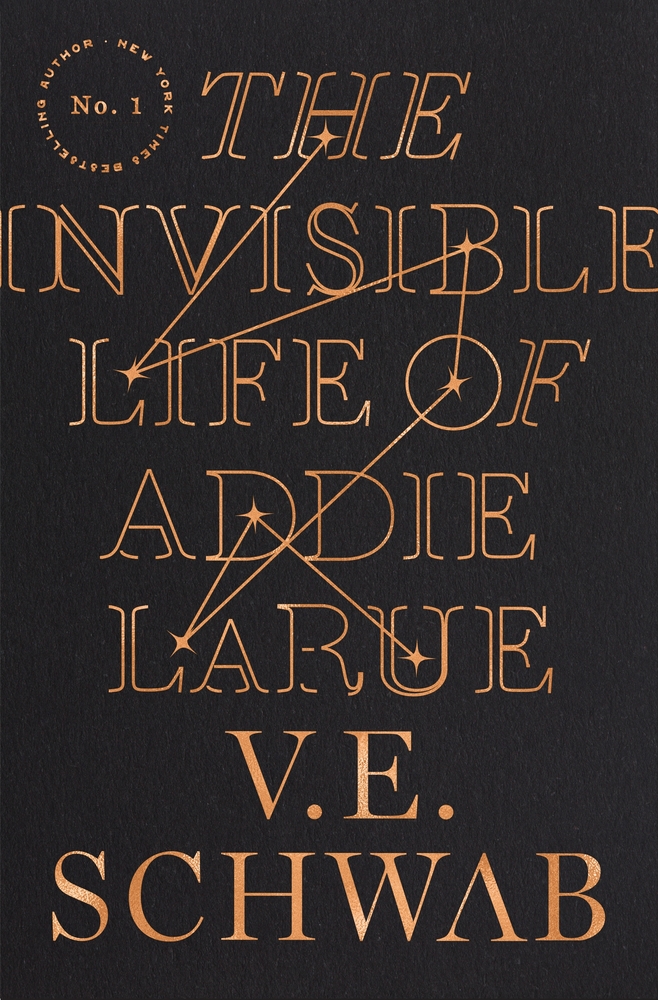
The Invisible Life of Addie LaRue, by V.E. Schwab (10.06.20)

Versatile author extraordinaire V.E. Schwab will be back this fall with her new adult fantasy book. The story is said to be about a young woman who trades immorality for being forgotten by everyone she meets. The young woman carries on this way for over three hundred years, until one day, a man remembers her name. I have never read anything by Schwab that did not have me instantly hooked, and this book does not sound any different.


The Conductors, by Nicole Glover (11.03.20)

Author Nicole Glover’s debut novel, from JJA Books, is about a magic wielding African-American couple in post-Civil War Philadelphia who use their powers to investigate a murder that the police won’t touch. Said to be a mash-up of The Dresden Files and Octavia E. Butler’s Kindred, this book combines elements of traditional fantasy, mystery, and history. I can’t wait to get my hands on it, as it combines some of my favorite things, and because the narrative sounds so exciting and fresh!  


The Rhythm of War, by Brandon Sanderson (11.17.20)

What would a list of forthcoming science fiction and fantasy novels be without the genre’s darling, Brandon Sanderson? The uber-successful author will be publishing the fourth installment of The Stormlight Archive this fall. Coming in at over one thousand pages, this book should keep readers busy, at least for a few hours. It is said to pick up with the human resistance taking on the enemy, only to find that the situation is a stalemate. From there, the war with the enemy develops into an arms race that begins to unveil secrets of the past. Sanderson can almost do no wrong, and I am sure that this book is going to be fantastic! 

Online Literature Resources for Staying at Home

So, we are in our homes. There’s no getting around that. While going outside in the sunshine is great, and I definitely enjoy a long, leisurely afternoon walk, a new free-time inspired exercise regime is unlikely to happen in my world. I much prefer to curl up in a cozy sweater on a soft bank of pillows with a cup of tea and a good book. I don’t often get a chance to do this, as many of us don’t. Our lives are busy, and reading for pleasure can become a luxury which falls by the wayside.

Right now, many of us are being given a moment of pause from the to and fro of our normal lives. While this can be scary and intimidating, it can also be a time for us to reconnect. We have a moment to rediscover those things about which we are passionate. For us bibliophiles and lovers of literature, that is books and anything to do with the books. With many bookstores and libraries closed, the normal venues where we get our fix seem out of reach. To remedy this situation, authors, publishers, and book lovers the world over are uniting to establish a strong online literary community.

Many bookstores are providing curbside and online shopping via web stores or social media. Changing Hands bookstore in Tempe and Phoenix will assemble a custom book care package tailored just for you or someone you love. This is just one of the many offerings being made by local bookstores—so be sure to check your local listings and see what’s available near you. Although live, in-person events have been canceled or postponed, book tours and public literary lectures are being moved to web-based platforms for home viewing. Libraries and online magazines are offering their archives for free. A simple web search will bring you hundreds of resources, at your fingertips, for your reading pleasure. Use this time of interlude and rekindle your fire for the written word! Here are a few links to get you started:

Literary Links

  1. https://www.quarantinebookclub.com/ – The Quarantine Book Club is a Zoom-based platform which hosts weekly author events. Their tag-line, “You’re stuck at home. Chat with an author,” pretty much sums up how it works. In the meetings, authors discuss their work and answer audience questions.
  2. http://www.gutenberg.org/ – Project Gutenberg is an online library with over 60,000 books in a wide-range of subjects. These books are free for download or online viewing.
  3. https://lithub.com/author/thevirtualbookchannel/ – Lit Hub’s Virtual Book Channel hosts live-stream author events, including interviews, literary festivals, and even book launches.
  4. https://electricliterature.com/ – Electric Literature is a nonprofit digital publisher whose website contains essays, criticism, and literary news. Along with this content, Electric Lit’s digital magazines, Recommended Reading and The Commuter offer short stories, novel excerpts, poetry, flash fiction, and graphic narrative.

For the Kids

  1. https://www.storylineonline.net/ – Storyline Online is a streaming platform which hosts celebrity actors reading children’s books aloud alongside colorful illustrations. Readers such as Chris Pine, Lily Tomlin, James Earl Jones, and Betty White bring children’s stories to life. The site also offers supplemental educational curriculum developed by educators with each book.
  2. https://www.weareteachers.com/virtual-author-activities/ – We Are Teachers virtual community has gathered its “Big List of Children’s Authors Doing Online Read-Alouds & Activities” here. Many of these events are available via social media, and accessible using your smartphone or other mobile device.

Book Review

Unabrow: Misadventures of a Late Bloomer

Publisher: The Penguin Group 
Genre: Nonfiction, Memoir
Pages: 249 
Format: Paperback
Buy Local 
My Rating: 4/5 Stars

Summary

What do aggressive facial hair, childbirth, an unhealthy obsession with the year 1993, and troll dolls have in common? Una Lamarche. Unabrow: Misadventures of a Late Bloomer is a hilarious collection of diary entries, observations, and convoluted graphics, some of which involve the correct way to use a public restroom.

Lamarche’s memoir tackles the most cringeworthy challenges of growing up female. Leapfrogging from one side splitting topic to another, and in no particular order, she takes the reader on a ride through the pitfalls of childhood, puberty, and even adulthood.

Lamarche recalls, with appalling and humorous clarity, her first-time experiences with drinking, sex, jobs-from-hell, and learning how to drive. As the book cover indicates this is “the book June Cleaver would have written if she had spent more time drinking and less time vacuuming.”

Thoughts

I am not sure which I did more of while reading Unabrow: laugh out loud or grimace. Anyone who has ever endured childhood, high school, or parenting will appreciate all the cringey and hilarious moments of this memoir. Lamarche is unapologetic, honest, and brash which makes for some entertaining stories.

Who wouldn’t identify with her obsession with the show Friends and the proclamation that she is the “Chandler” of her roommates? Or an apartment cleaning routine to the Led Zeppelin tune “Stairway to Heaven?” Then of course, there is the titular situation where Lamarche discusses her eyebrows, which, from birth, had joined to form a furry, face caterpillar. Her facial hair pact with her sister is one of those why-didn’t-I-think-of-that moments, and deserving of being the introduction to the book.

Despite my being slightly older than the millennial Lamarche, her stories are ones that any girl who’s ever memorized lyrics to an entire album, or has been dumped by their sixth grade friends can relate to. The random and chaotic format of the book just adds to its charm, and it was as if I was taking a peek inside Lamarche’s brain. As as a result there were some things, like the restroom graphics, that I can never unsee or forget!

Book Review

The Cheapest Nights: A Collection of Short Stories by Yusuf Idris, Translated by Wadida Wassef

Publisher: Penguin Classics
Genre: Short stories, satire
Pages: 181
Format: Paperback
Buy Local (Preorder)
My Rating: 4/5 stars


Published in Egypt in 1954, this collection of short stories captures glimpses of the lives of the Egyptian lower class, most of them based in Cairo. This compilation, which is to be published on June 9, includes a few stories from Idris’s other collections as well. Here, I’ve shared my thoughts on the three stories I found the most remarkable.

Summaries

The Dregs of the City —It all begins when Judge Abdallah loses his wristwatch. Being a textbook introvert and a man of routine, this minor inconvenience sends him into an introspective spiral where he contemplates his social awkwardness and general lack of success with women. But, he must find a wife before he is thirty-five (few aspects of his life are left unscheduled), so he doesn’t give up.

The narrative describes Abdallah’s misadventures with women in a jesting, almost O Henry-esque tone until it takes a sudden turn and we meet the dark side of the man that polite society knows as Judge Abdallah—a morally bankrupt person with no shortage of enthusiasm in judging others for faults in character, especially women. The story depicts in unapologetic detail the carnal urge to abuse one’s power that lurks in the best of us, and the pain of living with oneself after it’s been done.


Did You Have to Turn on the Light, Li-Li? —A priest forgets to end the morning prayer and leaves rows of men bowed in prostration for a long time. This is eventually written off as a joke and added to the annals of the neighborhood. But the narrative reveals the real reason behind the Imam’s lapse.

It goes back to when a young Sheikh Abdel Al is appointed as the Imam of the mosque in Al Batiniyya, where the people are generally intoxicated on opium and hashish throughout the day and go to bed at dawn, when he calls for prayer. But his real test appears in the form of temptation: a woman. When we covet something that we have no right to, we tend to blame ourselves less than we blame the thing itself. The story stealthily underlines that.

Having remained chaste and above impulses all his life, he sees her as the devil incarnate, even as he is drawn to her. Suddenly, he is very aware of his mortal flesh with all its weaknesses. He prays for divine intervention so that he may remain worthy of his position. His deliverance comes in a wave of poetic irony.


The Errand —In his youth, El Shabrawi traversed the length and breadth of Cairo as a city cop. But in recent years, he has been stationed out of town and he would give his life—his words—to go back to the city, if only for an hour. As luck would have it, a woman of unstable mental disposition is brought into the police station one day by her relatives and the need arises for a chaperone to take her to the asylum in Cairo. Predictably, El Shabrawi volunteers and, as no one else does, is given the responsibility of Zebeida.

But, it turns out that it is a little difficult to enjoy all the city has to offer with a woman in tow who is screaming and struggling to get away at every step. El Shabrawi is pushed to his limits as his patience is tested and as he dashes from one government building to another, caught in a web of bureaucracy. His release comes in an unexpected way. When it does, he is taken aback by his own feelings and subsequent actions. It is a story of human compassion written at a time when the subject of mental illness was treated with little sensitivity.


Thoughts

A writer who lived in a time and society of strict moral codes, Idris’s writing is bold yet eloquent. He doesn’t hold back in his dressing-down of the entitled, privileged man, or the underprivileged man, for that matter, and shines a clear light on the oppression of the women they lord over. His stories signify that he acknowledged and despised the hypocrisy of a society that held different standards, always, for men and women, for the powerful and the subjugated.


Thank you to Changing Hands Bookstore for providing an ARC
in exchange for this honest and unbiased review.

The Screw Keeps Turning

Hollywood horror movies have earned their place as the reigning champions of clichés and overdone tropes. Iconic stories like “Frankenstein” and “Dracula” have been recycled, re-imagined, and represented both with success and resounding box office failure (looking at you, 2017’s “The Mummy”). Right alongside our favorite monsters are the ghost stories—which happen to be a personal favorite of mine. In my opinion, it’s a little harder to make a good ghost story into a movie, because suspense is harder to portray successfully then a well-done CGI monster. Ghost stories have their moments, and just like our iconic monsters, there are some ghost stories that stand the test of time and earn their place among the great horror novels of history, and thus their place in cinema.

The Turn of the Screw is the type of ghost story you may not have known you’ve seen before. It has the creepy house with dodgy staff, a spotty history with unexplained deaths, and Hollywood’s favorite horror trope, creepy children. Not only is it a staple of Henry James’s work, but it has been made and remade into films for decades, some successful, and some, not so much.  At one point, James’s strange Gothic tale of a governess and her encounter with the supernatural was even transformed into an opera. Just like the works of Shelley and Stoker, ghost stories like The Turn of the Screw have their moments in the spotlight, and we need only wait for the right inspiration before they return to mainstream relevancy with a vengeance.

Early this year, Universal Studios released The Turning, which is a modern take on Henry James’s novella. One of the brightest stars recognizable from the new adaptation would be Finn Wolfhard, from Netflix’s of Stranger Things, as Miles. Miles is one of the two children that are central to the plot of The Turn of the Screw, and Wolfhard accurately portrays his eerie childlike beauty as well as his somewhat unsettling nature. The young actor already has some clout with horror, even though Stranger Things errs more on the side of science-fiction, but the hype his casting creates certainly puts this iconic Henry James piece back on the map for an audience that might not otherwise be exposed to the 1898 classic.

…”The THeater of the mind [is]… so much more powerful than any screen…”

Now, in concerns to move adaptations, book lovers often must take them with a large grain of salt. Not only is the theater of the mind so much more powerful than any screen, some of the most defining traits of our favorite stories are the ways in which they are written. Henry James’ unique style of writing and the way in which he builds the tension in his novella are defining characteristics that have never been successfully translated to the big screen. This, coupled with the description “re-imagining” means that I went into this film trying to maintain an open mind and not be too harsh on how it might stray from the original story. I don’t intend to write any spoilers, especially since the national COVID-19 epidemic has closed theaters almost right in the middle of its run, but I left this film feeling quite underwhelmed. Not only does it miss the subtlety that makes The Turn of the Screw as iconic and masterful as it is, but many of the plot points are cheapened to produce a quick scare. I’m as much a fan of the jump scare as the next person, but when you associate a film with a book, you take on certain responsibilities to represent that story and what makes it so beloved for its readers. Far be it from me to hold Hollywood to that, especially since we have so many flops seeming to communicate that faith to the original work is the least of their worries.

Adaptations done right

But all is not lost. Just like we have these adaptations that fall short of our love for a certain story, sometimes we have one that rises to the occasion. A breakout hit on Netflix in the Fall of 2018 was The Haunting of Hill House. You might recognize the title from another master of the ghost story, Shirley Jackson. Even though it fell even more firmly under the category of “re-imagining,” I would venture to say this is one cinematic endeavor that did so successfully, albeit in a serial format rather than a feature-length movie. The series managed to capture the tell-tale gothic atmosphere that make most ghost stories successful, and took enough elements of the novel to pay homage to the original while also weaving a unique tale. The result was a series that honored Shirley Jackson’s work and created a beautiful, stand-alone story with rich characters, suspense, horror, and heart. After the award-winning success of their first season, Netflix announced a follow-up second season that would utilize the same actors, but tell the story of another haunted estate near and dear to a book lover’s heart. This second season will be called “The Haunting of Bly Manor,” which should be recognizable as the estate in which The Turn of the Screw takes place. Let’s just say that my hopes are considerably higher for this iteration of this incredible novella, if how much I loved the first season is any indication. While I expect the same treatment with the story that Hill House underwent, the attention paid to the spirit of the source material coupled with real creativity and good writing makes the giant leap between films like The Turning and what I expect The Haunting of Bly Manor will be. For that comparison, however, we will have to wait and see.

In the meantime, one can always content themselves with the original. The Turn of the Screw is a quick read, but lingers with you long after it is finished. The novella begins like the best of ghost stories—with a group of friends around a fire, exchanging scary stories. It is a secondhand account, passed down from the protagonist that experienced the event, a young governess commissioned to teach the orphans Miles and Flora at Bly Manor. We know what we are getting into from the beginning, but still, the suspense built from the unusual circumstances of her employment to the occurrences on the manor grounds draw the reader in and keeps them guessing, on the edge of their seat.

Was it all in her head? you can decide, come April 7th

Ambiguity is also a defining feature of The Turn of the Screw, leading us to wonder whether it was all in the governess’s head, or if she really was a victim of the ghosts of Bly Manor—and, isn’t that the best thing about ghost stories? We get to be scared and are still left to wonder if ghosts are real or if it’s all in our head. The Turn of the Screw is worth a read anytime of the year, not just during Halloween when we’re in the mood for scary stories. And if you are still curious about The Turning and would like to draw your own conclusions, you won’t be able to catch it in theaters, but you can still catch it on streaming services starting April 7, 2020.

If you are like me, and are sitting on pins and needles for the Netflix’s second season The Haunting of Bly Manor, you will be happy to know that production wrapped up filming in February and the show is set to premiere sometime in 2020. (I’m willing to wager around Fall, since that’s when most people are looking for their horror fix.) Until then…

Double Indemnity and the Lost Art of Noir Fiction

Noir fiction is a lost art, and maybe for good reason. The genre is rife with misogyny, sexism, and toxic masculinity, traits that don’t fare well in modern culture. But every era is just a capsule that shows how its people were raised, what they valued, and what they envisioned for the future. While we can read noir fiction with a bad taste in our mouths, we can also read it with detached curiosity about the time capsule in which it’s contained. In doing so, we inevitably find a genre rich with sharp storytelling, witty dialogue, and crafty characters.

Double Indemnity

The novel Double Indemnity is no exception. Written in 1943 by American novelist James M. Cain, it inverts the typical salty and wise-cracking detective story into one of an anti-hero. This is the story of the criminal himself, insurance salesman Walter Huff.

Huff is hardworking, all-American, laser-focused, and keen to ferret out shady deals to protect the firm he works for. When he drops by the Nirdlinger residence to remind the elusive Mr. Nirdlinger to renew his automobile insurance policy, he meets the volumptuous femme fatale Phyllis, the dissatisfied wife of Mr. Nirdlinger. Phyllis discusses insurance with Huff, feigning ignorance of the whole process, but when she starts fishing for information about accident coverage, Huff grows suspicious. He knows immediately that Phyllis wants accident insurance to pull a fast one on Mr. Nirdlinger, and he wants no part of it. That is, until later that night when he starts stewing over the idea. What if he devised a perfect scheme to collect an accident insurance claim? After all, Huff knows every angle of the insurance business, and it’s something he’s thought about more than once. 

Romance, premeditated murder, and a faked train accident

Thus begins a taut narrative of romance, premeditated murder, a faked train accident, and a suspicious insurance agency that will find any reason not to pay out the claim. Huff plays it cool, but as his boss, Keyes, begins to piece together the evidence, the tension begins to crack the relationship between Huff and Phyllis. Huff drifts away out of self-preservation, but he begins to form a close bond with Nirdlinger’s daughter from a previous marriage, who confesses that she thinks her stepmother, Phyllis, killed her father. Huff tries to talk her down, until he learns a shocking truth about Phyllis, one that will lead him to do the unthinkable.

While readers might be quick to dub Phyllis an archetypal spider-woman, who lures Huff into the twisted web of her plot, it is Huff who masterminds the murder and orchestrates it. Still, it’s difficult to see Walter Huff as a real criminal. Cain sketches his character with enough human complexity that he emerges as a near hero by the end of the book, leaving Phyllis behind as the twisted villain. But we can’t quite forgive Huff for committing murder, and neither can Cain. In the end, Huff’s and Phyllis’s mutual culpability drags them to a surprising ending.

Say what you will about the noir fiction genre of the early 20th century, but many of these stories were ahead of their time. Their exploration of sexuality and hard crime were deemed appalling by readers of the era, though these themes feel tame by modern standards. Still, the grip these stories have on the history of crime fiction and thrillers is undeniable, and they provide a history lesson that will keep you up reading late into the night. 


Guest Post courtesy of Ryan Doskocil

Literary Event: Lunch Doodles with Mo Willems

The Kennedy Center Artist-In-Residence, Mo Willems, welcomes readers, writers, artists, and creative people everywhere to join him for Lunch Doodles. This fun series is being hosted online by The Kennedy Center daily at 1:00 pm Eastern Time. In these sessions, Willems uses his doodles to teach artists of all levels how to get creative with written and visual art. Each day, Willems is providing new inspiration and fun ideas to keep our creative sides busy while we keep our bodies healthy.

Don’t worry if you can’t be there for the 1:00 pm live stream, each session is recorded and can be found on The Kennedy Center website or on YouTube for free streaming! Go join Willems on his journey to spread the joy of art in its simplest form: doodling.

For more information about this series, click here.


Location: Hosted Online by The Kennedy Center 

Time: 1:00 pm ET *Sessions are recorded and can be found for free on The Kennedy Center website or YouTube

Book Review

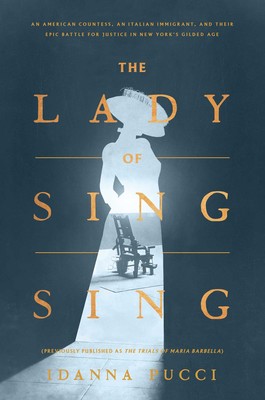
The Lady of Sing Sing by Idanna Pucci

Genre: Historical Biography
Pages: 304
Format: Hardcover
Buy Local 
My Rating: 4/5 Stars

Summary

The Lady of Sing Sing is a poignant retelling of the first woman in America sentenced to the death penalty and the women worldwide who came to her aid. In 1895, Maria was accused of killing a man who seduced and falsely promised to marry her. Her case lit New York City on fire, even attracting the attention of an American Countess in Italy, Cora Slocomb.

Cora works tirelessly on Maria’s case, seeing her as another poor Italian immigrant being treated unfairly by the American courts. Idanna Pucci, Cora’s great-granddaughter, expertly weaves together the struggles of immigrants, capital punishment, prejudice, violence against women, women’s autonomy, and the power struggles between those in power and women and ethnic minorities. She blends intimate characterizations with broader political machinations to tell a nuanced story of the trials of Maria Barbella.

Thoughts

What I most enjoyed about this book is how the author seamlessly blended fiction with history. It is impeccably researched, yet extremely engaging. As most students of history like myself can attest, that balance is incredibly difficult to achieve and many history texts end up bland and dense. These two characteristics are the opposite of The Lady of Sing Sing, which draws the reader in from the first chapter. I loved the intimate view of the historical figures and how well Pucci captured what their inner lives might be like during such difficult times.

The content of this book is also increasingly relevant today. The death penalty is still unfairly and disproportionately inflicted on minorities, and America is still obsessed with capital punishment. It is easier to reflect on these aspects of American culture when looking at them through the lens of the past. This book offers the chance for that reflection because of its personal characterization of the struggles and unfairness associated with the death penalty. I was shocked as I read about the ineptitude of Maria’s first trial and how the judge’s racist attitudes influenced his decisions, but I was filled with hope by the thousands of people who tried to help Maria. These ideas are not as foreign as they seem and it is interesting to see how the historical legacy of ideas on the death penalty have translated into our modern perspectives. 

Overall, it was a good read and I definitely recommend it to anyone who is interested in history, social justice, or who just wants to read something engaging and different. Also, don’t forget to read the Afterword!


Thank you to Changing Hands Bookstore for providing an ARC
in exchange for this honest and unbiased review.

Book Review

The Selection by Kiera Cass

Publisher:  HarperTeen
Genre: YA Fiction
Pages: 352
Format: Paperback
Buy Local 
My Rating: 3/5 stars

Summary

In a dystopian world, the United States has become a monarchy named Illea where citizens are forced into a One (royalty) through Eight (criminals and outcasts) caste system. The prince of the country is looking for a new wife and will hold a competition with ordinary girls from all different castes and locations around the country to choose his new princess. 

 Kiera Cass’s novel, The Selection, is another classic 2010’s dystopian piece similar to Divergent, Hunger Games, with even a little bit of “The Bachelor” mixed in. The main protagonist in the story is a fiery red-head named America, a Five, who does not want to follow the rules of this repressive government. She is already in love with Aspen, a Seven, but when she is selected to enter into the Selection (basically the Prince’s version of “The Bachelor”), she is forced to leave behind her old life and enter into this cutthroat competition against girls of all different castes and locations for the crown.

Throughout the book, America comes to learn more about herself and what she is capable of and questions the beliefs and prejudices she has held for her whole life.

Thoughts

The Selection in its plot is very ordinary, almost fulfilling that checklist of YA dystopian novels: the love triangle, the feisty main character who has a blatant disregard for the rules, and the clear mistrust between the protagonist and the main leadership character (in this case, America and the King Clarkson). Despite its seemingly “normal-ness,” the book actually always sticks with me. Why? It’s not only because I have a taste for these dystopian YA novels, but because the book used such descriptive language so that I could see each character, emotion, and location clearly in my head. The images and feelings that were described by America and her backstories to help the audience understand the context of the situation are so detailed that I could imagine each of the scenes in my head, play-by-play. I knew exactly how the palace looked, her feelings about the Prince, the Selection, and even the strawberry tart she had before her first official meeting with Prince Maxon. The imagery in the text was strong and will make it memorable in this way for the audience. 

One of the most interesting themes of the story was actually along the lines of judgement and prejudice. Throughout the book, each of the characters has some sort of a judgment about the other characters due to the stereotypes of the castes and royalty that they have learned growing up. This stubborn prejudice clouds America’s judgement and prevents her from seeing the important and caring qualities that Maxon has, and her innate quality to rule. Maxon, on the other hand, also had prejudices about those from lower castes but he was quick to learn from his mistakes, which shows a stark contrast between America and Maxon’s characters and learning curves.

Overall, although the book was a bit predictable and followed the classic YA fiction tropes, I still found that it combined interesting themes and borrowed from pop culture in ways that were new (such as using the concept behind The Bachelor). It was the perfect before-bed read—relaxing, interesting, with the perfect amount of romance mixed in.


Thanks to Israa Jahan for this guest post.