Magic and Mysticism

For everyone out there who learned to ask deep philosophical questions at the age of twelve or thirteen after reading Harry Potter and the Deathly Hallows, I would like to impress upon all readers the great power of young adult fantasy novels to teach the juvenile mind about ethics and existentialism. I have not come across a history or political science textbook that has explained a tyrant’s psychology as well as Albus Dumbledore: “Voldemort himself created his worst enemy, just as tyrants everywhere do! Have you any idea how much tyrants fear the people they oppress? All of them realize that, one day, amongst their many victims, there is sure to be one who rises against them and strikes back!”

A frequent argument I have heard from skeptics is that fantasy books fill their readers’ heads with unrealistic nonsense (dead flies and bits of fluff), while the truth is that these stories deliver some of life’s most crucial lessons in the form of allegory.

When Dumbledore points out to Harry that not every prophecy in the Department of Mysteries has been fulfilled, he reminds us that our decisions, even at a microcosmic level, are what shape our future in the end. The entire arc of the prophecy is a caricature of how human beings have always tried to predict and control the future. But as every time travel movie has proven, attempting to change the past or the future always comes at a great price. Even though it is not realistically possible to change the past, we like to think that we can alter our future if we can predict it. But these attempts to change our fate are the very things that set us on the path that was predicted for us.

Many lessons can also be gleaned from these books that are delivered in simple, straightforward sentences. These are usually extraordinary characters talking about the ordinary aspects of their lives. “People find it far easier to forgive others for being wrong than being right,” is an example of a quote that rings with truth.

In addition to being a catalyst for philosophical discourse among youths, the fantasy genre constantly crosses paths with science. This is quite different from how science fiction presents science. While sci-fi books and movies try to depict what the advancement of technology based on current discoveries would look like, fantasy is more about staying true to the primordial laws of physics and chemistry—even in the world of magic.

As any Rick Riordan fan could tell you, The Kane Chronicles is easily the most existential of his works. Although these books echo some of the happy-go-lucky zaniness of the Percy Jackson and the Olympians and The Heroes of Olympus series, the Egyptian pantheon comes off as more obscure than the Greek or Roman ones. For starters, the deities are not necessarily “good,” which challenges the established notion of an all-powerful entity being all-benevolent.

Riordan cloaks the duality of life in the story of the Duat—the endless river which is like a second skin beneath the world that we perceive. All mortals exist in both worlds, simultaneously. This is a graceful ode to the scientific theory that matter can exist as both particles and waves (proposed by Louis de Broglie in 1924). Furthermore, there is Ma’at and Isfet, order and chaos, two inexorable forces that perfectly balance each other, coinciding with Newton’s third law of motion.

But the finest point of this series is when Sadie learns that there are conflicting stories about how the gods came to be and did what they did. For example, in one story, Isis and Osiris are siblings, while in the other, they are husband and wife. This is actually true for mythical stories in most cultures, because they began as folklore and were created by different people whose names cannot be found anymore.

But Riordan explains it in a way that does not break the illusion of the magical world he has created. In this universe, the Egyptian gods need mortal hosts to operate on the earth. Depending on the relationship between these hosts, the gods’ relationships change. As Iskandar says, “The gods do not think of relationships the way we humans do. Their hosts are merely like changes of clothes. This is why the ancient stories seem so mixed up. Sometimes the gods are described as married, or siblings, or parent and child, depending on their hosts.” This theory gracefully maintains the illusion of fantasy while also respecting the different views held by experts in this field.

It is in stories like this that magic and science blend into what was taught ages ago by ancient philosophers and what is now called mysticism. After all, modern technology may appear to be magical to someone who is not acquainted with the engineering behind it, as shown by The Wizard of Oz. Maybe, what we think of as magic is simply advanced science in another universe.
Book Review

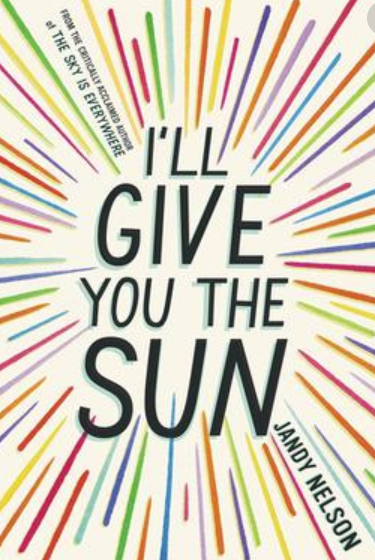
I’ll Give You the Sun by Jandy Nelson

Publisher: Dial Press
Genre: Young Adult Fiction
Pages: 384
Format: Hardcover
Buy Local
My Rating: 4.5/5 stars

Summary

This story is about a set of fraternal twins, Noah and Jude, as they begin to navigate young adulthood. The two share a love for art—but  Noah is very open about sharing his artistic ability, while Jude tends to keep her talent to herself. Despite being extremely close as children, their relationship begins to shift as tensions rise in each of their personal lives. Further pressuring them is the impending application deadline for a prestigious art school that both twins applied to. 

As their lives progress, Noah and Jude are each faced with their own set of challenges that push them further away from one another. In addition, they begin to lose sight of their own identities. Just as it appears that things couldn’t get any worse, an unanticipated disaster strikes, changing both of their lives in the aftermath. Will something—or someone—bring them back together?

Thoughts

This novel was recommended to me by one of my close friends. I had never heard of it, and as such dove in without many preconceived expectations. To my excitement, the novel was not slow to start and it wasn’t long before I was fully immersed in the stories of each of the two protagonists. Both were very accessible characters, mostly because of the book’s multi-narrative format. Reading from each character’s point of view added a lot of relatability to the novel—I was able to empathize with both Noah and Jude and became invested in each of their stories. 

Perhaps one of my favorite components of this story was the way art was used to develop the theme of personal identity. Throughout the novel, art is something both of the twins use as a form of self-expression and communication. However, Noah and Jude are both dynamic characters—and their relationship to artwork changes as part of their development. At the beginning of the story, both use art as a way to express themselves, privately. By the end of the novel, each character has learned to use art to communicate who they are as people and as a mode to display how they want to be seen. I loved reading as each of the characters experienced this shift in perspective. It even influenced the way I viewed my own ideas concerning creative expression. 

Adding to the novel’s magic are many beautiful quotes riddled throughout. One of the most notable is “We were all heading for each other on a collision course, no matter what. Maybe some people are just meant to be in the same story.” In the context of the story, this signifies that fate may play a role in Noah and Jude’s relationship. No matter how hard they try to distance themselves from one another, they continue to be pulled back together by some unseen force. Although this may not be the case for all real-life relationships, I think it serves as an interesting examination of what causes some people to fall back into each other’s lives, no matter the circumstance.

I removed half a star from my rating of this book because it romanticizes life a little bit too much for my taste at some points. Although it was a great escape from reality, there are some parts of the story that are too overtly chauvinistic to take seriously. I do think the story offers a lot of profound insight on the meaning of life and relationships—but some are too whimsical to buy into. That being said, the moments where the book misses the mark are few and far between, and it didn’t impact the story’s readability at all. I would highly recommend this book to anyone who enjoys a thought-provoking and heartwarming story. 

8 Spectacular Banned Books To Read This October

From September 27th to October 3rd, book-lovers all around the world celebrate the freedom to read by participating in Banned Books Week. The event began in the 1980s to bring attention to interest groups that were attempting to remove books they found offensive from libraries and schools. Today, it continues to address modern attempts at censorship and strives to support the sharing of ideas—even if they offend. Banned Books week has just wrapped up, so let’s keep celebrating the right to read by diving into these eight incredible and controversial tales.


The Giver—Lois Lowry. This book follows a boy named Jonas who discovers that he lives in a dystopia. His entire community strives to eliminate all suffering and pain  by removing anything that has the possibility of  introducing negativity or diversion from the norm, such as colors, love, or choice. When Jonas is assigned the feared position of “The Receiver of Memories,” he sees for the first time how far his community has fallen. Now that he knows of the world before “sameness,” he must decide to fight to return his society to the freedoms of the past, or see the wisdom in hiding from the dangers of choice.

Why this book was banned: The Giver includes references to sex, chemical castration, child murder, euthanasia, suicide, violence, and death, making it a controversial book for school libraries—especially in elementary schools. It was banned temporarily in California in 1994 due to its sexual content and in 1995 the book was challenged for its reference to euthanasia, causing schools in Montana to require parent permission for the book to be checked out. More recently, in April of 2001, a father tried to get the book removed from Colorado schools because he believed it would cause school shootings due to its violent nature.


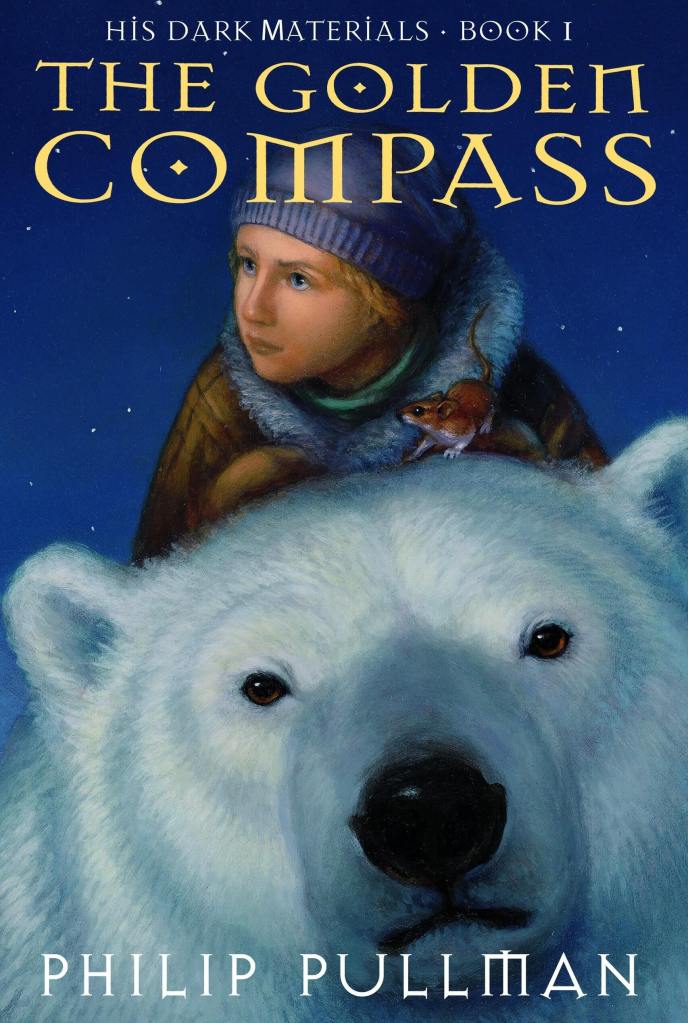
The Golden Compass—Philip Pullman. In a world where humans are born with spirit animals, a young girl named Lyra must help stop children from being kidnapped, tortured, and killed by a powerful church that controls all aspects of her society. On her journey, she discovers a conspiracy by the church that threatens to change her world as she knows it.

Why this book was banned: The Golden Compass largely focuses on what is referred to as “dust,” which represents sin. The church in the story is fighting to stop the destruction of sin because it allows them to keep their absolute power over the entire world. This premise outraged several religious groups, specifically many Catholic groups who felt this book was a direct attack. The author has even been referred to as “the most dangerous author in Britain” and “the anti-C. S. Lewis” by Peter Hitchens, who is a journalist for The Daily Mail. Many Catholic schools have banned this book from their libraries due to this perception, such as the Halton Catholic School in 2007. 


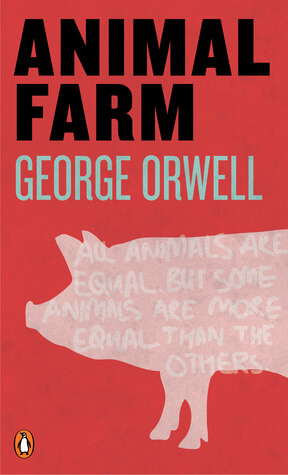
Animal Farm—George Orwell. This allegorical tale takes place on a farm where all of the animals have become fed up with the terrible treatment from the farmer. The animals revolt and succeed in expelling the farmer, leading to them creating a farm where “all animals are created equal.” As the farm grows, so does the corruption, as the once-great ideals of animal farm fade away until they are back to the same tyrannical rule, making it a perfect allegory for the communist uprising in Russia.

Why this book was banned: Animal Farm was banned in Russia until the fall of the Soviet Union in 1991 due to its anti-totalitarianism. Ironically, it was also banned in America during the Cold War due to the positive references to communism at the beginning of the book, meaning that Animal Farm has been banned for being both too communist and not communist enough.


Carrie—Stephen King. All Carrie White ever wanted was to be normal, but with an abusive religious zealot for a mother, Carrie could never fit in among her classmates. Each day she is forced to put up with relentless abuse from her classmates due to her odd clothing and beliefs, and abuse from her mother who is convinced that her daughter is a sinful demon that must be cleansed. One day, Carrie discovers she has telekinesis and begins to use her powers to finally take back her life, but the bullies at school have other ideas.

Why this book was banned: With its references to violence, puberty, religion, sex, and foul language, it’s no surprise that Carrie was often challenged by school officials. It was first banned by Clark High School in Nevada in 1975, then by The West Lyon Community School Library in Iowa in 1987, and most recently by the entire library district of Almar-parish Williamstown in New York in 1991. In response to these frequent bannings, Steven King was quoted saying “get a copy of what has been banned, read it carefully and discover what it is your elders don’t want you to know.”


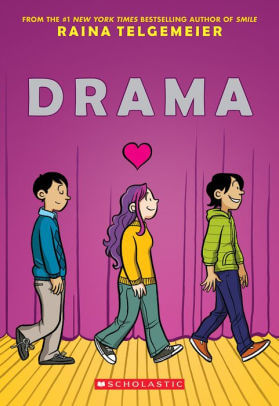
Drama—Raina Telgemeier. Callie, a middle school techie, befriends two twin drama nerds during their middle school production of The Moon Over The Mississippi. Together, the three of them navigate the tumultuous world of junior high romance as they learn to embrace who they are and to be unashamed to share it with the world, regardless of who supports them.

Why this book was banned: Drama deals with realizing and accepting one’s sexuality and the blowback that can come from it, which makes it a controversial read for some—especially since it was published in 2012, before gay marriage was legalized in all states. Drama has been banned in Texas several times, first in 2014 by Chapel Hill Elementary, then in 2015 by Kirbyville Middle School, and, most recently, in 2016 it was banned by the entire Franklin Independent School District. This book is an anomaly on this list as it doesn’t contain anything sexually explicit, violent, or abusive—it just has LGBTQ+ characters.


My Brother Sam is Dead—James Lincoln Collier and Christopher Collier. Set during the American Revolution, this book follows a boy named Tim Meeker as his family, who is on the side of the British, and his brother, who supports the revolution, struggles to survive during turmoil caused by the war. From looting, kidnapping, prison ships, hanging, mass slaughter, and much more, this book removes the veneer that often covers the Revolutionary War and shows the pain and suffering that both sides caused during America’s fight for independence.

Why this book was banned: The book often uses profane language and depicts graphic scenes of death and suffering, causing many schools to have it removed from their libraries. The American Library Association reports that My Brother Sam Is Dead is “the 12th most commonly challenged book” from 1990 to 2000 and the 27th most commonly challenged book from 2000 to 2009.


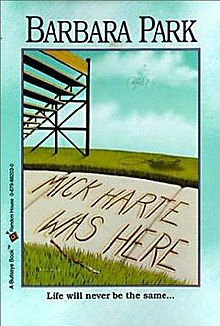
Mick Harte Was Here—Barbara Park. This book follows Phoebe Hart as she tries to make sense of the sudden tragic death of her younger brother Mick Harte and struggles to give meaning to his passing. Deceptively simple, this story shows the pain of sudden loss honestly and in a way that anyone can understand, all while imparting on the reader the importance of bike safety without coming across as preachy or distracting from the focus of the story. While this book was originally intended for younger audiences, the tact with which it deals with issues that affect everyone makes it a powerful read at any age.

Why this book was banned: This book does not pull its punches when it comes to addressing the serious pain that comes from death and loss, and, as such, it is often seen as far too intense for young readers. When the book was challenged at Centennial Elementary School in 2004, the mother leading the charge was quoted saying that she thinks “it takes the structure of an adult mind to deal with most of the themes in this book.”


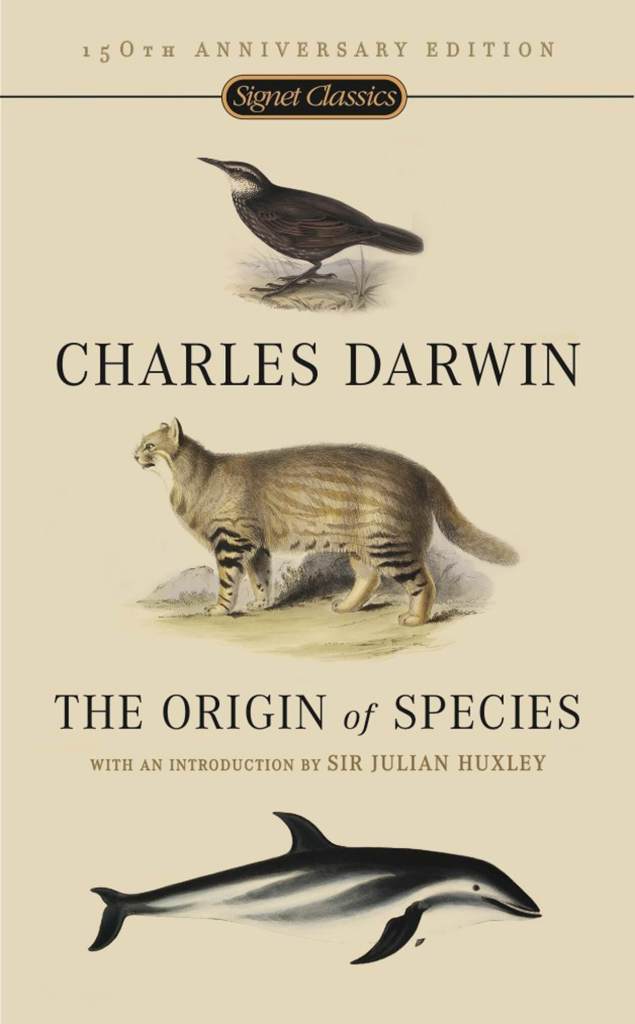
The Origin of Species—Charles Darwin. Arguably the most famous and important scientific text ever written, The Origin of The Species relays the theory of evolution using evidence from Darwin’s studies on the Galapagos Islands. Using his studies on animals such as the Galapagos tortoises and mockingbirds, Darwin changed biology as we know it and allowed us to begin to answer many of life’s greatest questions.

Why was this book banned: This book was first banned by Trinity College, where Darwin attended school, when it was published due to it being declared “blasphemous” by all sects of Christianity at the time. It was also banned in Yugoslavia in 1935 and in Greece in 1937. The teaching of the theory of evolution from this book in America was also fraught with restrictions and outright banning, the most famous being the Scopes Monkey Trial in 1925, which surrounded a teacher who broke a Tennessee law that forbade the Teaching of Evolution.

Book Review

How to Feed Yourself: 100 Fast, Cheap, and Reliable Recipes for Cooking When You Don’t Know What You’re Doing: A Cookbook by Spoon University

Publisher: Harmony
Genre: Nonfiction, Cookbook
Pages: 224
Format: Paperback
Buy Local
My Rating: 4/5 stars

Summary

It is back to school season—and whether this fact spurs feelings of fear or excitement, there is one unavoidable, and oftentimes frustrating, subject within everyone’s fall schedules: food. The COVID-19 pandemic has restructured dining halls for college students, tightened the budgets of families, and possibly even allowed time for new at-home hobbies. Spoon University’s How to Feed Yourself is a simple and comprehensive cookbook designed by college students, for college students.

It is incredibly flexible for anyone’s cooking level, desires, and situation. As we enter the fall with changing situations, How to Feed Yourself offers simple, cheap meals that don’t force the reader to buy a plethora of unknown ingredients, spices, and tools. The recipes are based on common ingredients to create plenty of simple, diverse, and healthy (but not too healthy) dishes. Spanning from “All-Day Breakfast Tacos” to a “No-Sharing-Required Mason Jar Banana Split,” Spoon University has prepared dishes for every occasion, every skill level, and every lifestyle.

Thoughts

This year I made the bold and, admittedly nerve-racking, decision to cancel my meal plan as I am sure many incoming and returning students are doing. As I ventured into my new reality of consistently cooking for myself, I wanted a cost-effective, nutritious (but not too healthy), and simple cookbook tailored to my novice skill set to help me out. I am usually apprehensive about cookbooks because they are often shrouded in mystery from complicated recipes, expensive and uncommon ingredients, and unrealistic expectations (because let’s face it—my food never turns out looking like the picture). However, I was very satisfied with this cookbook—it uses simple recipes, has consistent, colorful, and an easy-to-follow page layout, in addition to encouraging language. The ingredients needed for every recipe are basic, and the recipes are created with the expectation that the reader only has “an oven with a stovetop and broiler, a microwave, a fridge, and a sink.” The book is split up largely by chapters with recipes featuring some of the most common food items (eggs, chicken, pasta, fish, potatoes, toast, grains, veggies, and bananas). Later chapters provide recipes for occasions or habits, such as make-ahead meals, group recipes, date-night ideas, alcohol, and desserts. While this structure seems confusing, it allows you to find recipes based on what you have available. The book also outlines the most basic and important points of cooking and flavoring meats, using grains, and seasoning vegetables while offering flexible recipes which is encouraging and a helpful tool to understand the basics of food.

I’ve tried several recipes, including the “Not Your Average BEG,” the “Deconstructed Chicken Pot Pie,” and the “2-Ingredient Flourless Pancakes.” The recipes were fairly delicious and creative. The “Not Your Average BEG” used toaster waffles to create a kind of bun for the egg sandwich, and while the “Deconstructed Chicken Pot Pie” could have used additional seasoning, it was simple and a great dish to learn how to cook with chicken. My favorite recipe so far, however, are the “2-Ingredient Flourless Pancakes” because they offer different flavor suggestions and I had the freedom to get creative and substitute or add ingredients. As a beginning cook and novice cookbook reader, I am very happy to have taken a chance on this book because it is tailored to any cooking level, flavor pallet, and bank account. If you don’t eat meat or need a dairy/gluten free diet, the recipes offer substitutes and diet-specific recipes. Additionally, it has recipes for the lazy days, the single-parents, the working student, and the tired-of-ramen freshman.

We naturally come to food for community and enjoyment, and while our lives might be stressful in many ways right now—and our dinners might look different—our food shouldn’t be stressful. This book gives me hope in my ability to create a meal instead of spending that extra five dollars on the grocery store’s frozen meals section; it gives me hope that I can learn a new skill; and it gives me encouragement during this time—I hope it can for you, too.

6 Books That Explore Social Dis/Connection

You might be feeling disconnected and isolated right now going through this global pandemic. Whether you are the type of person that likes to take a deep dive into what you’re feeling and really indulge
and explore it, or you’re the type of person that likes to go in the opposite direction and find
hope, there is a book on this list for you.

Feeling socially disconnected can be disorienting. The first three books on this list capture the
essence of social disconnection and the yawning chasm of isolation. Spooky! Lonely! Take a
deep dive into the solitude you’ll find here.


Johnny Got His GunDalton Trumbo. Be warythis tale is dark, scathing, and unsettling in its embodiment of social disconnection. A young soldier returns from the First World War and slowly becomes aware that he is severely injured. His injuries are such that he has little ability to communicate with the people around him. Written in 1971 during the Vietnam War, Trumbo writes a depressingly persuasive anti-war story by describing the communal untethering it brings.


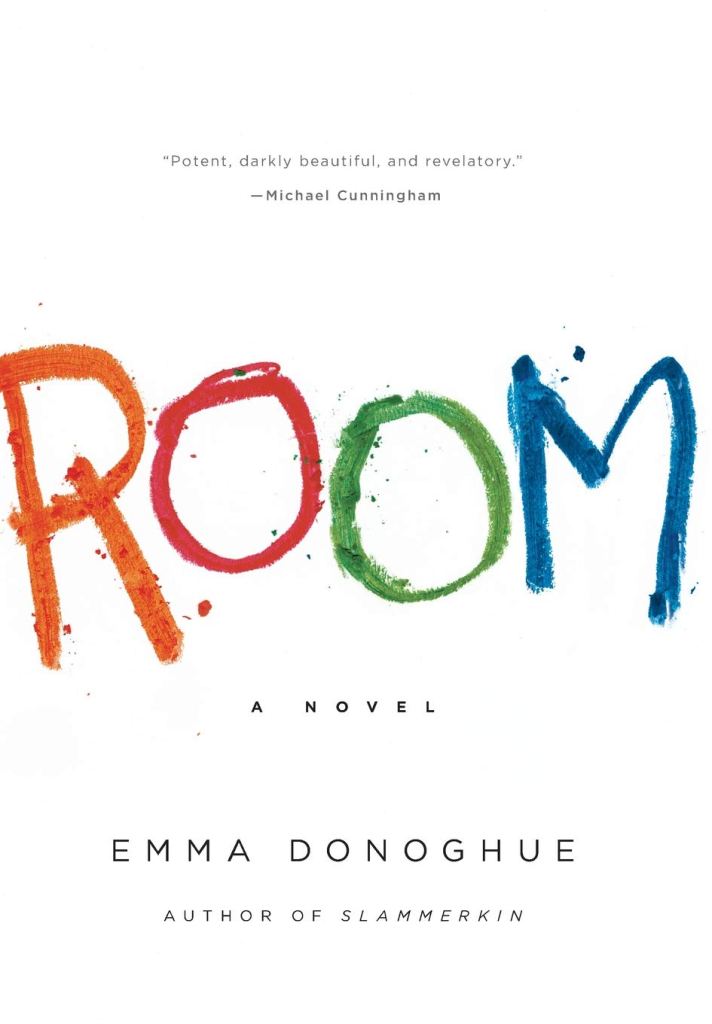
Room—Emma Donoghue. Made into a movie in 2015, Room is narrated from the perspective of a 5-year-old boy named Jack. Room is all he knows. See, his mother was kidnapped and kept locked in a shed in the kidnapper’s backyard. Completely isolated from others, Jack slowly has to learn how to forge bonds with people other than his mother. Ultimately hopeful, most of the story is unnerving and claustrophobic in the characters’ total forceful removal from society.


The Martian—Andy Weir. To balance out the heaviness of the previous two recommendations, I suggest The Martian, the basis for the 2015 film of the same name. This book will make you laugh out loud. Mark Watney is an astronaut who gets accidentally left behind on the planet Mars after an aborted mission. The story explores themes of survival, communication beyond great distances, and the importance of the many rallying together for the few. Talk about social disconnection when you’re literally the only person on a whole planet!


Or if that’s just not your thing, take a peek at these other three books that speak to the importance of social connection and the awesome power of interpersonal relationships. Hope! Kinship! We will find one another even in the dark.


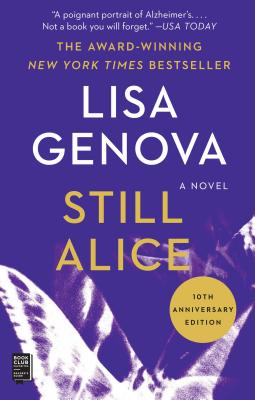
Still Alice—Lisa Genova. Alice is a successful linguistics professor who begins to struggle after a diagnosis of early onset Alzheimer’s disease. Despite the usual associations with the disease as causing further isolated from others, it is her husband and children who remind Alice—and us—about the power of connection and being with loved ones to ground us through hardships.


The 100-Year-Old Man Who Climbed Out The Window and Disappeared—Jonas Jonasson. Get ready for one of the most delightful books you’ll ever read—seriously, it’s so cute. After escaping from a nursing home, 100-year-old Allan takes off on a series of wild and surreal adventures. You’ll learn about Allan’s colorful history as he creates new friendships along the way. And if you enjoy this book, there is an equally lovely sequel.


Your Inner Fish: A Journey into the 3.5 Billion Year History of the Human Body—Neil Shubin. Your inner fish? Now hear me out. In this engrossing nonfiction book, Shubin will take you on an evolutionary journey that will leave you never looking at yourself and the place of humans in the greater scheme of the universe the same again. Through fascinating evolutionary biology, he shows us how vastly interconnected all of humanity and nature are. You’ll never feel alone again.


All of the books on this list remind us that we are human, that we thrive when united, and that coming together is the most important thing. Read a few chapters, and then call a friend to tell them you love them.

Book Review

A House is a Body by Shruti Swamy

Publisher: Algonquin Books of Chapel Hill
Genre: Fiction
Pages: 201
Format: Hardcover
Buy Local
Rating: 4.5/5 stars

Summary

A House is a Body is a bold and provocative collection of short stories from emerging author Shruti Swamy. Her collection contains twelve short stories that are set in India and the United States. Each one is an intimate dive into the human experience. Her narratives redefine the genre of domestic fiction, focusing on the tension of relationships and the inevitable isolation of being human. Swamy doesn’t hold back any punches. She navigates the challenging circumstances of birth and death, love and loss, betrayal and redemption as if she’s been writing for a lifetime. Swamy’s ability to craft authentic domestic turmoil within such a small space on the page is both impressive and unsettling.

Thoughts

I was beyond excited to pick up my copy of A House is a Body. I discovered Swamy’s collection on a list of exciting books to anticipate in 2020 and was intrigued by the description of her writing as a marriage between the realistic and the fantastic. I couldn’t wait to experience what promised to be a literary uprooting of the domestic. Her stories did not disappoint—each narrative was more compelling than the last, pulling me through the entire collection in a matter of hours.

One of my favorite stories in the collection is titled “The Siege.” The story is told from the point of view of a young queen who is married to a selfish and violent king attempting to steal the wife of another man. The circumstances are dramatic and devastating, yet I still had so much fun reading a story that was placed in a setting with royalty and wars fought over romance. Swamy’s depiction of the setting was fantastic—within just twenty pages she was able to build a world with complex characters and conflict. This story is a can’t miss for anyone who enjoys the fantasy genre.

Another one of my favorites was titled “Wedding Season.” This story takes on a very different tone from the one in “The Siege.” The story is centered on two young women, Teja and Al, who travel from the United States to India for Teja’s counsin’s wedding. The young women are forced to hide the romantic nature of their relationship for fear of being ridiculed for their sexuality. Swamy’s narration manages to be beautiful despite the tragic circumstances. The stark contrast between the beauty of India and the tension of the lovers’ secret makes the story captivating. This is definitely a story for the modern world. I was impressed by how Swamy addressed the subjects of sexuality and identity with such boldness. Her story left me trying to decide if the ending should be considered happy or sad. What I am sure about is that it’s worth reading to decide for yourself.

It’s not often that I find a collection of short stories where I can say I enjoyed every story, but I can confidently say I enjoyed every story in A House is a Body! I would recommend this collection to readers who enjoy strong female characters and the uneasiness of the mundane. In other words, if you like “The Yellow Wallpaper” or “The Story of an Hour,” Swamy is the contemporary voice you’ve been waiting for. This collection is an impressive and promising start to a young author’s career, and I can’t wait to see what’s next for Shruti Swamy.


Thank you to Changing Hands for providing an ARC
in exchange for this honest and unbiased review.

Book Review

Trouble the Saints by Alaya Dawn Johnson

Publisher: Tor Books
Genre: Thriller, Fantasy
Pages: 352
Format: Hardcover
Buy Local
My Rating: 4.5/5 stars

Summary

The stage is set in pre-second-world-war New York with an oracle, an assassin, and an underworld gang about to lose its alpha—all thriving in a be-bop jazz bar, brazenly ignoring the Prohibition. Phyllis Green, blessed with saints’ hands, is mob boss Victor Dernov’s executioner. Known to some as Victor’s angel, and to most as Victor’s knife, she goes by Phyllis LeBlanc in downtown Manhattan, meting out mob justice with her holster of knives.

That is until she meets Dev. Playing judge, jury, and executioner turns out to be a lot more complicated when she falls in love. Devajyoti Patil, bartender at The Pelican, is also blessed with saints’ hands – he can detect threats on a single touch. But unlike Phyllis, he does not use them to throw knives. Just when Phyllis believes she can act on her promise to Dev of never killing again, she is given a task that forces her to go back on her word.

Someone is killing people with “the hands” and leaving the corpses behind with bleeding stumps and clear signs of having involved them in some form of dark ritual. It’s obvious—they’re trying to steal the power of these hands. Victor’s lieutenant, Red Man, tells Phyllis that the murderer is Trent Sullivan, and that she must take him out.

Having grown up in an all-Black neighborhood, Phyllis has spent her whole adult life trying to pretend that she’s not. Owing to her lighter skin, she passes scrutiny in most segregated places in 1930s New York. She has even taken care to change her name, so no one can trace her back to her old neighborhood—it’s how she has survived. But a decade after she executes Sullivan, and Dev leaves her for it, she finds that her heritage is about to be revealed, and that, suddenly, her life depends on her proving her whiteness.

A lot of factors wrestle for priority as Dev returns unexpectedly to her life as she’s simultaneously given a new assignment. Not to mention, the draft creeps up and starts upending the lives of everyone she holds dear.

Thoughts

The struggles of people of color before World War II that changed society in many irreversible ways are depicted in sincere detail in this book. Skin trumps economic status as Phyllis, Dev, and their friends find themselves increasingly vulnerable as they try to get away from the criminal element that has protected them so far.

It is really promising to find that BIPOC literature is finally making its way into the limelight. The story is set at a time when very few would think to write a novel with a black woman and an Indian man as the lead duo. Hopefully, we are at a time when we can look back at these immortal years from a different perspective than we are used to.


Thank you to Changing Hands Bookstore for providing an ARC
in exchange for this honest and unbiased review.

Short and Spooky: 4 Horror Anthologies To “Fall” For

“The Spooky Season”

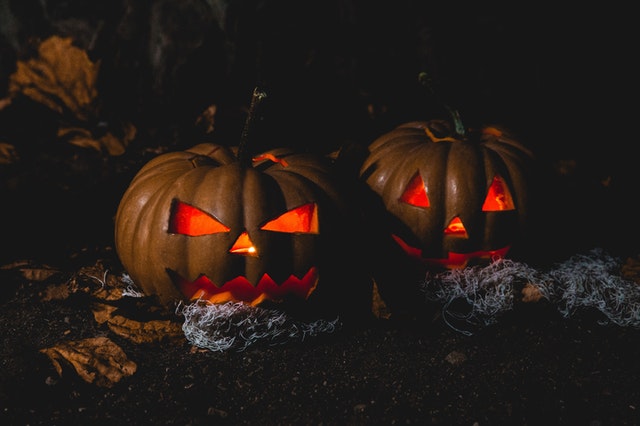
Every October a craving begins for pumpkin spice-flavored anything, sweet tooths start aching, and harmless orange fruit becomes the bearer of terrifying and toothless grins. The yearning for a good scare also grows as full as a harvest moon as we flock to haunted houses and corn mazes, or even to Netflix to give us that shot of fear-based adrenaline. Another surefire way to create some chills is simply turning to some classic horror stories—and there are a plethora of short story anthologies to get your spine tingling and your heart racing. In this classic selection of oldies-but-goodies, there will be aches (but not the sweet tooth kind), the bittersweet taste of revenge, mad men, and weird women a-plenty. Enjoy, but be sure to read with the lights on.


Norman Bates has nothing on some of these psychos…

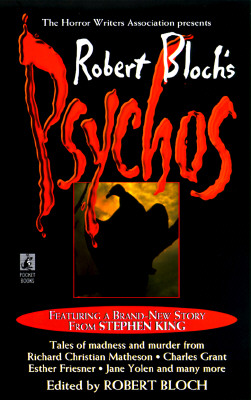
Psychos—Robert Bloch. Not to be confused with Bloch’s classic Psycho, this collection centers around madness and its many forms. Whether it comes under the guise of a seemingly benign object with murderous intention, the most intense road rage on record, a meticulously planned revenge plot on a drunk driver, or a “oops” of an autopsy, these stories will genuinely freak you out. A notable tale from this anthology is “Grandpa’s Head” by Lawrence Watt-Evans, which will make you rethink the pasts of every single person in your family, even the most innocent-seeming! 


These ladies were ahead of their time…

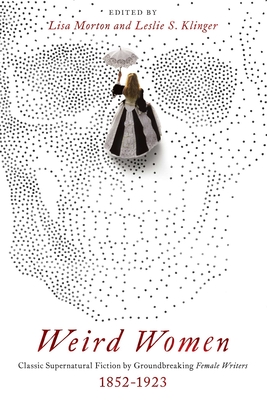
Weird Women: Classic Supernatural Fiction by Groundbreaking Female Writers (1852-1923). More recently published, yet by no means modern, Weird Women is a collection from the female perspective. Compiling work from such greats as Louisa May Alcott, Charlotte Perkins Gilman, and Frances Hodgson Burnett, these stories are beautiful, bold, and brooding. From ghostly little girls in locked rooms, unrequited wishes coming true through dreamscapes, and the beauty of wistaria (the old-fashioned spelling) covering sinister deeds, these tales are all supernaturally stunning. The stories are helpfully annotated to bridge the gap in some vernacular differences as well. If you appreciate lush writing, descriptive details, and the suspense of a slow burn, you will love this collection.


A little naughty, not nice…

I Shudder at Your Touch: 22 Tales of Sex and Horror. For those who like a little risque with their risk, I Shudder at Your Touch features distinguished writers such as Stephen King and Clive Barker. With such disturbing topics as devilish weight loss programs, a not-so-little mermaid, a yearning for youth gone dark, and perverse revenge on an ex-lover, these stories spice things up more than that latte at Starbucks. A notable tale here is “Keeping House” by Michael Blumlein, with a creepy look at a woman’s descent into madness. If you like “The Yellow Wallpaper” by Charlotte Perkins Gilman, you will be sufficiently spooked by Blumlein’s story. There is also a follow up edition, Shudder Again.


The indisputable king of macabre…

Everything’s Eventual: 14 Dark Tales—Stephen King. No list of short story anthologies would be complete without one from the king of horror, Stephen King. Everything’s Eventual is a collection featuring what you would expect from King—the unexpected. A lunch date gone gruesomely wrong, wish fulfillment for a quarter, and a traveling salesman debating his own self-inflicted untimely death, this is one diverse batch of dark tales indeed. Notable stories are “1408,” which explores just how creepy a hotel room can be, and “The Man in the Black Suit,” which is King’s nod to Nathaniel Hawthorne’s “Young Goodman Brown.” Incidentally “1408” was adapted into a decent film starring John Cusack and Samuel L. Jackson.


So, curl up with your favorite blanket and a pumpkin spiced latte, turn the lights down low, and give yourself the willies. Just don’t blame me when you lie awake in the dark wondering what those strange sounds are!

Fractured Fairy Tales: How to Fix Humpty Dumpty Even if You’re a King’s Horse with James Riley

Most of us grew up reading Fairy Tales. They are both bizarre and alluring and for many of us, they continue to interest us well into our adulthood. Best-selling author James Riley takes an in-depth look at fairy tales: why they are so strange, the logic within them, and why we are so fascinated by them.

Riley has written his own collection of fairy tales, which he will use to illustrate some of their most peculiar features. If you’re interested in learning more about fairy tales, this event might be perfect for you!


Date: September 23, 2020
Location: Zoom
Time: 6:30–7:30 p.m.
Cost: Free

To RSVP and for more information, click here!

Top 4 Netflix Book-to-Movie Adaptations

As Netflix has grown more popular, they have started producing more and more of their own content. Plenty of top ranking shows, movies, and documentaries are Netflix originals. A handful of these are based on best-selling novels, and most of the time they do a pretty solid job bringing these beloved books to life. I have compiled a list of my top four book-to-film adaptations from Netflix which are all very close to my heart.

To All the Boys I’ve Loved Before—Jenny Han. When I was 14, this was one of my all-time favorite books, but I had forgotten about it as I got older. As soon as I heard Netflix was coming out with a movie adaptation of it, it immediately jogged my memory and I couldn’t wait.
For those of you who aren’t familiar with the story, it is about a girl named Lara Jean who wrote five love letters throughout her life, kept them in a box with no intention to mail them. So when they suddenly got out and all the recipients had them, including her sister’s ex-boyfriend, Josh, Lara Jean freaks out. She decides to fake date a different letter recipient named Peter to throw Josh off, but that doesn’t exactly go as planned—you’ll have to watch to find out why.


Book to movie adaptations are always hit-or-miss, but this one did not disappoint for me. They cast it well because the characters are exactly how I envisioned them, and they truly brought the story to life. I highly recommend this film to any lovers of the books!

All the Bright PlacesJennifer Niven. This novel is definitely a bit heavier than the previously mentioned one, but it is still phenomenal. It’s definitely a tear jerker, but in the best way. If you haven’t read the book, it follows Theodore Finch starting when he finds his classmate, Violet Markey, about to jump off a roof. He doesn’t know her very well but decides to befriend her anyway, making a silent pack to himself that he won’t let her struggle alone. As he is dealing with his own mental health issues, this is something he hopes will help him, too. It’s a beautifully written story, but I definitely recommend reading it alone (unless you don’t mind people seeing you sob uncontrollably).


Netflix did a great job bringing it to life as a film—it’s a great blend of tragic and heartwarming, and is sure to tug on your heartstrings. Whether you loved the book or just prefer to watch movies, I recommend getting cozy with a box of tissues and putting this one on.

1922—Stephen King. This one is for the horror/suspense junkies out there. This novella is quite different from the previous two books on this list, but the film adaptation is pretty solid and very underrated. The story follows a farmer named Wilfred who kills his wife—and gets his son in on it—in order to avoid having to sell his land. After this happens, weird things begin to happen around the farm, most of them unexplainable.
The film adaptation came out in 2017, which was a big year for King, so naturally this one was swept under the rug a bit more. That being said, the film does bring certain aspects of the novella to life and the story is very interesting. If you’re a fan of King and a fan of supernatural horror stories, this movie should definitely be included in your scary movie marathon.

Let it Snow—John Green, Lauren Myracle, and Maureen Johnson. When I was in middle school, I went on a John Green kick, much like a lot of people my age. In doing so, I stumbled upon this masterpiece of a story. This is one of my favorite holiday stories and when I saw they were making a movie out of it, I freaked.


If you’re not familiar with the novel, it follows three different main characters in the same town as they handle various decisions. Without giving too much away, we have best friends who may or may not have feelings for each other, a celebrity encounter, and a girl dealing with a breakup. These stories all take place simultaneously around the holiday season—I mean, what more could you ask for?!
Netflix turned this novel into a film last year and despite some small changes, I absolutely loved it. I felt that the changes really added to the story and the actors were perfectly chosen. It really is an adorable film and sure to put you in the holiday spirit (so maybe save this one for after Thanksgiving).