Book Review

Educated: A Memoir by Tara Westover

Publisher: Random House
Genre: Autobiography, Memoir
Pages: 352
Format: Hardcover
Buy Local

Summary

Growing up in a remote area of beautiful Idaho may seem like a dream come true. But for Tara Westover, the remote location mirrored her own isolation, both in beliefs and in terms of those she could relate to.

Born into a family of devout Mormon extremists and survivalists, Tara was not allowed to take medicine, have a valid form of personal identification, or even attend school. Moments that might have been spent learning how to read were instead needed to prepare for the inevitable doomsday that her family believed was quickly approaching.

My Thoughts

Tara’s journey—from a child unable to attend school to a young adult earning her PhD at the renowned Cambridge University—is filled with heartbreak, tears, and genuine happiness. The eloquent yet accessible nature of Tara’s writing style allows her readers to go through the journey of her young life with her. Even though her life experiences are likely vastly different from those of the majority of her readers, Tara has a way of telling her story that is innately human. Although most of her readers may not relate to Tara’s memories of things like being in a horrible car accident and then forbidden to go to the hospital for her injuries, themes like familial tensions and the struggle to find the meaning of one’s academic education will certainly resonate with many others. 

Educated is worth the read not only because Tara’s story is compelling, but also because it will positively leave readers with something long after they’ve closed the book—whether that be gratefulness for the opportunities education has afforded the audience or reflection on what life and education means to them. I encourage everyone to delve in as soon as possible, and I promise you won’t be able to put it down.

All the Bright Places: Book-to-Movie Adaptation

Each time I go to Goodwill, I end up leaving with a stack of books that live on my shelf indefinitely. I always plan to read them, yet somehow always end up with more that I don’t get around to. A few weeks ago, I found All the Bright Places sitting on my shelf and was drawn to it. I had heard some things about it, but was not at all expecting the emotional whirlwind it took me on. I devoured it in a day, then immediately watched the movie afterwards to compare—and I have some thoughts on the adaptation.

All the Bright Places tells the story of Finch and Violet, an unlikely pair that first meet on the top of the school’s bell tower. They are the only two who know the truth about who saved who as the story circulates the school. When they’re paired to do a school project together, they discover just how much they need each other. But as Violet heals, Finch begins to sink.

I fell in love with this book the second I finished it and I knew it had been made into a movie, so immediately after closing the book I pulled it up on Netflix.
Generally, the movie did a good job bringing these characters to life. The casting is one place where they excelled. Elle Fanning is a perfect Violet—she’s exactly how I pictured her in my head. Justice Smith, as Finch, was excellently cast as well, which really aided in putting the story on the big screen.


Casting aside, there were a few changes made that I found a bit odd. For starters, in the novel Violet and Finch meet on the top of the bell tower and most of the school sees them up there, turning it into a whole ordeal. In the movie, however, Violet is on a bridge when Finch finds her. It seems like a minor change, yet in the novel a large part of the reason they’re thrown together is because of the news story that spirals from being caught up there. Ultimately, this didn’t make a huge difference to the overall feeling and message of the story, but I was surprised when at it.

A common flaw when translating a book to a movie is the timeline. I noticed while watching that it almost felt rushed, but I also think that is just a result of the medium. Generally speaking, the important moments were articulated well and the actors did a great job bringing this movie to life. I will almost always favor books to movies, and I definitely recommend reading the book first, but the movie does bring the story to life in a touching way. 

If you haven’t read this book already, I definitely recommend it to anyone looking for a new tearjerker. Niven touches on a lot of important, and often overlooked, issues, especially in literature, and for that I applaud her. I recommend both the novel and the film, but I suggest that you read the book first to get the full effect. You can purchase it here.

Book Review

Better Together by Christine Riccio

Publisher: Wednesday Books
Genre: Young Adult, Coming of Age
Pages: 448
Format: Hardcover
Buy Local
My Rating: 4/5 stars

Summary

If you’re looking for an extraordinarily unique, dark twist on a classic story, look no further than Christine Riccio’s Better Together. Jamie and Siri are sisters separated at a young age and completely devoid of contact for over a decade due to their parents’ nasty divorce.

In a twist of luck (or fate) the two sisters are reunited at the same “rediscover yourself” retreat and hatch a devious plan: the two will switch places and confront their respective parents.

However, not everything goes as planned, and it’s going to take a lot more than switching places to understand each other, find themselves, and ultimately face the complexities of family.

Thoughts

It has been almost a year since my very first post with The Spellbinding Shelf where I discussed one of my favorite young adult novels, Again but Better by Christine Riccio. Now, coming full circle, I decided to review her newly released second novel, Better Together. While very witty, I have to admit that initially I was not completely sold on the plot—mostly because it wasn’t my usual type of young adult novel. The whimsical magic reminiscent of The Parent Trap and Freaky Friday are classically engaging, but I was not as enthused with those themes. Perhaps due to my hesitancy, I ended up being disengaged, and the combination of short and rather uneventful chapters left me searching for more.

Despite some of these shortcomings, I was pleasantly surprised with Riccio’s capability to take a traditionally lighthearted storyline and investigate the twisted, dark, and traumatizing difficulties of divorce, dysfunctional families, and the impact of parents’ choices on their children. Indeed, there were moments in the book where, while I was craving more action, I couldn’t ignore the insight and attention to how both Jamie and Siri processed their emotional baggage. Riccio does an amazing job detailing the struggles of both characters who have completely different personalities and means of handling their past to move towards their future. There were multiple times in which I had to underline prominent messages or found myself laughing at the page as Riccio nicely combined comedy, romance, and sardonic tones with the seriousness of her overall topic.

Most importantly, Better Together was primarily written during the pandemic—a heaviness that is translated in its pages as the reader slowly feels the suffocation and eventual release of tension most everyone has felt over the past year. In this manner, I appreciated Better Together not only because of its mix of tragedy and comedy, but also its overall feeling of angst and the eventual, much needed, feeling of relief.

Book Review

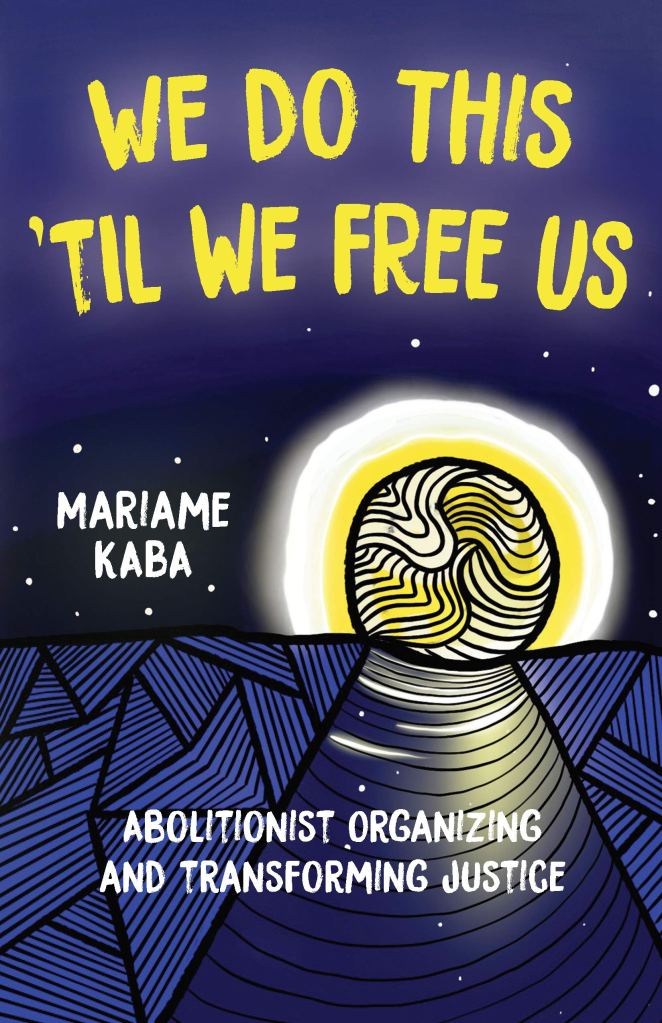
We Do This ‘Til We Free Us: Abolitionist Organizing and Transforming Justice by Mariame Kaba

Publisher: Haymarket Books
Genre: Political Science, Essays
Pages: 240
Format: Paperback
Buy Local
My Rating: 4/5 stars

Summary

Educator, organizer, and curator Mariame Kaba collects seven years of essays and conversations on Prison Industrial Complex (PIC) abolition into one volume.

Kaba has been a foundational organizer in multiple prison abolition projects, including Survived and Punished (which helps free “survivors of domestic and sexual violence and other forms of gender violence who are imprisoned for survival actions”) and Project NIA (which aims “to dramatically reduce the reliance on arrest, detention, and incarceration for addressing youth violence”).

For those who were first introduced to PIC abolitionism last summer through #DefundThePolice, Kaba presents a holistic vision of the movement’s history, present, and future.

Thoughts

The modern theory and practice of PIC abolitionism grew out of the civil rights movement half a century ago. The movement’s roots, as the name implies, can be traced back to the slavery abolition movement that presaged the American Civil War. However, PIC abolition has been almost entirely excluded from mainstream conversations about the American justice system, until its ideas became central to the Ferguson uprising of 2014 and the George Floyd uprising of 2020. But as “Defund the Police”—the first demand of #8toAbolition—became a policy demand of a plurality of local Black Lives Matter organizations, the national news media were forced to suddenly contend with the work and vision of PIC abolitionists.

By the summer of 2020, Mariame Kaba had been writing about PIC abolition for a decade on her blog Prison Culture. I was introduced to PIC abolition through Kaba’s work, as were many other young abolitionists. She is a gateway for a new generation into the ongoing struggle for emancipation.

Kaba’s greatest strength, in my opinion, is the combination of her writing’s accessibility and her scrupulous care to cite the sources of her ideas. I often have trouble understanding works of political theory, but Kaba stubbornly refuses to deal in the abstract; every idea she presents is grounded in examples drawn from her work as an organizer. Likewise, each idea is attributed to the activists, organizers, and writers who provided her with its germ. ‘Til We Free Us thus functions as not only an introductory text, but an index of foundational PIC abolitionist writers (almost entirely Black women).

If you would like a taste of what this book offers, I’d recommend starting with Kaba’s June 2020 opinion piece for the New York Times, “Yes, We Mean Literally Abolish the Police,” which is also included in this anthology.

Origins of Disney Fairy Tales

Disney has had no trouble remaking and reimagining some of the most beloved fairy tales. Disney continues to inspire and promote the now often thought of as “original” Disney magic—from the live action retelling of the Jungle Book to the newly released villain origin story of Cruella. However, many of the most well-known princesses and plots that are famously attributed to Disney actually get their original magic from books. Here is a list of some of the most well known and oldest Disney stories originally inspired from novels.


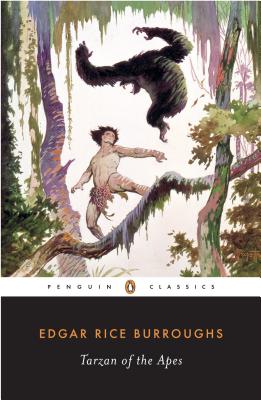
Tarzan. This adventure classic is probably one of the first Disney movies many people see, however it was originally a book published in 1914 by Edgar Rice Burroughs. Tarzan of the Apes consists of the same beloved plot: a young boy is raised by apes within an African jungle but when White explorers arrive within the area, the adult Tarzan adopts their ways to gain the love of Jane Porter. Ring any bells? However similarly Disney adapted the story, the original text highlights the differences, conflict, and struggle between what is considered the “wild” and the “civilized.” While the Disney version definitely provided some heartwarming magic and toe-tapping music to the story, the book provides a little more introspection.


The Jungle Book. The well-known author and Nobel Prize winner, Rudyard Kipling, is the original writer of the now Disney classic The Jungle Book. Originally published in 1894 the story follows the unlikely friendships between a young boy and various animals within the jungle. Disney adopted this classic into an animated film in 1967 and eventually created a live action remake in 2016. The Jungle Book is undoubtedly another example of Disney’s capability to not only popularize 100+ year old stories, but to bring them to life in a new way. I wonder what Kipling would have thought of his characters as Disney merchandise?


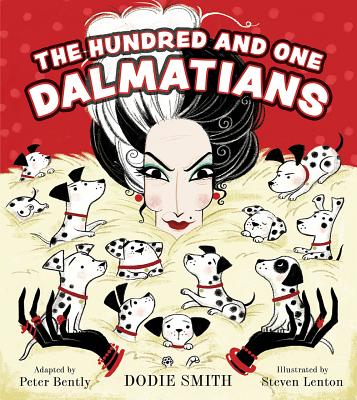
101 Dalmatians. The Hundred and One Dalmatians is actually a children’s novel written by Dodie Smith and originally published in 1956. The plot between the two works is similar, with Disney adapting original characters such as Pongo and Missis as well as the now infamous Cruella de Vil. The book is only 32 pages long, which is considerably shorter than the two plus hours of watch time for each 101 Dalmatians-themed movie. Nevertheless, we have Disney to thank for not only bringing life to these characters but expanding on and developing the heart behind Smith’s work


Peter Pan. The story and character of Peter Pan is as deep in history as the character and story originally created by J.M. Barrie in 1906. The story of Peter Pan began with the character who initially appeared in Barrie’s 1906 Novel The Little White Bird. This appearance was transferred into the 1906 lesser-known story Peter Pan in Kensington Gardens. Peter’s story wasn’t fully developed until Barrie’s 1911 novel Peter and Wendy. The character is famous as a symbol of youth, and many of the characters and themes from this story are now the hallmark of Disney’s brand—from Tinker Bell’s prominent presence in marketing to the popular idea of “being a kid at heart” that builds the Disney aesthetic. Peter Pan is one of the most iconic characters in popular culture and in Disney, all thanks to the imagination of J.M. Barrie.


Pinocchio. Pinocchio is one of Disney’s earliest movies and stories. The animated film Pinocchio dates back to 1940, but the plot and character were originally created by Italian author Carlo Collodi in 1883. The original Italian story, however, is much darker than the beloved Disney adaption. Pinocchio, rather than becoming woodworker Geppetto’s friend and adoptive son, begins abusing him and eventually runs away as his feet are carved by the old man. Geppetto is eventually arrested for trying to recapture Pinocchio, after which Pinocchio returns to Geppetto’s house where he kills Jiminy Cricket. Additionally, Pinocchio is almost hanged by the Fox and Cat who want to steal Pinocchio’s gold, but he is saved by a Fairy at the last moment. However, Pinocchio doesn’t learn his lesson and after losing his gold to the Fox and Cat, he lives with the Fairy and her son where his mischievous lessons and dire consequences continue up until he turns into a real boy. The much longer and darker original story is meant to serve as a lesson for children and emphasize good behavior—a similar idea perhaps, although less lighthearted, than the Disney adaptation.


Bauer, P. & Lowne, C. (2018, October 23). The Adventures of Pinocchio. Britannica.
https://www.britannica.com/topic/The-Adventures-of-Pinocchio

The Little White Bird. (2021, May 19). In Wikipedia
https://en.wikipedia.org/wiki/The_Little_White_Bird

Photo Credits: Changing Hands Bookstore