Book Review

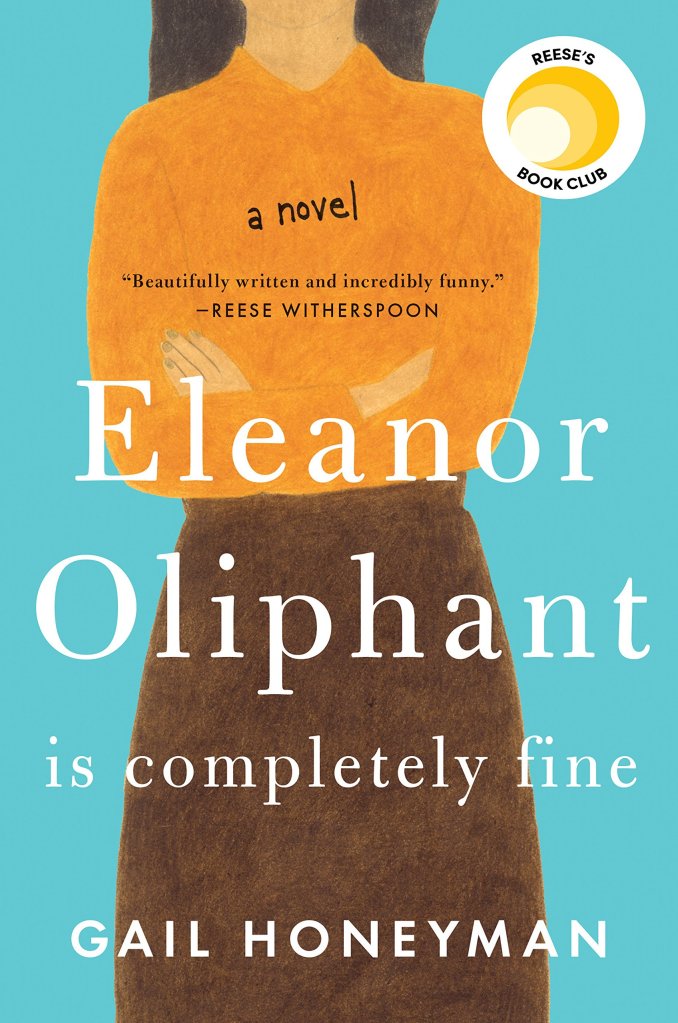
Eleanor Oliphant is Completely Fine by Gail Honeyman

Publisher: Penguin Books
Genre: Contemporary Fiction
Pages: 416
Format: Paperback
Buy Local
My Rating: 3/5 stars

Summary

In Gail Honeyman’s debut novel, she details the story of Miss Eleanor Oliphant, a 29-year-old intelligent, witty, and independent woman living in Glasgow, Scotland. Eleanor sees the world, and her very existence, as a very private routine that—if kept in order—would allow her to maintain an acceptable and satisfactory life. But Eleanor’s idea of normal quickly crumbles away when she meets her new best friend, Raymond, and experiences human connection like never before.

With every new social interaction comes a fresh internal perspective for Eleanor. Experiences that may seem trivial to the more extroverted person push Eleanor outside of the emotional and physical boundaries that have bubbled around her for so long. These moments test the initial beliefs she held about her life habits and the constructs of her own identity. Seen as a modern Jane Eyre, you will at the very least come to admire the beautifully raw character that is Eleanor Oliphant.

Thoughts

Eleanor Oliphant is Completely Fine proved to be both an entertaining and heartfelt novel that puts you through a rollercoaster of emotions. You will encounter sweet and charming moments contrasting with painful awkwardness, topped by a heart-aching sadness for Eleanor’s history and struggling emotional state.

At first read, you might find Eleanor to carry a distant persona with her unique family history and perspective on life. Yet, as you get deeper into the story, you will empathize with the darkest bits of fear, doubt, and shame that in reality is not easily or regularly voiced to others, but ultimately proves to be a big part of Eleanor’s existence.

Gail Honeyman offers an authentic angle on the realities behind trauma, solitude, and friendship through a narrative laced with unspoken grief. She reflects on what it is like to live in a time where an individual can be surrounded by hundreds of people, either physically or online, and still feel overwhelmingly alone. Honeyman illuminates how this loneliness can be overcome with the support of friends or family and a strong individual will to not just survive, but live freely and with an open heart.


Guest post courtesy of Adrianna Ortero

Literary Event: Write Here, Write Now | Lynn Melnick: “Writing Truth from Memory”

Independent Bookstore Day is April 30! What is a sufficient way to celebrate all the bookishly amazing qualities of the independent literary community? Besides visiting your local bookstore, you can attend Changing Hands Bookstore’s online writing workshop.

Changing Hands offers a monthly writing workshop online called “Write Here, Write Now” in partnership with Phoenix College and ASU’s Piper Center for Creative Writing.

This month’s session “Writing Truth from Memory” focuses on the use of our memory as a means to tell stories, how we can harness and change our memories in storytelling, and how memories ultimately contribute to our work. The session includes poetry readings from Shane McCrae, Danielle Pafunda, and Adrienne Su to demonstrate the role of memory within writing and how we can utilize it in telling the truth.

Additionally, the event includes a 30-minute crash course on creative writing—including a writing prompt and dedicated time to write and read your work to the group. 

Let’s celebrate Independent Bookstores Day in style by exploring our creative side and taking the role of author; to register, click here.


Location: Online

Date: Monday, April 26, 2021

Time: 6:30 p.m. – 8:00 p.m.

Price of Ticket: $5.00 (+$1.24 Fee)

Book Review

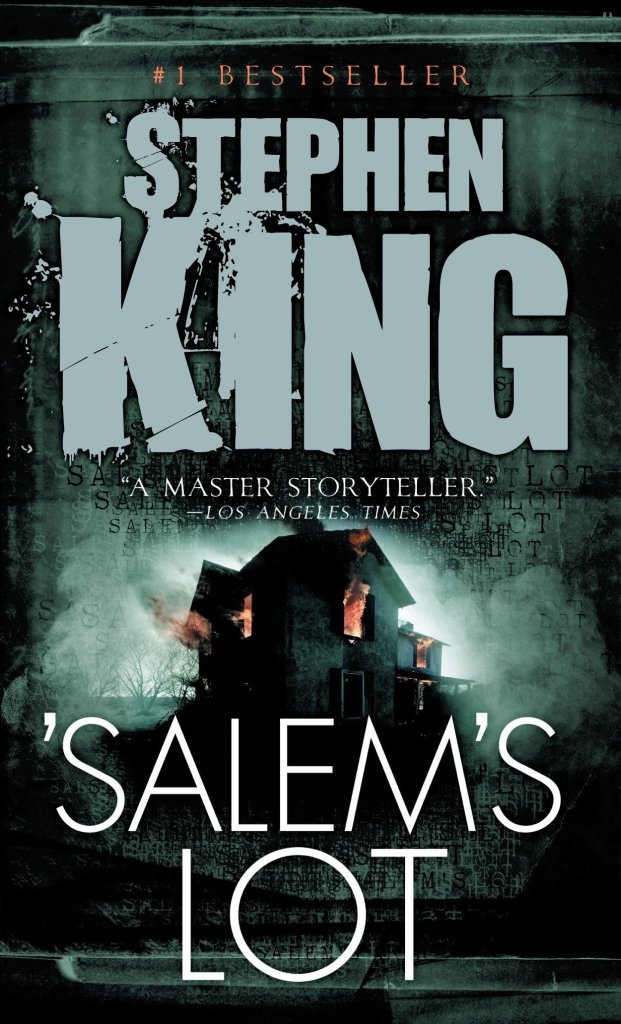
Revisiting ‘Salem’s Lot by Stephen King

Publisher: Anchor
Genre: Horror
Pages: 672
Format: Paperback
Buy Local
My Rating: 5/5 stars

Summary

‘Salem’s Lot is still a popular horror novel, despite being published in 1975, a fairly long time ago. For that reason, I believe that it’s appropriate to write a review and revisit this renowned novel that Stephen King regarded as one of his favorites. I hope it inspires you to either read this classic for the first time, or—if it’s been a while since you’ve read it—to dust it off and dive back in. 

At its most basic level, ‘Salem’s Lot is a horror novel about vampires. It takes inspiration from vampire stories such as the infamous Count Dracula, but is far more modern in terms of writing about vampires as they infiltrate regular society, largely inconspicuous until the living start to pay closer attention.

However, upon a closer glance, the novel all is not what it seems on the surface. In fact, vampires aren’t even suspected for at least the first 100 pages. Instead, the focus is on the introduction and development of the characters. Their stories are what carry the novel and make it important and a worthwhile read. As King often does in his books, there are underlying themes woven intricately into the subplots and characters that require closer attention from the readers—mirroring the relationship between the vampire, Kurt Barlow, and the protagonist, Ben Mears (joined by the townspeople). As Mears and some of the townspeople join forces to defeat the vampire infestation, much is learned about the characters and their pasts. 

Even though the vampires are supposed to be the antagonists of the story, it could be argued that the real antagonist is the pressure of living in an idyllic town, and the damage that can be done by burying some of the traumas that the townspeople feel are better left unsaid, due to the importance of maintaining the town’s ‘squeaky clean’ image. 

That being said, there is a reason King is regularly associated with the horror genre. While there are more tender, human, components of the novel, the concept of the undead comes alive within the novel, and it is equally engaging. King stays true to traditional vampire lore, complete with nods to garlic and holy crosses. However, pairing these stereotypes with a rural North American town setting make it both modern and haunting.

With everything from scares to keep you up at night to well developed characters you’ll fall in love with, ‘Salem’s Lot is, without a doubt, a novel both worth reading for the first time or dusting off after a long hiatus.

6 Book Series to Get You Back Into Reading

Are you looking for a new series to transport you back to the glory days of Harry Potter and The Hunger Games? Trust me, I’ve been there—worrying I’ll never find anything as good as the adventures I went on with Tris Prior and Percy Jackson. Procrastinating buying that new book in the bookstore because it could never give you the same feelings of nostalgia of reading Twilight for the first time? I get it, but it’s time to move on. There are bigger and better books out there; just as there are more characters to grow with and tropes to fall in love with. I promise. And with everything going on right now, a series is just the heavy duty escape into a magical world to occupy you for more than a few days. So, here are five book series to get your reading mojo back—adding a book to each series the further you read on.


Six of Crows—Leigh Bardugo. Starting off with this duology, Six of Crows introduces a slew of characters for you to meet: a witch hunter, sharpshooter, a former servant with a talent for stealth and knife-wielding, and many more. This character-driven plot consists of heists and cons against the Ice Court, wealthy merchants, and crime bosses. With only two books, it’s an easy way to ease back into reading.

This series is part of the Grishaverse, which means there is a separate series called The Shadow and Bone trilogy that you can read after! This series is also coming to Netflix April 23.


Caraval—Stephanie Garber. This is the first trilogy I read after my three year slump of reading, and it totally kick started my reading addiction again. These three books follow the two sisters Scarlett and Tella Dragna as they find themselves at Caraval, an exclusive once-a-year performance in which the audience gets to participate to win a special prize. Things take turn, however, when the sisters end up in a sinister game fighting for love and family.

As you dive deeper into the series, you discover mysterious forces and secrets that go back to before they were even born—all orchestrated by the anonymous ringmaster and the all-powerful Fates.


Crave—Tracy Wolff. A great recommendation for all vampire lovers, Wolff’s series takes place at Katmere Academy: a school full of shapeshifters, witches and vampires. For Grace, this is the last place she wants to be…that is, until she meets Jaxon, a charming vampire with deadly secrets. This young adult series is the next series to sink your teeth into.

The fourth book of this series comes out September 28th, 2021—plenty of time for you to catch up on this series full of twists, romance, and deep fantasy lore; so sit back, relax, and read as slow as you want to.


The Heroes of Olympus—Rick Riordan. If you took quizzes to see who your godly parent was, this five-book series is for you. Chances are, if you’ve already read the original (beloved) Percy Jackson series, then you’ve already heard about this series. Whether you brushed it off or thought it wouldn’t live up to its hype, this is your sign to finally read them. It mixes familiar faces from Camp Half Blood and introduces new ones from Camp Jupiter to unite seven half bloods to fulfill another prophecy and save the world.

The Heroes of Olympus series expands on the mythological world and gives the characters from the original series another chance to continue their story, set a couple months after The Last Olympian.


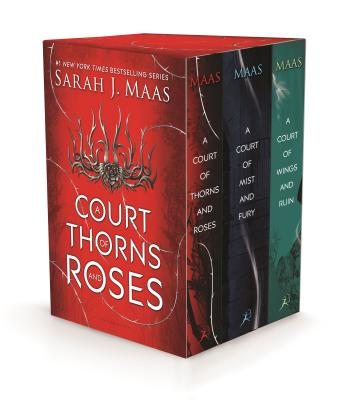
A Court of Thorns and Roses—Sarah J. Maas. Sarah J. Maas is taking the world by storm with her A Court of Thorns and Roses series. This is the first series in a long time where I’ve stayed up until two in the morning just to finish reading. Classified as a “New Adult” genre, this series can be described as Beauty and the Beast meets magical kingdom of faeries. If you’re into amazing world building and obsessing over characters, I highly recommend it, 11/10. While only four books are out on the market right now, Maas is under contract to write two more, ensuring the perfect amount of satisfaction and anticipation in a series. 

P.S. If you like this series you can level up and go for Sarah J. Maas’ seven book series, Throne of Glass. Psst…this series is completed. Yay!


The Stormlight Archive—Brandon Sanderson. Last but not least, we have Sanderson’s The Stormlight Archive series. This is not for the faint of heart, but if you’re not afraid of commitment, I highly suggest it and I applaud you for diving head first into reading again. Although there are only four books out, there are ten planned.

So, if you’re ready to invest six to ten years on a series, this one is perfect to get you back into the reading saddle. Happy reading!

Chaos Walking: Book-to-Movie Adaptation

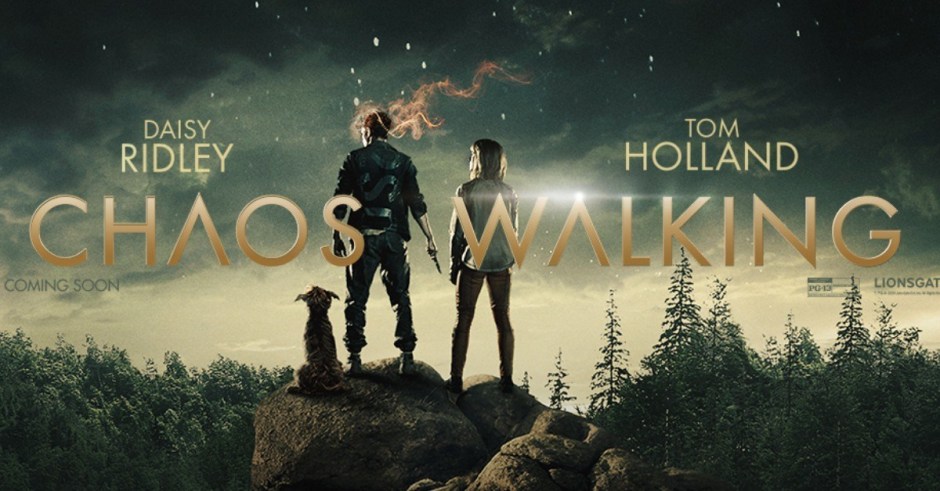
When I first heard that The Knife of Never Letting Go by Patrick Ness was going to be made into a movie, I was cautiously optimistic. This book seemed like an odd choice for a movie adaptation, as it was filled with dark themes and had a very complicated setting that would be hard to translate into a movie. However, if done right, I could absolutely see this adaptation becoming something like The Hunger Games, where the dark themes and complex world were translated almost seamlessly to film. And seeing as they cast two of my favorite actors to play the leads, Tom Holland and Daisy Ridley, I knew that I at least needed to give this movie a chance. However, after finally getting to watch this adaptation, I have to admit that I am disappointed. While it was by no means terrible, the movie sanded down a great deal of what I loved about this book, leaving behind a movie that just felt underwhelming. In this reflection I will detail the things I enjoyed, and the things that let me down, in Chaos Walking.

Before I begin, however, a quick spoiler warning. Since I will be comparing the book and the movie, there will be spoilers for both. If you wish to view either of them unspoiled you can find the book here and showtimes for the movie here.

The Good

First off, what I enjoyed about the movie. One of the areas where I was most skeptical when it came to adapting this book to a movie was the concept of the Noise. Basically, in the book, the humans live on a planet where the men are all able to hear each others thoughts all of the time, an ability which they call the Noise. This would obviously be very difficult to do in a movie, as the voices would eventually become overwhelming. Much to my surprise, however, the movie actually managed to portray this not only in a way that didn’t overwhelm the viewer, but also led to some of the best moments in the movie. The Noise is portrayed as an iridescent fog that whispers, which allows for the viewer to differentiate between spoken and thought dialogue, and only gets louder when it’s necessary for the scene. My favorite scene where this occurs is when Todd, the main character, learns that the town murdered his mother and all the other women in the town. Todd’s panic and his subsequent struggle to hide his thoughts leads to a wild hurricane of competing voices that expresses the turmoil of the scene perfectly. I would even argue that this was better than how it was handled in the book.

Another way the Noise is improved from the book is its ability to create illusions. In the book you can only hear the disembodied voices, but in the movie the Noise will periodically take the form of people and things that look real enough to fool several characters. This is used in my favorite scene in the entire movie, where the main antagonist is fooled into thinking that the ghosts of all the women he killed are confronting him. It creates a powerful moment where the movie finally addresses the darker themes of the book in a direct way, and if the movie had featured more moments like this I would’ve enjoyed it a lot more. Instead, the movie shied away from these themes, so I’m only left with a small handful of moments that I remember fondly.

The Bad

Sadly, the occasional good scene wasn’t able to save this movie—and for every good choice the movie made there were far more missteps that just didn’t work.

The first misstep in Chaos Walking was the age of the characters. The two main characters were 13 years old in the book, but in the movie their age seems to be somewhere in the 18–19-year-old zone. While I understand why movies age up characters, especially when the movie is rated PG-13 and contains a great deal of swearing and violence, this change damages a large portion of the movie. Todd, the male lead, is often treated like a child and behaves in a manner that would make sense if he was 13. He is also treated like a child by the adults in the movie. However, while Tom Holland is an actor that can often play younger characters, he’s still too old to fit in with the attitude and the treatment he receives. This problem also happens with Daisy Ridley’s character. She is treated and behaves like a frightened little girl, but she still comes off as a young adult and it creates a jarring disparity that is never really addressed. As much as I love Tom Holland and Daisy Ridley, they weren’t the best pick for a story about children, and the confusion over their age and the way they behave follows them throughout the entire film.

The movie also removed Todd’s entire character arc—his struggle with what it means to be a man. In the book, Todd is repeatedly taught that in order to be a man he must be able to kill, and when he finally leaves his town, he is confronted with many opportunities to do so, some more justifiable than others. Todd struggles with his desire to prove himself a man to his society and his innate humanity, inevitably questioning what it even means to be a man and if he really wants to be one. This arc is helped by Todd’s age, as he is regarded by his entire town as a child whom they don’t take seriously, and he is frustrated over this treatment. This is completely absent in the movie. Todd has no hangups about killing; he says one line about being a man in the beginning but it never comes up again, and for all intents and purposes he doesn’t struggle at all with his identity. This wouldn’t be an issue if the movie added another aspect of Todd’s character to replace it, but instead Todd is just portrayed as a doe-eyed kid with very little substance to him. This is a shame, because his struggles with manhood would’ve been an unique arc, but instead Todd is left a very bland character.

Where the movie really drops the ball, in my opinion, is the removal of the religious themes. The main focus of the book was how religious extremism can lead to violence and evil, especially when faced with the unknown. This is shown in two ways: first, how the humans treat the natives of the world, known as the spackle; and how they treat women. Without giving too much away, The Knife of Never Letting Go shows just how dangerous fear of the unknown can be, and how opportunistic people can use fear combined with religion to manipulate the masses for their own selfish ends. However, this is not the case in Chaos Walking. While religion does occasionally make an appearance, it is limited to one character who is generally dismissed by others. The power that fear has is glossed over entirely, with only slight moments where people behave irrationally. The violence and death driven by fear is completely dismissed as well. The animosity between the humans and the spackle only makes one very brief appearance, and could honestly have been left out of the movie entirely. While the movie does address how they subjugated and murdered all the women, it is only focused on occasionally, and the movie pins most of the blame on two men (rather than acknowledging that it was done by the entire town). At times it feels like the movie is afraid to delve too deeply into these ideas and risk alienating movie watchers, which is a real shame seeing as, like I said before, the times where this movie shines is when it embraces the themes of the book. If Chaos Walking had taken the risk and addressed these themes head on, it would’ve been a much better movie, but instead it only went halfway and left a lot to be desired.

Final Thoughts

In conclusion, I was pretty disappointed by this movie. I don’t necessarily blame anyone involved in the film, because this book was bound to be hard to make into a mainstream movie. It’s a book that is jam-packed with themes and ideas, and the movie struggled to include them and ended up feeling incomplete. As someone who read the book, I can’t say whether someone new to the story would enjoy the movie. I did watch this movie with my father, who hasn’t read the books, and he was often lost and confused, so I can’t imagine this movie being a good introduction the the world of The Knife of Never Letting Go. That being said, I can’t say that I completely regret watching it. The scenes where the movie really embraced the original story, though few and far between, were incredible to watch. Ultimately, I don’t see myself watching Chaos Walking again. It just lacked the spark I felt when reading The Knife of Never Letting Go that made me fall in love with the series.

5 Books to Liberate You From Dieting and Diet Culture

Photo by Gabriel P on Pexels.com

Have you heard that old bit about goldfish and water? Two young goldfish are swimming around and they pass an older goldfish who says to them, “Water’s great today!” After, one of the young goldfish says, “What the heck is water?” Diet culture is like the water around us; we swim through it everyday and it seems so normal and commonplace that we don’t even recognize it’s there.

Diet culture is a system of beliefs that equates thinness to health and a higher moral and social status, that promotes weight loss and shrinking one’s body, and perpetuates fatphobia and oppresses people in non-normative bodies, especially people of color, disabled people, queer people, and trans people. Seventy five percent of women exhibit disordered eating or thoughts about food or their bodies. Ninety one percent of women try to control their weight with dieting and 22% are “always” dieting. Are you tired of the shame we put on diverse bodies? Are you sick of the constant diet cycle and shame of “failing” over and over when actually 95% of diets fail you?

Making peace with our bodies, with eating, with taking up space figuratively and literally, is a radical act while living in a culture steeped in dieting, diet culture, and oppression, and while dieting is a multi-billion dollar industry. To reject dieting, to fight diet culture, and to treat people living in larger bodies with dignity and respect is to live better in our personal lives and to make change socially and culturally. These five books will illuminate the myths surrounding equating health with thinness, challenge your assumptions about fat and size, educate you on the unethical treatment of fat people, and teach you how to live differently—and better—when you reach for liberation from dieting and diet culture.


Anti-Diet: Reclaim Your Time, Money, Well-Being, and Happiness Through Intuitive Eating— Christy Harrison. As a registered anti-diet dietician and journalist, Harrison offers this incredibly well-researched manifesto on rejecting dieting once and for all.

She uncovers how the blame of dieting failures and weight stigma is not the fault of individuals, but rather the fault of the diet industry, creating victims for profits, and unethical science and attitudes.


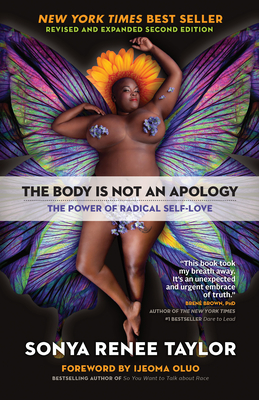
The Body is Not an Apology: The Power of Radical Self-Love—Sonya Renee Taylor. Read this book. Just read it. Taylor offers one of the most valuable gifts: radical self-love.

Radical self-love is about healing the wounds of oppression, body terrorism, and systems that perpetuate racism, sexism, fatphobia, queerphobia, and ableism. Taylor invites us to dismantle those systems—with love and with a brand new chapter of tools and exercises published in this second edition.


Intuitive Eating: A Revolutionary Anti-Diet Approach—Evelyn Tribole and Elyse Resch. If and when you’re ready to leave dieting behind forever, learning about intuitive eating offers a detailed road map for how to do it.

Based on 10 principles, intuitive eating is about everything from rejecting diet mentality to respecting your body to relearning how to honor your hunger and respect your fullness. If this how-to guide is useful to you on your journey, consider their accompanying workbook or their recently published book of daily exercises.


The F*ck It Diet: Eating Should Be Easy—Caroline Dooner. This is not another diet book; it’s not even another diet book masquerading as a “lifestyle change.” There are no rules. F*ck it.

As both a comedian and a former chronic dieter, Dooner’s anti-diet diet book is both funny and scientifically accurate. Are you still hungry after lunch? F*ck it, eat when your body is hungry. The lesson you’ll learn by the end of the book goes way beyond the irreverence or rebellion you might assume it teaches, but goes way deeper and down to relearning intuition and trusting our bodies again.


What We Don’t Talk About When We Talk About Fat— Aubrey Gordon. Did you know housing and job discrimination because someone is fat is legal? And what if I told you that fat people received worse healthcare, not simply because half of all doctors describe their fat patients as “awkward” and “ugly” but also because fat people are regularly told to “lose weight” as treatment for things like ear infections or broken bones?

Gordon walks readers through the world of anti-fatness and the systems that keep it in place. This must end. As she says, “We can build a world that doesn’t assume fat people are failed thin people, or that thin people are categorically healthy and virtuous.”


Liberating yourself from dieting and diet culture is not easy, but it is important. These books will help you see differently, love yourself and others more, and ultimately live better. They will help you see the water around you—and you can’t clean up dirty water if you can’t see it.

If you are seeking support or resources for an eating disorder or disordered eating, call or text the National Eating Disorders Association helpline at (800)-931-2237 or chat with them online.

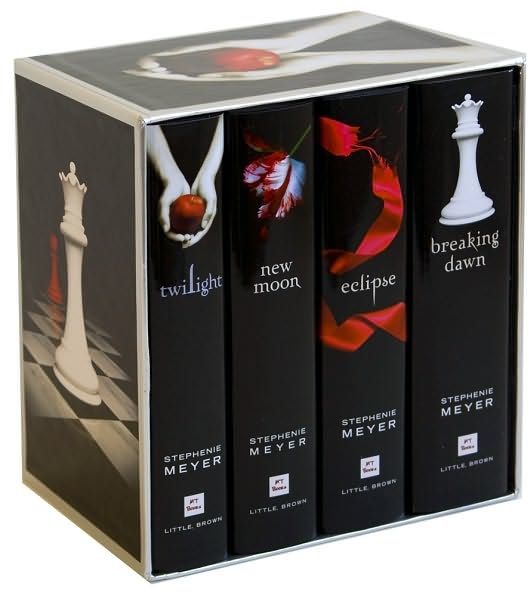
Twilight Books Ranked

Most of us are likely familiar with the Twilight Saga from Stephanie Meyer. If you were a teenager in the late 2000s–early 2010s, you probably saw the series everywhere. Meyer’s vampire versus werewolf world had us captivated. Like with all series, I’m sure each of us has our favorite installment. Here, I have compiled my ranking from least to most favorite. (Warning: spoilers ahead!)

4. New Moon. Starting out the list at the bottom is New Moon. I loved this series for the better part of my young adult life, and while I do appreciate this installment in the series, it does fall at the bottom of my list. This may seem counter-intuitive as I was Team Jacob growing up and we see the most of Jacob in this novel, but I can’t fully handle lifeless-adrenaline-chasing Bella. I definitely understand where her emotions were coming from, but it doesn’t exactly make for the most riveting read. That being said, I do love how we learn about the werewolves here and see Bella’s friendship with Jacob evolve.

3. Twilight. As the book that began the whole series, it didn’t feel right to put it last. This book is important to me for a lot of reasons. I had seen the name being thrown around but wasn’t sure what to think. Eventually, the movie came out and I watched it and immediately fell in love. At that point, I picked up all of the books and read them immediately. So in that sense, it was this one that kicked it all off for me. That being said, I have always been a big fan of sequels in stories, which is likely why I am more drawn to the later installments in the series. I also think it’s fair to say that Meyer’s writing improves greatly across the series, therefore the others are just slightly better.

2. Breaking Dawn. Now this one may be controversial, as Breaking Dawn is a universal fan favorite. There are a lot of reasons to love this one—we get to see Bella as a Vampire, we learn about a new type of “magic,” and there is the ultimate vampire showdown. A lot of momentum has been building for this book, and it played out really well. It can be hard to end off a series and I think Meyer did a good job rounding everything out. The ranking of Breaking Dawn as 2nd is mostly due to what it lacks compared to Eclipse, which I will get into next.

1. Eclipse. There is a plethora of reasons that Eclipse takes the gold as my favorite installment of the Twilight Saga. One of the best parts of learning about any world is seeing world building while also getting to know more about the characters, and this is something Meyer’s does beautifully here. We learn about the newborn vampires and how they’re used for armies while getting to know more about Jasper. We also get Rosalie’s backstory as well as the backstory for the Quileute tribe. All of these are important pieces to the puzzle of the Twilight world and it makes for an extremely satisfying read. The love triangle between Bella, Jacob and Edward really comes to a head here as well. I remember reading this for the first time and finishing it within four days. Whenever I want to re-read or watch a part of the series, I always choose this one.


This list was not as hard to make as my list for The Harry Potter Books, however the amount of novels in the series played into that. Eclipse has been my favorite ever since I first read the series, but the rest I wasn’t sure about until I sat down and went through each of them again. Feel free to comment your list and let us know what you think! If you’re interesting in purchasing any of these, you can find them all on Changing Hands’ website here.

4 Binge-Worthy Escapism Reads

Now more than ever, many people are finding their way to books. As the real world becomes progressively more and more like a dystopia, books provide a welcome escape to the turbulence of our everyday life. If you’re anything like me, this past year has made you even more dependent on fictional worlds to help make sense of the real one. While this escapism if often found in books, it’s also commonly found in the world of film and TV shows. In the spirit of fueling your next binge-reading and binge-watching experiences, I thought I’d provide some escapism series that have a film counterpart (or, at least one in the works). These selections are all made up of at least three books in the core series, and many include spin-offs or related works.


Shadow and Bone—Leigh Bardugo. Soon to be a Netflix series, now is the perfect time to read the Shadow and Bone series. The first book in the trilogy follows orphaned soldier Alina Starkov, who unwittingly reveals dormant and powerful magic to save her best friend when her regiment is attacked. She begins training with the Grisha—the magical military elite—under the guidance of their infamous leader, the Darkling, who believes that Alina’s power might be the key to saving their war-torn country. As Alina trains, she makes a dangerous discovery that threatens those she loves and her entire nation.

In addition to the Shadow and Bone trilogy, the Grishaverse also includes the Six of Crows duology and the King of Scars duology, whose final book was just released last month!


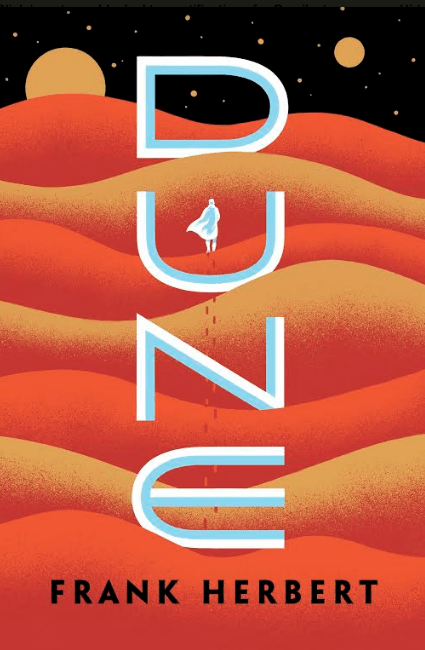
Dune—Frank Herbert. Lauded as one of the best science fiction novels of all time, you’ve likely heard about the adaptation starring Timothée Chalamet and Zendaya set to be released later this year. Dune tells the story of Paul Atreides, heir to a noble family on the desert planet Arrakis, who is tasked with ruling the desolate land and safeguarding the melange—a drug that is highly-coveted for its abilities to extend life and enhance consciousness. When Paul’s family is betrayed and destroyed, he goes on a journey to avenge his family and bring to fruition humankind’s most ancient and unattainable dream.

As an added perk for those looking to escape in the barren deserts of Arrakis, the Dune series contains many prequels and sequels written by both Frank Herbert himself as well as his son, Brian Herbert. For a complete list of the books in the Dune series (both novels and short stories) in chronological order, check out the Dune website here.


A Darker Shade of Magic—V.E. Schwab. For those who have recently read The Invisible Life of Addie LaRue and have fallen in love with Schwab’s magical writing, I’d draw your attention to her older fantasy series, A Darker Shade of Magic. Schwab crafts a world of four parallel Londons: Red London, where magic and life are celebrated; Gray London, a poor land without magic; and White London, a city slowly losing its life force due to constant magical warfare. As for the fourth London, Black London, nobody speaks of it anymore. Almost nobody can travel between the Londons, as the magicians capable of teleporting between the worlds (the Antari) are all but extinct. One of the last remaining Antari, Kell, acts as a messenger between the Londons—as well as an unofficial smuggler of valuable artifacts, a side gig that often gets him into trouble. His misadventures cause his path to collide with Delilah Bard, a cutpurse looking for adventure.

The Shades of Magic trilogy, while not as well-known as some of the other series on this list, is also slated for a film adaptation in the (hopefully) near future by writer Derek Kolstad.


Outlander—Diana Gabaldon. Outlander follows Claire Randall, a former British combat nurse, as she returns home from the war in 1945. While on a second honeymoon with her husband, she walks through a standing stone in one of the ancient circles of the British Isles and finds she is suddenly an outlander in a war-ravaged Scotland in the year 1743. As Claire attempts to navigate this violent world, she finds a companion in the young Scottish warrior Jamie Fraser. As their lives become more closely intertwined, Claire finds herself torn between two different men from two irreconcilable lives.

The Outlander series is currently eight books long, with a ninth set to be released sometime this year and a tenth promised after that. The series has also been adapted into a TV show, with 12–16 episode seasons for each book. The show just aired its fifth season—based on The Fiery Cross—last year, and has been renewed for a sixth and seventh season.