Book Review

The Night Circus by Erin Morgenstern

Publisher: Anchor
Genre: Fiction, Fantasy
Pages: 528
Format: Paperback
Buy Local
My Rating: 4/5 stars

Summary

The Night Circus tells the story of a mysterious circus that arrives without warning. Le Cirque Des Rêves (The Circus of Dreams) is only open at night, and the wonders inside seem truly magical. From the delectable treats to the performers and tents, every aspect of the circus seems to delight and defy reality at every turn. Of course, few know what is really occurring behind the scenes.

Celia and Marco have been engaged in a duel for most of their lives. Entered into a competition by their vindictive guardians when they were children, they know little about the contest—including the rules, the goal, and against whom they are competing. All they do know is the venue, a circus wherein they can showcase their abilities as illusionists and magicians.

Thoughts

One of the first words that comes to mind when I try to describe this book is enchanting. Morgenstern weaves a narrative that seamlessly blends what appear to be unrelated storylines with an elegance that seems to reflect the winding paths of the circus itself. A large cast of characters are introduced right off the bat, and it seems impossible that all of their stories can be treated with the same level of importance. Doing the impossible, however, is a specialty of the titular circus, and the book makes a serious (if not entirely successful) attempt to bring you deep into these characters’ lives. An especially captivating touch comes from the occasional passages in the second person: you truly become the person experiencing the wonders housed within Le Cirque Des Rêves. The descriptions of the circus itself is also deeply captivating: from the intoxicating smell of apple cider to the wonderfully-disorienting layout of the circus tents, you’ll find yourself mesmerized and, like the Rêveurs—the self-dubbed devoted followers of the circus—eager to explore more.

It’s worth noting that the actual plot of the book can be a bit slow to progress in some places, but the aforementioned descriptions do much to keep the reader’s attentions during these stagnant moments. One drawback of the large number of characters included in the story is the subsequent lack of characterization as a whole. Aside from the main duo of the novel, Celia and Marco, many characters are not given special attention or notice. A notable exception to this rule is found in the character of Bailey and the young circus twins he befriends, Poppet and Widget. It is also worth noting that the book is divided into many (many) chapters—each segment is only about a few pages long. While this division makes the book easy to read in pieces during a busy time (midterms, anyone?), I cannot stress enough the importance of noting the identifying information at the beginning of each chapter—namely the year. The contents of the story span a few decades, from the inception of the circus to the conclusion of the competition between Celia and Marco.

Perhaps my favorite thing about this story comes from the family created by everyone involved in the circus. As a close-knit community formed by the performers themselves, it’s touching to see the circus grow to something greater than itself, something that makes dreamers everywhere feel seen and understood by. This is perhaps most clearly seen in Bailey, who sees the circus as an escape from his dull life on a rural farm, and Herr Friedrick Thiessen, the clockmaker who creates a cult-following from his captivating publications about the circus. At its core, beyond the magic and mystery, The Night Circus is about family, and the bonds that we form when we are allowed to truly be ourselves. The love shown by the characters to one another—and to the circus itself—is the true magic at work, and serves as an inspiration to dreamers everywhere.

4 Books Turning the Big 5-0 in 2021

Birthdays are a funny thing. As I turn fifty this month, I realize that half a century is a big deal, and not just for people! As the years go by, books come and books go—but the really great ones stick around. So, to celebrate my birthday, I look to some novels and books that have truly stood the test of the time.


Our Bodies, Ourselves—Boston Women’s Health Book Collective, Judy Norsigian. In 1969, some women met at an Emmanuel College conference to discuss women and their bodies. From this gathering grew a group that eventually formed a collective that left nothing off the table when it came to women, their bodies, their sexuality, and even reproductive rights. “Women and Their Bodies,” a 193 page pamphlet, was published in 1970 and in 1971 was renamed Our Bodies Ourselves to reaffirm the ownership that women need to take in regards to their physical selves.

Several other niche editions have appeared as well, tackling menopause and pregnancy and birth. It has been updated every three to four years, but unfortunately due to some financial pressure the group’s last edition was in 2011. However, the information and spirit of Our Bodies Ourselves still holds on strong!


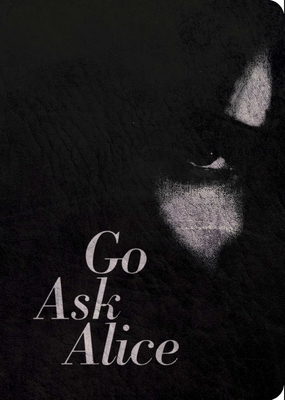
Go Ask AliceAnonymous. Promoted as a real-life account of a teenage girl’s disturbing foray into the world of drugs, the authorship of Go Ask Alice has been called into question for quite some time. It has been suggested that the book is actually the combined efforts of several authors and not a true account at all.

Be that as it may, that does not negate the powerful story of “Alice,” who is never named in the novel, as she descends into a life of drugs and sexual abuse. Go Ask Alice is a cautionary tale that—despite its age—still holds up today, as proven by the 50th anniversary edition that was published in late December.


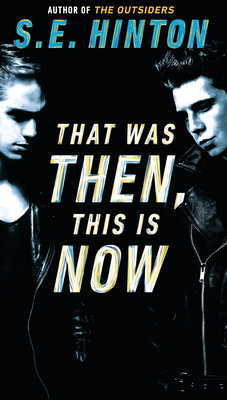
That Was Then, This Is NowS. E. Hinton. While novelist Hinton is best known for The Outsiders, you cannot discuss groundbreaking young adult fiction without including That Was Then, This Is Now.

Set in what would be referred to now as the same “universe” as The Outsiders, the novel features some of the same characters, but focuses mainly on two close friends, Mark and Bryon. As a coming of age story, it explores the inevitable growth and tensions that come with being not only being a teenager, but the specific challenges of the 1960s.


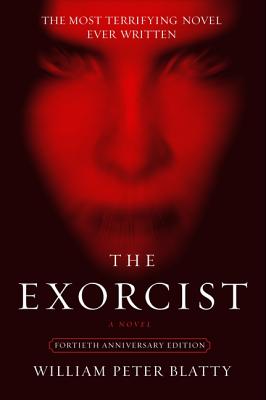
The ExorcistWilliam Peter Blatty. Terrifying then, terrifying now, Blatty’s novel continues to define the horror genre with its disturbing imagery and details.

The novel explores themes of religion, faith, and death through the story of Regan, an 11-year-old who suffers possession at the hand of a demon. Her shocking journey is laid out graphically, and ultimately becomes a battle of good versus evil and a test of faith. The Exorcist has not only held up as a novel but it spawned a critically acclaimed film, and a recent television series.


Good books are like a fine wine, they only get better with age, so give one of these oldie-but-goodies a try!

5 Books Entering the Public Domain in 2021

The start of this new year brought with it a collection of books entering the public domain. So many fascinating tales are now available for the public to adapt, share, and create with—from compelling dramas, to absurdists allegories, to tragic tales of love and loss, this year’s batch is truly extraordinary. To celebrate the arrival of these classic stories, I’ve complied a list of my favorite books that have entered the public domain this year! May they continue to inspire for generations.


The Great Gatsby—F. Scott Fitzgerald. You may remember this story of greed and love from your high school English class. Set in the early 1920s, young businessman Nick Carroway rents a home in New York for the summer and finds himself entangled with an eccentric ‘new money’ millionaire named Jay Gatsby who assists him in his quest to win the heart of Daisy Buchanan. There’s only one problem; Daisy is married to a rich (and unfaithful) husband. The death of the American Dream in the face of unfettered ambition is an idea that still rings true today, and I, for one, cannot wait to see what stories come from this book’s entry into the public domain.


In Our Time—Ernest Hemingway. If you love stories of the trials of war, this collection of short stories is right up your alley! Set around the First World War, In Our Time is a collection of tales surrounding all aspects of wartime—from scenes of evacuations, to the experiences of soldiers, to life after the war, this book showcases the ever present humanity behind one of the world’s bloodiest wars.


The TrialFranz Kafka. (German Version) Much like Alice In Wonderland or The Hitchhiker’s Guide to the Galaxy, The Trial by Franz Kafka follows the story of the ‘every man’ thrust into a world of madness and confusion, where the rules don’t matter, except when they do, and chaos runs rampant. It follows a man named Josef K. who is awoken late one night by two officers informing him that he has been accused of a crime and that he must prepare his case. The problem? Josef has no clue what he’s been accused of, nor does he know where these men came from or for whom they work. From then on it only gets more complicated for poor Josef as he desperately tries to navigate a world of increasingly intricate bureaucracy to prove that he is innocent of a crime that he knows nothing about. With a world as bizarre as our own criminal justice system, this story will have you entranced till the end as you too try to understand the peculiar world of Franz Kafka’s The Trial.


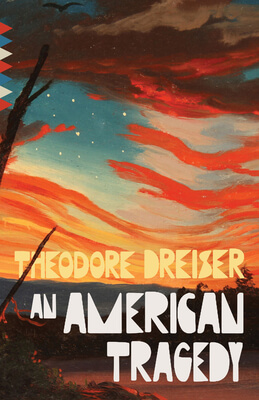
An American Tragedy—Theodore Dreiser. The 1900s era of storytelling is best known for being about the “lost generation,” which refers to the feeling of displacement that many young men felt after returning from war and finding it difficult to believe in the American Dream again. Theodore Dreiser’s An American Tragedy perfectly encapsulates the sorrow that was often synonymous with this theme. This book tells the story of Clyde Griffiths, a factory worker who becomes entangled in a love triangle between a wealthy socialite and a fellow factory worker whom he got pregnant. Based on the murder of Grace Brown in 1906, this story is perfect for those who enjoy a look into the darker side of love and ambition.


Mrs. Dalloway—Virginia Woolf. In yet another perfect example of the ‘lost generation’ theme of the 1900s, Mrs. Dalloway follows the life of Clarissa as she prepares for a party that she plans to throw that night. Throughout the day, she interacts with various people and ponders her life and whether she will be happy with her choices as she continues to grow old. Running parallel to her story is the life of Septimus Warren Smith, a World War I veteran who struggles with his past and relives the horrors of war. Mrs. Dalloway, at it’s core, is a story of choice and the effects they can have—even years down the line. I related greatly to Clarissa Dalloway’s insecurities regarding her choices, as I know what it’s like to worry that you one day you will harbor regrets. Overall, Mrs. Dalloway shows the joy that can come from embracing one’s choices and living in the present, and the despair that can come from clinging to the past.

Book Review

Fantastic Fungi: How Mushrooms Can Heal, Shift Consciousness, and Save the Planet

Publisher: Earth Aware Editions
Genre: Nonfiction, Ecology, Spirituality
Pages: 184
Format: Hardcover
Buy Local
My Rating: 5/5 stars

Summary

Can mushrooms change the world? Can they heal the planet? Can they repair your body? Can they realign your spirit?

Simply put, yes. In Fantastic Fungi, legendary mycologist Paul Stamets offers a beautiful collection of essays from the director of the Arizona Center for Integrative Medicine at the University of Arizona Dr. Andrew Weil, food science journalist Michael Pollan, professor of Forest Ecology Suzanne Simard, and nature and food writer Eugenia Bone. Along with the essays are visually arresting photographs of fungi and mushrooms. Organized in three sections, these essays explore what mushrooms mean for the planet, our bodies, and our spirits. Reading the collection is a transformative experience where learning about issues like the mycelial internet, mushrooms as therapeutic intervention, and the stoned ape hypothesis will leave you seeing the world and your place in it from a totally new perspective.

Thoughts

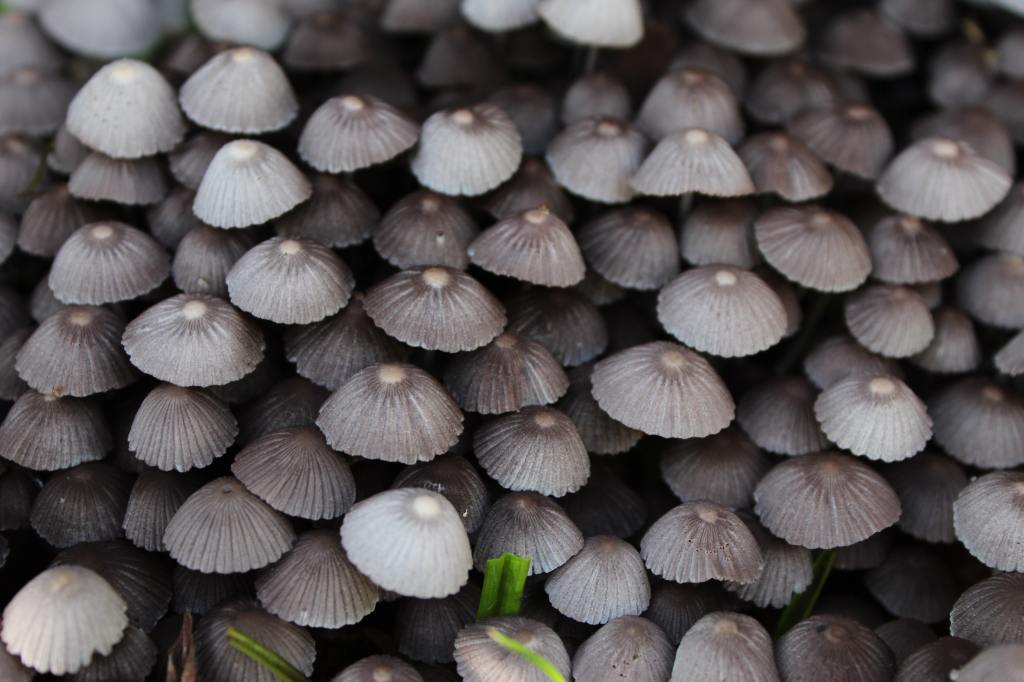
That mushroom you see peeking up out of the mulchy forest floor? That’s only the tip of the fungal iceberg. A mushroom is only the fruiting body part of the organism, a way to release spores and reproduce when conditions are right. But below the surface? In the soil, branching out into a vast network of interconnection lies the vast entirety of the fungus, the mycelium stretching out—sometimes for miles. Mushrooms are much more complex than you may think.

Paul Stamets’ Fantastic Fungi accompanies a documentary of the same name. Both can be enjoyed alone or explored together in a complementary way. They are truly a fantastic journey into the big and tiny, micro and macro beautiful world of fungi, mushrooms, and our human relationships with them.

Did you know fungi are not plants? They’re not animals, either. Rather, they comprise their own kingdom. Stamets’ documentary suggests that perhaps fungi are the dominant species on earth. The biggest organism on earth is no whale, elephant, or giant squid, but a honey fungus that spans 2.4 miles in Oregon and is perhaps almost 9,000 years old. Fungi are the most common species on earth and are literally everywhere, “under every footstep that you take…all over the world.”

“Take a breath. You’ve just breathed in 10 fungal spores”

Grief, anger, and depression about climate change are normal, but at times reversing environmental destruction can seem hopeless. However, Fantastic Fungi is optimistic, and you can help. Become involved in fungi activism with organizations like The Radical Mycology Mycelial Network, which seeks to increase community resilience, support local ecologies, and recompose organic waste. The documentary and book offer a promise of hope about our environment. Mushrooms can save bees from extinction. Mushrooms can safely break down and recompose hazardous waste and industrial pollutants. Mushrooms can repair soil that has been over-tilled and damaged by pesticides. To quote Stamet: “Nothing lives alone in nature, and communities are more likely to survive than individuals. What a beautiful inspirational model for how human beings might live: in a shared economy based not on greed but on nurturing relationships and mutual cooperation.”

Fantastic Fungi calls us to action—as amateur mycologists, naturalists, and ecologists, citizen scientists, and change agents. Anyone can appreciate, learn from, and heal with mushrooms and fungi. We can—and should—work with fungi for the betterment of the planet.