With every new year comes new books, and here at The Spellbinding Shelf we are always looking forward to new publications! No matter how old I get, I always find myself gravitating towards YA novels—there is something about coming-of-age stories that just comfort me. So, I’ve compiled a list of YA novels I am particularly stoked about for 2021.
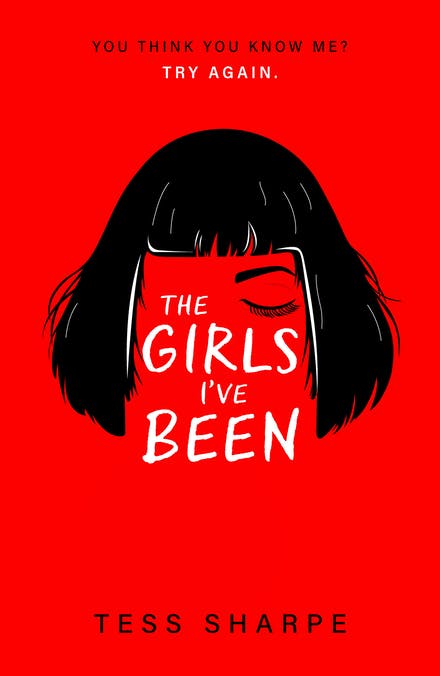
The Girls I’ve Been—Tess Sharpe. This novel follows the daughter of a con-artist who escapes from her mother, only to end up as a hostage in a bank heist. This novel is so highly anticipated, that they already have a film planned for it starring Millie Bobbie Brown. However, I am a firm believer in reading the book before seeing the movie and I am looking forward to picking up this one on January 26th!
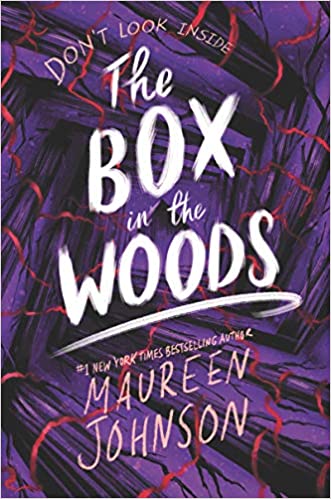
The Box in the Woods—Maureen Johnson. If you loved the Truly Devious stories, then you will be stoked for this release. Stevie Bell is back in another installment. Before kicking off what she thinks will be a normal summer, Stevie gets a call about the Box in the Woods Murders. Naturally, she can’t refuse and thus her investigating begins. This one won’t be available until June 15th, but you can always read the other three novels from the series in the meantime!
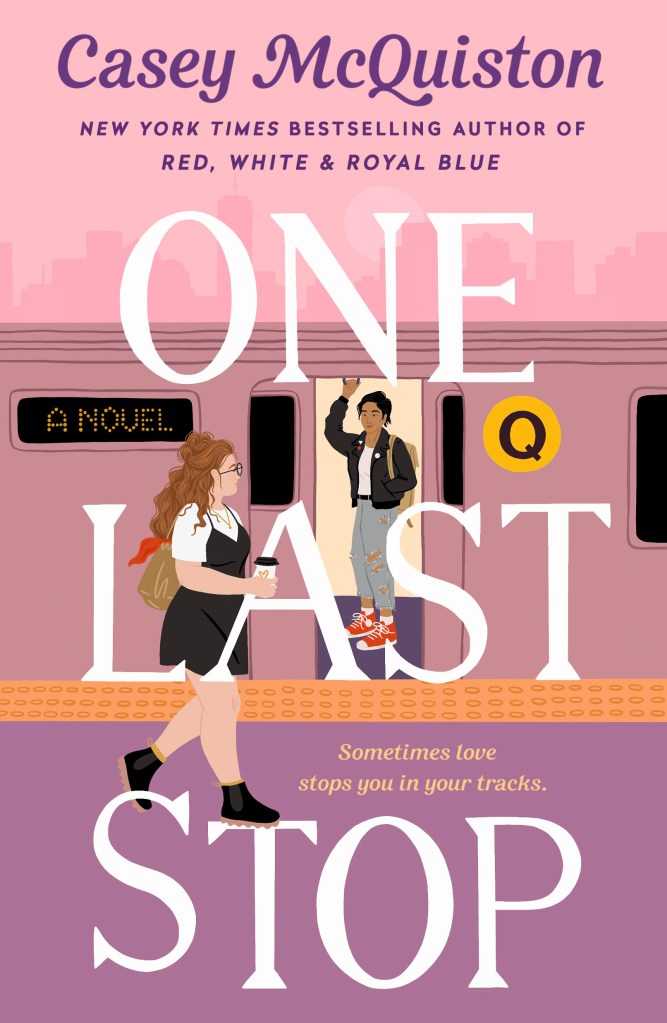
One Last Stop—Casey McQuiston.Red, White & Royal Blue was everywhere this summer, and Casey McQuiston is back with another novel that is sure to steal your heart. Twenty-three-year-old August finds out that her subway crush is from 1970’s Brooklyn, and now she must figure out how to help her. I am super excited about the representation in this book and can’t wait for it to be released on June 1st!
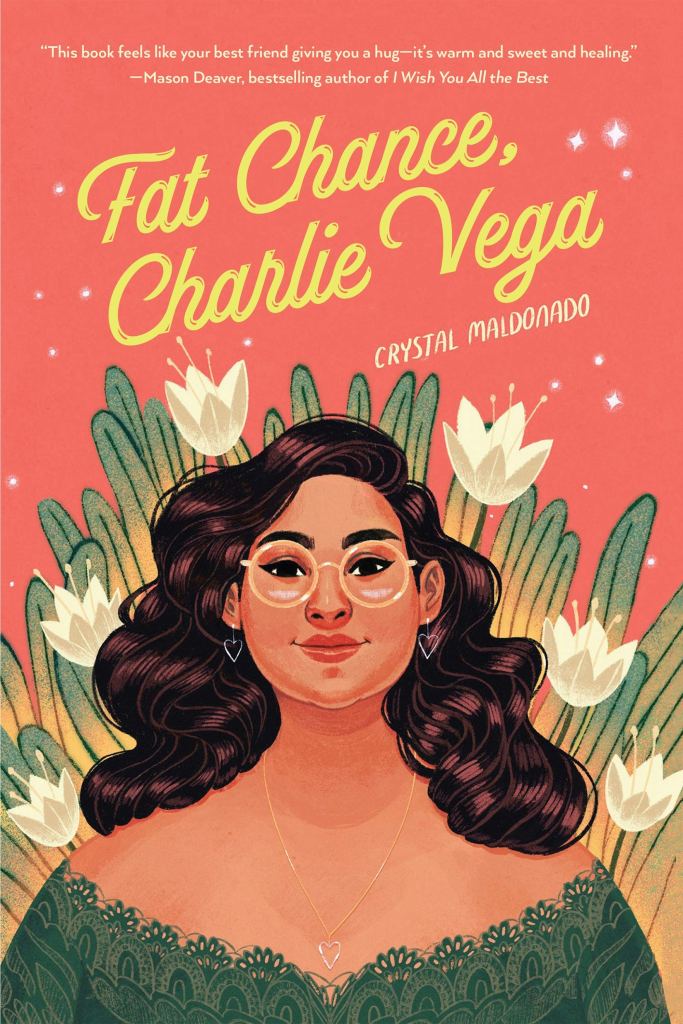
Fat Chance, Charlie Vega—Crystal Maldonado. This book follows Charlie Vega, a young girl navigating the scary world that is high school. Additionally, her own mother is pushing the skinny, white narrative onto her—despite the fact that she is neither of those things! When the boy who asked her best friend out asks Charlie out, she can’t help but wonder if people truly see her. I am especially excited for this book because I think the world of YA books needs more diversity in it’s main characters. You can check the shelves for this one on February 2nd!
Somewhere Between Bitter and Sweet—Laekan Zea Kemp. This novel was pitched as I’m Not Your Perfect Mexican Daughter meets Emergency Contact, which sounds fantastic to me. It follows the story of a young girl named Penelope who dreams of opening her own pastry shop next door to her father’s taco shop. When her father hires a new boy to work in the shop, Penelope can’t help but get close to him. So, when his immigration status and the shop are threatened, Penelope has to come up with a plan to save them both. This novel sounds like an absolute tearjerker and I cannot wait to pick it up on April 6th.
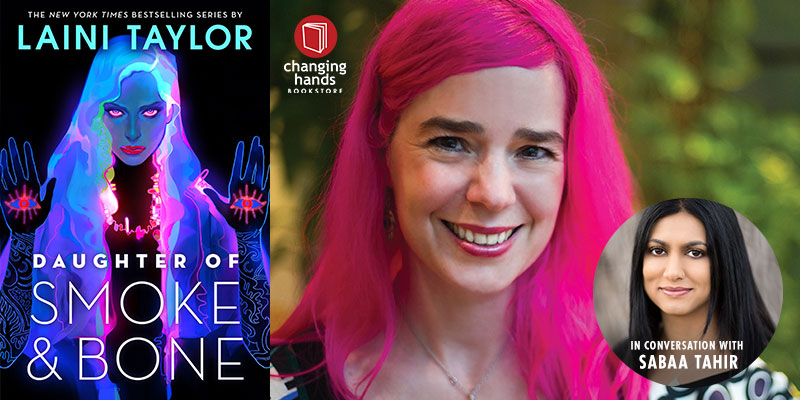
Changing Hands Bookstore will be hosting a virtual conversation with acclaimed author Laini Taylor as she celebrates the tenth anniversary of her Daughter of Smoke and Bone trilogy. The National Book Award finalist will be in conversation with Sabaa Tahir, author of A Sky Beyond the Storm, the final book in the Ember in the Ashes quartet.
This event will take place next Thursday, January 28 from 6:30 p.m. to 7:30 p.m. Attendance is free, and the first 50 people to purchase a book with their ticket will have their bookplates personalized by Ms. Taylor. For more information about this event, and to purchase tickets, click here.
Location: Online
Date: Thursday, January 28, 2021
Time: 6:30 p.m. – 7:30 p.m.
Price of Ticket: Free (optional VIP tickets available)
Publisher: Penguin Random House LLC Genre: Fiction, Short Stories Pages: 274 Format: Hardcover Buy Local My Rating: 3/5 stars
Summary
Jojo Moyes, best known for her novel Me Before You and the film by the same name, waxes optimistic in Paris for One, a collection of nine short stories all told from the female perspective. Offering up relatable and recognizable female characters in the midst of change, Paris for One takes the reader on journeys of self-discovery, relationships gone wrong (and right), and the life-changing power of a pair of Louboutins.
Thoughts
Worn out from life in quarantine, and never ending political and civil strife, Paris for One is part female empowerment, part escapism, and could be just the distraction you have been looking for. I am a sucker for anything Parisian, and impulsively tossed this book into my online shopping cart without even bothering to read the reviews. My instincts ended up being right on, as this collection is a series of delightful, breezy reads that will help take the edge off a tough week of scrolling through social media and wondering where we all went wrong.
Moyes seems fully aware that sometimes all you need is a little mental escape. She fills her stories with relatable, “every woman” type characters—which excuses her a little for placing some of them in pretty predictable situations. An excellent example of this comes in the form of the titular story where Englishwoman Nell’s failed Parisian getaway turns surprisingly into just what the doctor ordered for her overly stable existence. It’s a familiar theme, but who hasn’t dreamed of throwing caution to the wind, boarding that flight, and facing adventure head on with a brooding Frenchman on a scooter?
Another playful entry is the sweet and funny “Christmas List,” where a day of shopping leads to something you just can’t buy—a change in attitude. Neither story pushes the envelope in the genre, but they made me smile, and just because they are familiar doesn’t make them any less fun!
Wisely though, Moyes does switch gears by adding a little drama and introspection into the collection with “Bird in the Hand” and “Love in the Afternoon.” Exploring the complexities of married life, these stories ground the collection from flying off into a Parisian cotton candy cloud filled sky. In both, Moyes reminds us that sometimes things do happen for a reason, and the grass may not be greener on the other side when it comes to life and love.
Moyes’s writing style is straightforward and uncomplicated, which makes this the perfect easy read for a lazy Sunday afternoon…or Monday through Saturday given the current state of the world! While these aren’t stories you will be pondering days later, it’s clear that they weren’t meant to be. So curl up in your favorite chair with Paris for One and indulge yourself with a few life-changing fantasies. My guess is you deserve just that!
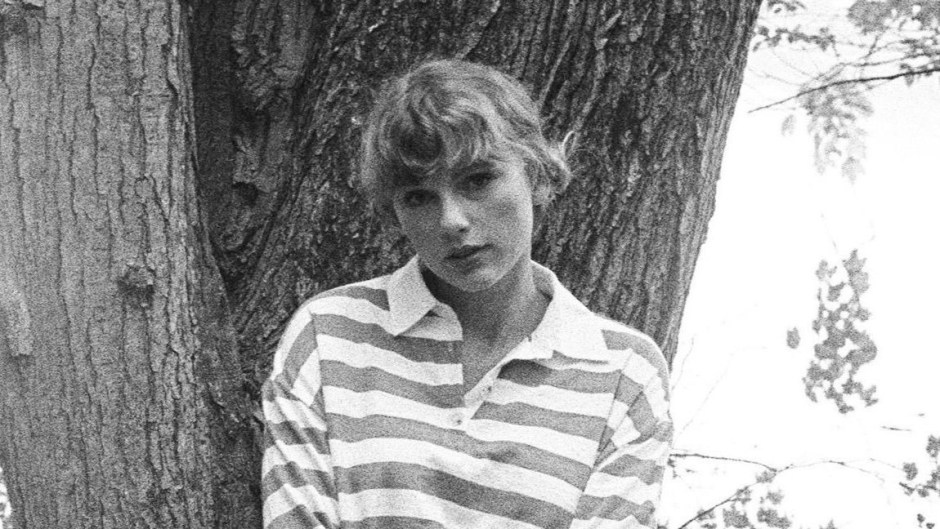
In case you missed it, Taylor Swift has been very busy during the pandemic. Within the span of five months, she released two studio albums—Folklore and Evermore—bringing her to a grand total of nine studio albums. Now you may be wondering, why is a book blog telling me about Taylor Swift? Well the truth is, whether you love or hate her music, her poetic songwriting ability rivals that of some of the best poets to date. She started by creating stories within 3–4 minute songs and now creates love triangles by connecting individual songs. If you still don’t believe me, let’s look at some of her best lyrical work. There is a multitude of ways to analyze her work, but I will be breaking it down into three different categories: literature references, powerful lines, and storytelling.
Literature References
Taylor loves her literature references—and so do I. Some of them are very obvious, such as “Love Story,” (which I won’t include for that reason) but a lot of them are more subtle, which just adds to her genius. This list is not exhaustive and doesn’t include every album, but let’s look at a few of my favorites:
“Wonderland”: Taylor took it up a notch on her fifth album, 1989, by creating an entire song based on a literary reference. The song “Wonderland” is a reference to Alice in Wonderland and the idea of getting so lost in love that you don’t realize you fell down a rabbit hole and now you have to figure out how to escape or spend forever where “life was never worse but never better” (Swift, 2014). Taylor directly references the beloved tale with lines such as “Took a wrong turn and we / Fell down the rabbit hole,” and “Didn’t you call my fears with a Cheshire Cat smile?” (Swift, 2014), meaning the subject of the song wrote off her fears with a wide grin, causing her to feel falsely assured. This song is a prime example of the strengthening of Taylor’s literary references.
“This is Why We Can’t Have Nice Things”: All of Taylor’s albums are an era in their own right, but Reputation took that to the next level. A number of the songs on this album allude to various classics, from A Tale of Two Cities to Slaughterhouse Five, but I am just going to talk about the most thorough reference on the album, which is “This is Why We Can’t Have Nice Things.” This song is basically The Great Gatsby explained in three minutes and 27 seconds. It details a friendship that was extravagant and wild—much like the way Gatsby would party—that ends due to secrets and lies, much like the way friendships and relationships ended in Gatsby’s world. The first verse reveals this idea immediately with the lines, “It was so nice throwing big parties / Jump into the pool from the balcony / Everyone swimming in a champagne sea / And there are no rules when you show up here / Bass beat rattling the chandelier / Feeling so Gatsby for that whole year” (Swift, 2017). If that doesn’t sound like a Gatsby party, I don’t know what does.
“Invisible String”: I am going to break my “explaining one literary reference per album” streak here, because Folklore is an English major’s dream. “Invisible String” contains a nod to the popular line from Ernest Hemingway’s The Sun Also Rises, “Isn’t it pretty to think so?” (Hemingway, 1926). In the chorus she sings, “And isn’t it just so pretty to think / All along there was some / Invisible string / Tying you to me?” (Swift, 2020). Personally, I think this is one of her most beautiful songs and I love the way she slipped this reference in there.
“The Lakes”: Before Taylor started writing in quarantine, she must have been reading, because this song immediately took me back to my English Literature class. In this song, Taylor references what I guessed to be the five Lake Poets from the late 18th to early 19th century. The chorus opens with “Take me to the lakes where all the poets went to die” (Swift, 2020), which, if I remember correctly, were the big five romantic poets. Upon further listen, I noticed an interesting line which I believe is a further nod to them. In the second verse she sings, “I’ve come too far to watch some namedropping sleaze / Tell me what are my words worth” (Swift, 2020). William Wordsworth was one of the five Lake Poets, so I can’t help but to think that the last bit of that verse is meant to continue the allusion to the poet. It could be a coincidence, but most of us know by now that Taylor doesn’t do coincidences.
“Happiness”: Moving into her most recent album, Evermore, we have the song “Happiness.” When I first heard this song, I nearly died. Not just because it’s one of her saddest songs ever, but because the literary references in it made my nerdy heart swell. Once again, Taylor has alluded to The Great Gatsby, but in an even more poetic way. In the second verse, she sings “I hope she’ll be a beautiful fool” (Swift, 2020), which is an obvious nod to Daisy’s famous line from the novel and I audibly gasped on my first listen. Towards the end, there is also a line that says, “All you want from me now / Is the green light of forgiveness” (Swift, 2020), which I also took to be an allusion to Gatsby. It may just be me, but I am trained to think Gatsby when I hear green light, so I think this is the perfect subtle nudge towards it.
“Tis the Damn Season”: By now, we’ve probably noticed that Taylor has taken to referencing phrases and lines from famous works and that’s exactly what she does in “Tis the Damn Season.” In the chorus of this song, she makes a direct reference to Robert Frost’s beloved narrative poem, “The Road Not Taken,” with the line, “And the road not taken looks real good now” (Swift, 2020). This poem was engrained in my head as early as middle school, so naturally I was extremely excited about this reference.
Powerful Lines
Taylor may be the queen of literature references, but some of her best lines have nothing to do with allusions and are simply poetic in their own right. I consider music and songwriting to be a form of poetry, therefore most of her songs themselves read as a poem. Honestly, I could pick a line at random and it would probably be beautifully written, but then we would be here all day. So, in no particular order, I’ll just go through a few of the ones that really strike a cord with me.
“And you come away / With a great little story / Of a mess of a dreamer / With the nerve to adore you”—”Cold as You” (Swift, 2006). Taylor wrote her first album at 15 and she has grown a lot since then, and as such most of my favorite lines won’t be from her debut album. However, I think it is important to look at her old lyrics to help see how far she has come, and these lines from “Cold as You” still get me even after all these years.
“So I’ll watch your life in pictures like I used to watch you sleep / And I feel you forget me like I used to feel you breathe”—”Last Kiss” (Swift, 2010). This song, particularly this line, always hits me even now—despite the fact that I was 12 when it was released.
“You call me up again just to break me like a promise / So casually cruel in the name of being honest / I’m a crumpled up piece of paper lying here / ‘Cause I remember it all, all, all too well / Time won’t fly, it’s like I’m paralyzed by it / I’d like to be my old self again, but I’m still trying to find it”—”All too Well” (Swift, 2012). Unfortunately, I cannot paste the entirety of “All too Well” but this bridge speaks for itself.
“Cause you can hear it in the silence / You can feel it on the way home / You can see it with the lights out / You are in love”—”You are in Love” (Swift, 2014). By itself, this doesn’t seem like much, but the song is about saying you’re in love without saying it directly, and I absolutely love the way she chose these lines to depict that.
“Please don’t ever become a stranger whose laugh I could recognize anywhere”— “New Years Day“ (Swift, 2017). Even though this is just a one liner, it gets me every time. Taylor has a way of describing scenarios in one line that packs a punch, and this is one of those instances.
“I don’t wanna keep secrets just to keep you / And I snuck in through the garden gate / Every night that summer just to seal my fate / And I screamed for whatever it’s worth / ‘I love you,’ ain’t that the worst thing you ever heard?”—”Cruel Summer” (Swift, 2019). The beginning and end of this verse are my absolute favorite, but I also love Taylor’s allusion to gardens throughout so many of her songs. It gives them such a whimsical feeling. Also, it was a cruel summer so it seems fitting.
“You drew stars around my scars / But now I’m bleedin”—”Cardigan” (Swift, 2020). “Cardigan” is one of my favorite songs off of Folklore, because there are so many lines like this one that pack a punch but also tell a story, which is something she consistently does beautifully.
“But I’m a fire and I’ll keep your brittle heart warm / If your cascade ocean wave blues come / All / these people think love’s for show / But I would die for you in secret”—”Peace” (Swift, 2020). This song is another one of my favorites off of Folklore (honestly, I love every song on this album). There is something undeniably poetic about this line in particular, with the metaphoric language and symbolism. I get the chills every time.
“I don’t like that falling feels like flying ’til the bone crush”—”Gold Rush” (Swift, 2020). This is another one liner, but it does such a good job capturing a feeling that we all probably know in just a few words. Even though it’s short, it’s extremely descriptive and really shows off her talent.
“While you were out building other worlds, where was I? / Where’s that man who’d throw blankets over my barbed wire? / I made you my temple, my mural, my sky / Now I’m begging for footnotes in the story of your life”—”Tolerate It”(Swift, 2020). I had a hard time picking just one line from this song, to the point that I considered pasting the whole song in. It’s honestly a very underrated addition to Evermore, but from a poetry standpoint is absolutely beautiful. If I read this in a poetry anthology I wouldn’t blink an eye.
“There’ll be happiness after you / But there was happiness because of you too / Both of these things can be true”—”Happiness“ (Swift, 2020). I’m including this one as a bonus, because I couldn’t not talk about it. Not only is “Happiness” ironically the saddest song ever, but the emotion she captures is astounding. This is one of my favorites from the album because it is so mature and really shows how she’s grown as a person and writer.
Storytelling
Finally, we move into the last category, which is the storytelling she does in some of her songs. Like any good songwriter, Taylor knows how to tell a story. She writes about her experiences, but also creates characters in her songs. These are five of my favorite stories she has told, in no particular order.
The Betty, Augustine, and James love triangle from Folklore. This Taylor original is one of my favorites because she gives us a presumed cheating scandal, but from the perspective of each person involved. There is no blaming the other woman or anything like that, and we get to see how each person may feel in a situation like this. It is a really interesting story and each song, “Betty,” “August,” and “Cardigan,” is different but equally fantastic.
The failed marriage proposal in “Champagne Problems.” The phrase “champagne problems” means an issue that in the grand scheme of things may not seem like a big deal, but matters a lot to the person. In this song, Taylor effortlessly tells the story of a person who has turned down a proposal due to their own problems. Each verse adds to the story, hooking you from the beginning. It is heartbreaking and beautiful and I absolutely love it.
The wedding being crashed in “Speak Now.” This song is great for a number of reasons. It tells the story of a girl who decides to crash her ex’s wedding by choosing to “speak now” rather than “forever hold their peace.” The imagery is so detailed it feels like you are watching the events unfold. Each verse gets closer and closer to the action until it unfolds, and they run away together (presumably). It is a lot more lighthearted than the previously mentioned storylines, but very well done nonetheless.
The story of a young girl growing up and appreciating her mom in “The Best Day.” This song goes through a young girls life, presumably Taylor’s, and all of the small things that make growing up hard. Throughout it, she reflects on how the one constant was her mom. This song is extremely nostalgic for me. I used to listen to it on family road trips and I would think about how I wasn’t even close to the age she was by the end of the song. It made me appreciate my mom a lot more and how she was there for me through everything.
Handling the illness of a loved one in “Soon You’ll Get Better.” In this song, Taylor tells the story of someone who has to deal with someone close to them being sick. It goes through all the motions of going to the hospital with them and watching them get worse and better and worse again. I don’t listen to this song often, simply because it is honestly so sad and it makes me think about what I would do if my mom got sick. However, as heartbreaking as it is, its extremely well written and never fails to pull on my heartstrings.
If you’re still here, thank you, and I hope you enjoyed analyzing the inner-workings of Taylor Swift’s music and songwriting abilities with me. Between her literature references, undeniably poetic lyrics, and strong storytelling, I think it’s safe to say she is truly the poet of our generation.
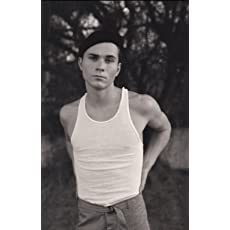
N. Alexsander Sidirov was born in the frigid landscape of Siberia. As a small child, he was adopted from Sosnovoborsk and moved from one of the coldest places on Earth to one of the hottest: Arizona. From his new home in Arizona, he began to explore the world of writing at the tender age of seven and found that the more he put pen to paper, the broader his vision became.
He began experimenting with using his life experiences as fuel for his literary fire by writing short stories. Even then, Sidirov enjoyed infusing his writing with the heartbeats of his identity and themes of his life, like his adoption journey, sexuality, loneliness, individuality, and neurodiversity.
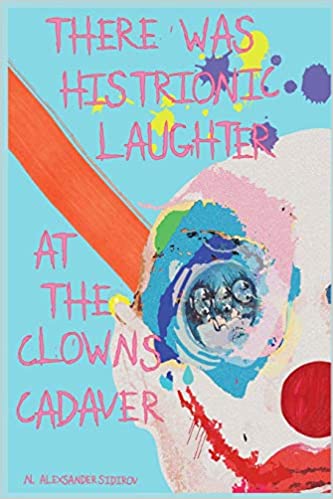
It was in college that Sidirov turned his creative eye from penning short stories to practicing poetry. After six years perfecting his craft, Sidirov decided to capture his unique view of the world in his debut poetry collection, There was Histrionic Laughter at the Clowns Cadaver, which, like all his writings, strives to change the way society views the world and liberate the creative process from the confines of social and literary conformity.
When not writing, Sidirov enjoys learning new languages, watching vintage cartoons, and—most of all—filing disputes with the credit bureau.
Глаза боятся, а руки делают The eyes are afraid, but the hands are still doing it.
1. Many of our readers haven’t spent time with your poetry yet, so I want to give them a chance to get to know you. How would you describe yourself as a writer? How would you describe this collection? I would describe myself as brave, subversive, bold, and open-minded. As a writer I would describe myself as brave, subversive, experimental, and bold. I think this collection is genre-bending, psychedelic, technicolored, aggressive, soft, honest, confessional, colorful, dark, ambient, straightforward, and enigmatic. I think that depending on the page it’s a different thing. What it means to the person reading really depends on their experiences. I have had people who have interpreted some of my poems exactly as I did, but the beautiful thing about poetry is that it’s art. It literally exists equally in the mind of every person who reads it. I wanted to create something that no one had read before and would be nearly impossible to compare to others because—as a writer—I didn’t want to be seen as a lesser version of a different writer. I am very much myself: what I create and my point of view is mine, and so this book is a conglomeration of my experiences and also how those experiences are filtered through my art and rather crazy mind. The book is very existential, avant-garde, and frankly in a lot of ways abstract. There are some people who are going to appreciate that it is one of a kind and that I put everything I could into it. There are others who are going to shrug their shoulders and find it too dense or challenging, and that’s okay. Either way, I’ll be alright.
2. I’m interested in your page numbers and the poem they create. What inspired this poem and what impact do you hope it has on readers’ experience with your collection? Ah yes, I remember us talking about that poem frequently throughout me writing it. First, I wanted to write a palindromic poem about the arbitrariness of the arrow of time, but I found the format to be incredibly constricting and it difficult to say anything of real meaning. Then, as I was finishing the book, I found myself absolutely petrified of death. I genuinely felt afraid of dying and a voice in the back of my mind said, ‘If you finish this book well, then you’ll have finished something, so now it’s all over and whoever or whatever can strike you down.’ It was very bizarre, but what I realized is that a lot of my procrastination came from an existential place—that I had put off finishing things because all along there was this fear telling me that if I did then I could die because I did something, and if I didn’t then how could I—I still had things to do. So I sat on a mountain and ruminated on it, and I decided that either I could try to bury the fear deep within myself or I could turn towards it. So I did the latter: the poem that extends over the page numbers is me imagining my eulogy if I were to die today. There’s this gratitude exercise where you imagine yourself on your deathbed and ask yourself what would you tell the people you love, and I decided to take it one step further. Frankly, doing it scared the living daylights out of me. It felt like I could be somehow cursing myself, but I knew that facing my fear of mortality in such an open and honest way might help others do the same. Because the truth is a lot of us are afraid to die. We only know life, Death is a house guest we’ve never met. I wanted to confront my mortality in a place where the numbers rise like age, and I also really liked the idea of imagining new places where poems could exist, and where their placement could kind of make its own statement. I think, hopefully, that I achieved that—thus far it has had a really really positive reception and I am grateful for that.
3. Many of your poems address the frailness of innocence and youth. Was this a conscious theme you had in mind while creating your poems, or did it occur naturally within your work? That’s so interesting that you said that, because I did not realize that my poems addressed the frailness of innocence and youth. I think nostalgia is an especially potent drug in that it almost always offers some form of high, but I would agree that youth is always present in my writing. Particularly the antithesis of youth. I think that more so than youth is the fear of the anti-youth, the loss of youth more often than not. I think that frailness, or perceived frailness, comes from a fear of getting older and not having enough time. That’s a theme that I read in so many of my poems. This is something I always felt—like I was behind or there was some form of magic clock sitting on my head and so if I didn’t move fast then nothing would get done. I am sure that has much to do with going to funerals as a child, I think coming to the realization that life does have an ending and our time here is ephemeral at a young age certainly shapes one’s perspective.
4. Your poem “Shelter Melter” is one of my favorite pieces in this collection. I view this poem as an absurd sort of Ars Poetica. I’m curious if you agree with my reading and what you personally hoped readers would take away from this specific piece? So that’s really interesting, yes Shelter Melter is one of the most controversial so far. People either love it or angrily write about the slew of letters on Goodreads. I think that your reading is absolutely a valid one. I would never go out of my way to tell others how to write a poem because the truth is I don’t think there’s one way or a right way. I would say, though, that I am always challenging the notion that there is a “best way” to write poetry and what constitutes “valid” forms of poetry. “Shelter Melter” came from an innate desire to shatter the fourth wall in a poem. Like take someone somewhere with me on a surrealist journey and then absolutely rock them by just kicking down the walls of their understanding of perspective. I think that in a weird way a lot of poetry, especially poems like “Shelter Melter,” really play with dimension in the sense that they exist in their own. There are a lot of things about poetry that I think are not frequently utilized enough in the art form and experimentation with dimension and perspective (in almost sculptural way) are certainly some of them. I hope that people can read that poem and realize that you don’t always have to take yourself seriously to write something that deserves to be taken seriously.
5. I’m proud to say I’ve been an active participant in your workshopping process for this collection and have seen your writing develop in unique ways over the past several years. How do some of your “older” poems vary from your “newer” ones within this collection? Yeah, you have been a HUGE part of the journey that was getting this book made—though, for many years, it was just me writing poems. I think that I always was experimenting, but over time I learned how to stage things better; I learned how to create poems that were definitively experiences. I always felt that poetry had the potential to be something grandiose and exquisite and in a lot of ways I think modern poetry tends to revel in the small, which is not a bad thing at all, but that wasn’t my thing. I loved Jodorowsky, Kate Bush, Bjork, and very very grandiose artists who created things in their mediums that just felt BIG—and I wanted to do the same with my writing. Over time I got better at creating subtle moments to interplay between those broad brush strokes. In order to create a masterpiece I am sure a painter must use many brushes; I feel this is probably the same with writing.
6. The cover of your collection is striking in all the right ways. What was your experience in collaborating with an artist to create this piece for the collection? Yes, so I worked with an artist Jeffrey Marchetti, who is incredible. He’s a queer artist. I saw his work on Instagram and told him I wanted to talk to him about maybe making my book cover. He agreed and we basically talked back and forth for weeks while slowly it developed. It was an arduous process, but to me it was really important that we create legitimate art. I wanted the cover to reflect the contents so I wanted to create a cover that someone could look at and analyze and actually derive meaning from. Personally, I am so happy with it. Jeff is an amazing artist who was so wonderful to work with; I really like to trust creative people to be creative, so I mostly just gave him abstract feelings and focal points to use as his inspiration and then as he progressed we would talk about it and discuss. I was never steadfast or militant about getting a perfect image because I know that in collaboration the perfect image happens with synastry and connection.
7. Independent publishing is a complicated and demanding process. What advice do you have for other writers who are considering this type of publishing for their own work? Do it! Do it! But be ready. It’s really hard, it’s exhausting, and it will wear you down. But being able to have complete control over what you make is one of the best feelings. I modeled for years and constantly had to defer to others in the creative process. Being able to have full, complete creative control is amazing—but it also means there’s no one to blame but yourself when things go wrong.
8. What’s next for you as a writer? Are you working on any new projects? YES! So I am currently writing a novel that I am trying to finish in 16 days! I have a break from my European coding bootcamp, so I decided that I would challenge myself to write this novel that I have had the idea for—in 16 days. I am currently on day three, and honestly it’s going really well. I have a TikTok channel dedicated to it! I am sure that by the time this is published, whether I did it or didn’t it will be there for the world to see, but follow it anyways @n.alexsandersidirov. After the novel is finished and begins the editing process, I am starting on a very very complex and frankly ambitious project that will infuse art, technology, and poetry into a book. It will not be a personal poetry collection, definitely more conceptual, but I am hoping that I can create something that brings poetry rocketing into the twenty-first century with some stuff that, at the very least, could only be conceived in 2021. That last statement will make sense once it’s finished, but I’ll just say that my coding bootcamp will definitely come in handy. As for following me as a writer, I have a website; I am on Goodreads. Expect the unexpected—right now I don’t see myself ever being a James Patterson or a genre specialist. I love poetry though, and I want to continue to create subversive pieces that hopefully show others that poetry means there are no rules, and the only way to break all the rules is to never learn them in the first place.
8. How can our Spellbinding Shelf readers best support your collection and your future writing ambitions? Well honestly, check out the collection! The physical book is absolutely the format it was meant to be read in, but the Kindle format is actually wonderful too! I am immensely grateful for anyone who is willing to read what I have written. As a queer author, its been wonderful having so many LGBTQIA people reach out and tell me that they really appreciated the book and that has been such a blessing. Being a local Arizona author, I think to some extent it can be intimidating to ask people to read your book, especially when it’s as abstract and extraneous as this one, but everyday I find myself telling people. It’s all part of the journey I suppose. I am immensely grateful for this interview, which helps give me an opportunity to explain it and also myself so people who have questions have something to elucidate them.
9. Is there anything else you would like our readers to know before they dive into your collection? Yes, the book is both very experimental and also very confessional—an unexpected combination certainly, but alas, it is what it is. It also requires careful reading and a willingness to take a leap of faith. Erin, you told me yourself that its not the kind of book you read casually on your lunch break, and I don’t want to disappoint anyone who imagines it might be something akin to an Instagram poet. A friend of mine described it as an electric storm or a mess of live wires, something that feels like it could electrocute you as you hold it. These are all very abstract metaphors, but I guess what I am trying to say is that I wrote the book for people who like bizarre, surreal, and absurd imagery and poetry—if that’s you, then yay! If that isn’t that’s fine, not every book is for every person.
You can purchase N. Alexsander Sidirov’s poetry collection or read the free Kindle version here.
The new year offers New Year’s resolutions and fresh beginnings for lots of people—more so this year than probably ever before, as we anticipate a vast improvement from the turmoil of 2020. While most of what the new year might bring remains a mystery, we can look forward to new releases by some of our favorite authors. Below are some of the YA fantasy releases I’m most excited about (some have even prompted a pre-order).
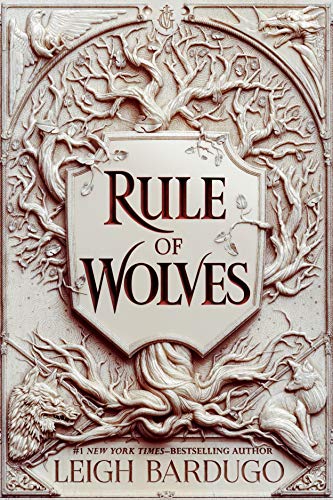
Rule of Wolves—Leigh Bardugo. The Grisha novels by Leigh Bardugo have been some of my favorite YA books that I’ve read this year. Luckily for me, I was able to tackle the Shadow and Bone trilogy in its entirety and the subsequent Six of Crows duology to get fully immersed in Bardugo’s mysterious and magic-filled Eastern European world. King of Scars sees the return of a fan favorite from the original trilogy (I know Nikolai was my personal favorite) and Rule of Wolves continues his story.
Release Date: March 30, 2021
A Court of Silver Flames—Sarah J. Maas. Sarah J. Maas has taken the fantasy world by storm with her A Court of Thorns and Roses (or ACOTAR) and Throne of Glass (TOG) novels. Delving into the ever-popular dynamic of mortals, magic, and the realm of the Fae, A Court of Silver Flames is a continuation of her ACOTAR series: this novel follows Nesta Acheron as she contends with political and romantic intrigue in the court of the Fae.
Release Date: February 16, 2021
Chain of Iron—Cassandra Clare. The sequel to Chain of Gold, Cassandra Clare returns to the Shadowhunters universe that has enchanted readers since City of Bones was published in 2007. Over the years, Clare has seen her stories translated to the silver screen as well as the small screen via a hit television series, so the Shadowhunters have become a household name throughout the various crossovers that Clare has created. Her newest series is called “The Last Hours” and is set in Edwardian London.
Release Date: March 2, 2021
Tales from the Hinterland—Melissa Albert. Most of us know The Hazel Wood from its wild popularity on bookstagram and other social media thanks to its gilded and intricately designed cover art that made for perfect book photography. However, it wasn’t just the cover art that managed to enchant audiences, as Melissa Albert introduced everyone to a new world based on dark fairy tales. Tales From the Hinterland is listed as “Book 3” of The Hazel Wood series; however, the description suggests it is to be a collection of stories set in the Hinterland world, which I’m sure is no less exciting to fans of Albert’s novels.
Release Date: January 23, 2021
Legacy of Orisha Book 3—Tomi Adeyemi. Pictured is the cover art for book two of Tomi Adeyemi’s series, as cover art and exact release dates have not been announced for book three. However, Adeyemi has confirmed via her website that the next installment will be hitting shelves sometime in 2021, and so I just had to give it an honorable mention for those that have been following this groundbreaking series. The Children of Blood and Bone and its sequel have revolutionized the YA scene and provided a different type of fantasy novel that is sorely needed within the genre. Influenced by Adeyemi’s West African heritage, these books blend African deities with magic, peril, deep character development, and representation, making The Legacy of Orisha books worth the read and worth the anticipation of the newest book.






 The Spellbinding Shelf