
Book Review

Bridge of Clay by Markus Zusak

Publisher: Knopf Books for Young Readers, 2018
Genre: Young Adult Fiction
Pages: 544
Format: Hardcover
Buy Local
My Rating: 4.5/5 stars

Summary

This book is about horse races, first loves, and storytelling—but it’s also about guilt, loss, grief, and family: brothers, fathers, and a many-named mother.

The novel tells the coming-of-age story of five Dunbar brothers whose father disappears after losing their Chopin-playing, Homer-loving mother to cancer. Later, their father returns into their lives asking for help to build a bridge. All of the brothers refuse to help, except for Clay.

The book peers into the lives of not only Clay, but all the family members and those whose stories intertwine with the Dunbars.

Thoughts

Let me start off by writing that Markus Zusak’s The Book Thief is one of my absolute favorite books. I first read it in elementary school, but the characters still stand vividly in my mind. That being said, I was a bit anxious to read Zusak’s latest novel, Bridge of Clay. He hadn’t published in over ten years, and—even though I had waited excitedly for the new book—I was afraid to start reading Bridge of Clay. I was hesitant because I wanted to enjoy the characters in the new book as much as I love Rudy Steiner and Hans Hubermann from The Book Thief.

When I finally worked up enough courage and time to give his new novel a fair reading, I must admit I was shocked by the first 100 pages or so. The novel isn’t at all what I was expecting. Though published and marketed to a young readers audience, I think that this novel better fits an adult audience. I worry that a younger audience might pass up this book as insignificant or boring, when I feel the novel is anything but that.

This book contains carefully crafted, beautiful, lyrical prose with a clear influence from famous Ancient Greek writing. A classics lover at heart, I appreciated all of the subtle (and many not-so-subtle) references to the great Homeric works—from the epithets to the home address to the pet names to Penelope’s reading preferences.

You’ll notice a few lines towards the end of the novel borrowed from earlier in the book. I believe it’s this repetition that closes the work so gorgeously. This stylistic choice is Zusak at his finest.

As much as I adore the sophisticated writing and mother character who feels very real to me, I also recognize that Zusak took some big risks when crafting this novel. With a highly detailed and incredibly emotional family history, temporarily withheld information (sometimes for hundreds of pages), artistically vague description, and switchbacks in both time and storylines, the book can be difficult to follow. It demands a patient audience. It begs for your emotions and your empathy. And this sort of book might not appeal to a large audience, particularly not a young readers audience.

It’s a beautiful book, but Zusak makes you work for it.

And I’m glad he did.
Book Review

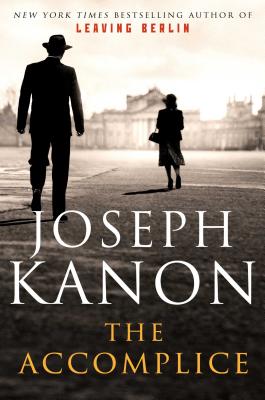
The Accomplice by Joseph Kanon

Publisher: Atria Books
Genre: Historical Fiction 
Pages: 324
Format: Hardcover
Publication Date: November 5, 2019
Buy Local
My Rating: 4/5 stars

Summary

It’s 17 years after the end of World War II in Germany, and the hunt for Nazis is nowhere near finished—at least, not for Auschwitz survivor Max Weill. But on the brink of his biggest catch—Otto Schramm, a doctor at Auschwitz believed to be dead—Max passes away, leaving the rest of the hunt to his nephew, Aaron Wiley. As Aaron reluctantly takes over the reigns of his uncle’s lifetime work, he finds himself thrust into a jungle as dangerous as it is alluring. Finding Otto Schramm is one thing, but capturing him is another. Chasing Schramm to Argentina, Aaron uncovers a helpful accomplice: Schramm’s beautiful daughter, Hannah. However, as the hunt becomes more complicated and Hannah remains unaware of Aaron’s true intentions, it becomes clear to him that Hannah may be the perfect accomplice—but to whom?

Thoughts

In my opinion, books dealing with the Holocaust and its aftermath are very risky. It is so easy to make these texts two-dimensional with characters that fall flat into one of two categories: the monster or the victim. However, I think Kanon toed the line between these two brilliantly, capturing the human condition in a surprising way.

The readers meet Otto, the Nazi doctor, nearly two decades after the war ends. However, Kanon does not let us forget the atrocities he committed and the behavior he was complicit in. I found this to be very important, because the horrendous tragedies of World War II must never be forgotten. I believe it is this two-decade time gap that allows Kanon to bring another interesting layer into the story.

I found Schramm to be a very complex villain because we are able to see him 17 years later, as an old man, and, moreover, because we learn so much about him through the eyes of his daughter. This tactic allows for a glimmer of humanity to weave in and out of the tapestry of Schramm’s character, adding depth to his being without erasing the monstrosities of his past.

My only qualm with the book was merely technical and purely personal: a lack of dialogue tags. While there are some, I found it difficult to follow some very fast-paced scenes in the story without a substantial amount of dialogue tags.

Overall, Kanon brought the perfect combination of action, mystery, and humanity to the pages of The Accomplice. I would definitely suggest this book for high school level readers or above as there are some delicate subjects and scenes within the book.


Thank you to the publisher and Changing Hands for my ARC in 
exchange for an honest and unbiased review.

Book Review

The Tattooist of Auschwitz by Heather Morris

Publisher: HarperCollins, 2018
Genre: historical fiction
Pages: 254
Format: Paperback
Buy Local
My Rating: 4/5 stars

Summary

Morris takes us through the experience of Lale Sokolov, based on Ludwig ‘Lali’ Eisenburg, the Jewish man who becomes the Tattooist of Auschwitz. Lale survives the horrors of his surroundings in the concentration camp by reaching out to others whenever he can. Of all the individuals he helps, he feels the strongest connection to a woman named Gita. Lale and Gita meet whenever possible and dream about a future together after being freed from the camp. Enduring through countless struggles, the couple eventually has their dream fulfilled. Their lives are not perfect, but they remain grateful for even the simplest of things, especially their ability to stay together. Lale and Gita’s experience proves the redemption of human nature through the worst circumstances imaginable.

Thoughts

I was expecting great things from this novel and it mostly delivered. I finished the book in a few hours, and I felt like it provided a good sense of the horrors and hope of Lale and Gita’s experience.

The purposefully simple prose, probably a remnant of its original form as a screenplay, is engaging. The present tense format makes the narrative easy to read even while grappling with a difficult subject and complicated themes. Morris’s synthesis of the information does her credit.

Overall, The Tattooist of Auschwitz delivers on the “powerful true story of love and survival” it promised on the cover. There have been disputes concerning the accuracy of the historical details it describes, which are valid. But for me, it goes against the message of the novel to minutely dissect the intricacies of the writing because ultimately the larger truth speaks for itself. Lale’s story, thanks to Morris’s telling, teaches his mantra: “if you wake up in the morning, it is a good day.”

Based on the subject matter and the content, I would suggest that this book is best only for an audience of high school students or above. That being said, anyone who is able should read this book to recognize that no matter where you are or what has been taken from you, no one can take away your ability to choose kindness and love over selfishness and hate.