As an avid book reader, I’d never been able to pick a favorite book. It had always felt like this unimaginable, impossible choice, like a mother picking her favorite child. I’d had favorites, of course—books I more than enjoyed (rated five stars on Goodreads enjoyed), and books that were quick to come to mind when asked for recommendations. But ask me for my favorite, my top pick, myif-I-were-stuck-on-a-deserted-island-and could-only-have-one-book-to-readread…I’d have nothing. So, to say that Maggie Steifvater’s The Raven Boys snuck up on me would be an understatement.
I first discovered The Raven Boys through Tumblr in 2015. My dashboard had been full of bloggers reposting quotes and character art and fancasts, all for a series that I’d never even heard of before. With such a dedicated fanbase that had seemingly come from nowhere, I’d decided to give it a try and bought a copy…
And didn’t like it.
Which sounds crazy, I know, for a book I’m claiming to be my favorite book. Shouldn’t it have been love at first page? But it took a little longer than that for me to start feeling the magic that Maggie had been building up to in those beginning chapters. In all honesty, it took me until about halfway through the book (roughly 200 pages in) to decide that it was something worth continuing. Once I got there, though—once it clicked—I was all in, devouring books one through three in a little more than two weeks.
Looking back on it, what I considered to be slow pacing—my biggest issue with the beginning of the book— was actually careful building. There’s five characters that make up Blue and her Raven Boys: characters who’d been complete and utter strangers to one another in the beginning of the book. Characters that are so fundamentally different from one another, each with such different dynamics, personalities, backstories—if Maggie had simply thrown them together in the beginning, what would’ve been sacrificed were the moments that made them come to life before our very eyes. The moments that slowly but surely guaranteed that before you even realized it, you too had become part of the group (affectionately referred to by fans as the Gangsey).
More than Maggie’s ability to create such strong individuals, The Raven Boys truly does have something for everyone: romance, history, friendship, adventure, magic…but a different kind of magic than I’d ever felt before.
Other fantasy novels, such as Harry Potter, make magic feel like real life. Like at any given moment, we too could receive our Hogwarts letters and be whisked away to a world of patronuses and magic wands and talking sorting hats. But The Raven Boys makes real life feel like magic, and that’s not something you feel by picking just any book off a shelf. It wasn’t even a distinction I was aware could be made until I felt it for myself. Don’t let the small town setting fool you: there is magic to be found in Henrietta, Virginia. Just maybe not in the places you’d expect.
Join Megan Whalen Turner, author of the New York Times bestselling Queen’s Thief series, and Shannon Hale, author of Kind of a Big Deal in conversation virtually on April 8th at 5:30pm.
Turner’s long-awaited Return of The Thief marks the conclusion of a twenty-years-in-the-making story of thief Eugenides. Hale has published over 30 books including the fantasy novels The Goose Girl and Book of a Thousand Days.
This event, hosted by Changing Hands Bookstore, has free admission tickets plus ticket and book bundles that are still available! For more information, and to register for this event, visit the Changing Hands Bookstore site here.
Location: Online
Date: Thursday, April 8th, 2021
Time: 5:30 p.m. – 6:30 p.m.
Price of Ticket: Free (with optional book and ticket bundle available)
Elizabeth Kendall’s The Phantom Prince: My Life With Ted Bundyrecounts her long-lived romance with one of America’s most prolific serial killers, Ted Bundy. The firsthand account is terrifying, but not for the reasons you might think. Elizabeth doesn’t spend time detailing the killings themselves, but instead tells the story of Ted Bundy from her perspective: that of a lover. Haunting is the tale, as she slowly realizes that a person she loved and trusted was capable of such horrendous crimes.
However, upon reading this novel, there was a component I found to be far more chilling: the power that Bundy held as a man in the 1960s and ‘70s, that allowed him to more easily manipulate his relationship with Kendall. In turn, she was led to believe her instinct was wrong, which manifested in her strong feelings of guilt for suspecting him of murder.
First, Bundy was able to begin to manipulate Kendall by agreeing to marry her, only to break off the engagement numerous times. Even as he began to betray her trust and pursue affairs with other women, she was coerced into believing he was going to marry her. This was especially important given the context of the times, because she was pressured into marriage by both her peers and parents. This allowed Bundy to wrap her around his finger and keep her looped in for years, even after she had reason to end the relationship beyond reasonable doubt.
In addition, Bundy used her naivete and lack of self confidence to feed her sense of self-doubt. In her novel, Elizabeth often expressed that she felt ugly—especially in comparison to other women with whom Bundy was involved. These ideas were enforced often throughout the relationship, as Bundy would often tell her she was the love of his life, only to tell her she was clingy and desperate days later. This vicious cycle continued to instill doubt into Elizabeth, and contributed to her beliefs that she was inferior to her male counterpart.
Perhaps the most crucial example of misogyny in the novel occurred outside of Elizabeth’s personal relationship with Ted Bundy. Instead, it took place when she initially attempted to speak with detectives about her concerns regarding Bundy’s involvement in local murders and kidnappings. Despite the evidence Elizabeth provided, she was often written off by male detectives as a ‘crazy’ girlfriend who was accusing her partner of a crime without any form of evidence. This, however, proved to be wildly untrue, as Bundy was eventually convicted of all the crimes Elizabeth tipped off detectives about. Even more disturbing is the fact that the male detectives seemed more concerned with Kendall’s sex life with Bundy than they were about her thoughts on his involvement in the crimes themselves. This was, without a doubt, one of the most striking examples of misogyny in the novel.
In conclusion, I feel that Kendall’s novel was very important, even in today’s political climate. Although her suspicions may have been taken more seriously in the present day, there are still parallels due to the leverage Bundy took advantage of by being the male in the relationship, and the lack of influence Elizabeth had over detectives because she was perceived as a woman with little self-confidence. The Phantom Prince is a worthwhile read for those who are seeking to reflect on gender roles and their unfair impact both within personal relationships and outside them.
Publisher: Tor.com Genre: Fantasy Pages: 160 Format: Paperback Buy Local My Rating: 4.5/5 stars
Summary
In this queer fantasy romance, Aqib bgm Sadiqi, son of a lesser noble in the court of Olorum, falls hard for Lucrio, a Daluçan soldier in the city as part of a trade delegation. Their love burns quick and bright, both knowing that each moment together is precious. All too soon the treaty will be signed, and Lucrio will be called back home. But they must also be careful, for the religion of Aqib’s forefathers does not approve of their union.
While kings and gods negotiate the future of their nations, Aqib and Lucrio negotiate their own futures in a treaty no less monumental for all that it defines—not relations between kingdoms and empires, but only between their two hearts.
Thoughts
The wonderful thing about short books is that you can read them in one sitting, and ever since Tor.com decided to start publishing novellas (one of the most underappreciated literary forms, in my humble opinion) I’ve been on the hype train.
A Taste of Honey is Wilson’s second novella from the imprint, set in the same world as his debut The Sorcerer of the Wildeeps. Tonally, however, the two books could not be more different. Sorcerer was a tour de force of experimental fantasy: a traditional sword-and-sorcery story with a non-linear narrative structure, and a masterful use of layered, naturalistic dialect. Imagine my surprise upon picking A Taste of Honey to discover an aching summer romance, full of queer longing and forbidden love.
Honey is in many ways a more casually approachable work than Sorcerer. This was a purposeful decision on the part of Wilson, who wrote in his essay “A POC Guide to Writing Dialect in Fiction” that “Many people won’t read even gorgeously written dialect—cannot, in the first place, perceive the beauty in it.” Therefore he toned-down the dialect in his second work, though he notes that Honey is still “deeply although subtly spiced with it.” His experiments with form, on the other hand, have been—if anything—heightened. The warp and weft of interwoven past and present give the book an almost dreamlike quality, imbedding the reader into a diachronic character study of Aqib bmg Sadiqi.
Aqib’s personal turmoil takes center stage in Honey. I’m not ashamed to say this book made me cry as Aqib’s thorny relationship with his family tore its way through my heart. (Don’t worry though, Ashante knows better than to violate romance’s sacred trust of the happily ever after).
And Lucrio—sweet Lucrio—is just about the best Prince Charming I’ve ever encountered in print. If you fall hopelessly in love with storybook characters (as I do), be prepared to go head over heels for this strong and gentle Daluçan soldier.
I recommend this book whole-heartedly. You would be hard pressed to find a more intimate portrait of tragedy, romance, and longing in a smaller package than A Taste of Honey. Come spend a chilly winter evening warmed by love and the light of the Olorum summer sun.
Podcasts are quickly growing as one of the most popular online storytelling mediums. One genre that has developed (thank the book gods) are ones that inspire, encourage, and inform you about the ins and outs of the writing world and help jumpstart your creativity. Below, I’ve compiled six amazing podcasts for writers who hope to one day share their creations with the world—or maybe even just their closest friends. These podcasts share everything from ways to make that story just a little extra special to the best ways to get a story published, giving you insider tips and tricks for whatever writing journey you’re on. I encourage you to check these ones out anywhere you get your podcasts (Spotify, Apple Podcasts, and Google Podcasts, just to name a few), and to explore what other book-ish podcasts are out there.
88 Cups of Tea—Yin Chang.88 Cups of Tea is a great podcast if you’re looking for that “just sat down with my friend that gives the best advice while drinking a relaxing chamomile tea” vibe. I recommend this podcast for anyone who is looking to find out more about crafting advice, lifestyle habits that nurture creativity, and overcoming rejections in a gentle, encouraging delivery. This nurturing and supportive environment is great for any writer that might be scared to take that first step into the writing community. Don’t worry, the host Yin Chang will be delighted to have you, and already has a cup of tea waiting.
Write or Die—Claribel A. Ortega and Kat Cho. If you’re more of a tough-love-gets-the-job-done kind of a person, the Write or Die Podcast hosted by authors Claribel A. Ortega and Kat Cho will definitely push you outside your writing comfort zone by spilling all of the dirty, insider secrets of what it actually takes to become an author. The authors take you through the many challenges of what it takes to get published—time, energy, thousands of rejections, and many, many tears. However, they also talk about how many authors pushed through that and are now living their dreams. This podcast answers the question: Do you have what it takes to become an author?
Pub(lishing) Crawl—Various Authors. Pub(lishing) Crawl is led by a group of authors and industry professionals who dive deep into all things “reading, writing, books, and booze.” You get an insider perspective on industry secrets such as crafting a pitch, characters, publishing relationships, and many other techniques that publishers are specifically looking for. You know how you’re supposed to do a crazy amount of research on the company you want to work for? This podcast takes all the guesswork of knowing what publishers want and simply tell you the nitty-gritty inner workings of publishing companies.
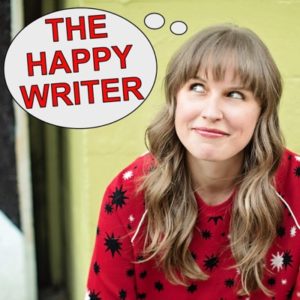
The Happy Writer—Marissa Meyer. I may be a little biased on this one, but The Happy Writer with Marissa Meyer—my favorite author, by the way—is one of my go-to podcasts. It is by authors for every writer, whether pro or beginner. Meyer and her guests join together for a fun chat about rejection, imposter syndrome, writer’s block and how to overcome all of it so that you can be…a happy writer! This podcast is great for talking about how writers can bring more joy to their writing process. Not only should writing be about getting published, but also about releasing stress, imagination, and writing about what makes you inspired.
Helping Writers Become Authors—K.M. Weiland. WARNING: Information Overload! K.M. Weiland has a straightforward, no-nonsense kind of attitude that is perfect for an information dump about “summoning inspiration, crafting solid characters, outlining and structuring novels, and polishing prose.” She educates her audience about writing and editing something that is good enough to see the light of day. The name of the podcasts speaks for itself, and anyone who listens to this will gain helpful knowledge about making your creations the best they can be.
Deadline City—Dhonielle Clayton and Zoraida Córdova. Sit down with Dhonielle Clayton and Zoraida Córdova to talk about things they’ve experienced in the time they’ve published 40 books. This podcast is incredibly fun as these New York City–based authors talk about “YA fiction, editing, reading reviews, and burnout.” Think of them as your two older sisters/best friends who just want the best for you and your writing endeavors. This is what I imagine each time I listen to them talk about love triangles or Hollywood adaptations of books. They’re young, fun and honest, but still know a thing or two about what lies beyond the industry curtain.
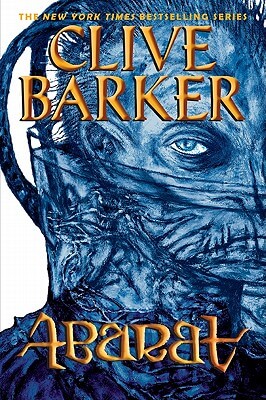
Publisher: HarperCollins Genre: Fantasy Pages: 528 Format: Paperback Buy Local My Rating: 5/5 stars
Summary
Candy Quackenbush is sick of her life. She lives in Chickentown, the world’s most boring town, her father is a loudmouth drunk, and everyone except her soft-spoken mother views her as a freak. One day, however, Candy finds herself literally swept away by the magical sea to a place called the Abarat. The Abarat has 25 islands and each one is frozen at a specific time of day—for example, on one island the time is constantly midnight—and each island is filled with extraordinary creatures. Thrust into a world of magic and adventure, Candy is definitely no longer bored. However, Christopher Carrion, the fearsome prince of midnight, is dead set on capturing Candy by any means necessary. But why? What does the Prince of Midnight want with an ordinary girl from Chickentown? And furthermore, why is Candy so drawn to the Abarat?
Thoughts
Abarat is one of the most unique fantasy series I’ve read in some time. Rather than having traditional fantasy creatures populate the Abarat, Clive Barker filled the entire series with never-before-seen creatures. My personal favorites are John Mischief, a man with large antlers that has eight additional heads hanging from them also named John; and Squbb and Squiller, two tiny squid-like creatures that, when placed on your head, serve as binoculars. The introduction of these new creatures is aided by Clive Barker’s inclusion of elaborate paintings and drawings of his creations. If you’re considering reading this series I would highly recommend getting a copy that includes his art. Even though they are slightly more expensive, it is completely worth it. His artwork can only be described as eerily enchanting, and that, combined with the fact, this is the first time these creatures have ever been seen, it really allows you to relate to the wonder that Candy feels.
Speaking of Candy, she is a wonderful female protagonist. I often find that female characters in fantasy can sometimes be shoehorned into either being the damsel in distress or the ‘not like other girls’ archetype that completely rejects and looks down upon anything feminine. Candy Quackenbush subverts both of these effortlessly. She is a strange girl who is delighted to have found the Abarat and, despite its many dangers, is unafraid to rush headfirst into the unknown. She is also fiercely clever and kind, often helping those she comes across without a second thought. That being said, the author did not forget to give her flaws, and her fearless nature often leads to her attracting unwanted attention and putting herself into danger. Overall, she is an exceptional protagonist that I absolutely adored throughout the three books.
The most fascinating aspect of Abarat is how the book handles the themes of darkness and light. As stated before, each island on the Abarat is stuck in a particular time period, and throughout the book there is a prejudice towards the people and creatures that exist in the darkness. At first, we as the reader agree with these prejudices—especially since the creatures from the night islands tend to be horrifying—but as the story continues, we come to understand that looks can be deceiving. The creatures of darkness are fully capable of sincere love and heartbreak, while the creatures of light are also fully capable of unspeakable cruelty. Without giving too much away, this trilogy succeeds in having both an impressive villain redemption arc and a reverse arc where a beloved hero is revealed to be a bitter monster.
Going off of the themes of light and dark, Abarat is definitely not afraid to get exceptionally dark. After all, one of the characters keeps their pickled nightmares in a glass collar that they wear around their neck to remind them to never love again! The feud between darkness and light leads to many horrific acts being perpetrated by both sides—not to mention the dangers that eventually come from Chickentown once they learn of the Abarat. This book, though technically meant for all ages, does not shy away from death and suffering, and fully embraces the complexities of those themes.
With all my gushing about this series, you may wonder if there is anything negative I could possibly say about it. Unfortunately, there is one issue that may deter readers, and that is how the series has ended—or rather, how it refuses to end. Abarat is supposed to be a five-book series, but since the release of book three Abarat: Absolute Midnight in 2011 there have been no new books in the series. The author still occasionally posts about completing the series, but aside from that, there has been virtually no news. While I definitely do not regret reading this series I would warn those who don’t like cliffhangers that the final book leaves plenty of plot points up in the air. Despite this shortcoming, I honestly couldn’t bear to give this book any less than five stars. Even though I may never know how it ends, I still consider it one of my favorite book series and I cannot wait until the day I can finally read the last two books.
In summary, the Abarat series is absolutely fantastic. Clive Barker is an incredible author and the effort and care he put into every aspect of this series shines through. While I may never get to see the end of Candy Quackenbush’s adventures in the Abarat, I will always be fond of the fascinating three books I was able to read. I fully recommend this book to fantasy readers of all ages.
What’s it like being a YouTuber? What does it mean to be a writer on a video-sharing platform? How can writers use the medium of videos for social justice?
I was able to sit down with Phil who operates the YouTube channel called That Dang Dad. Phil has always been a writer and creator—poetry, essays, film reviews, music—and has since focused his writing on creating video essays on topics like racial justice, accessibility, toxic masculinity, and more. His work is radical, but also funny and approachable.
He talked with me about how he came to create his channel, his writing process for a video, and what is unique about writing for YouTube.
What was the motivation behind beginning your channel and the framing of your channel name That Dang Dad? Are your intentions for your channel for fun expression, to solve a problem, or something else?
I’ve always enjoyed discussing big ideas with people and sharing new things I’m learning. As I got plugged into the YouTube community of people talking about radical social, economic, and racial justice, I found myself really energized to keep learning and making connections between pop culture, academic scholarship, and my own life experiences. I decided to start a YouTube channel as a way for me to continue to share my findings with others as well as just to generally put more kind, thoughtful, and inclusive content on the platform. YouTube is famous for platforming thousands of harmful hucksters fomenting violence and exclusion, so I wanted to do my part to cancel out some of that noise.
My first and foremost intention with my channel is to express an idea I’m wrestling with in a way that will stimulate and delight others. So, not necessarily to teach (although that does happen), and not necessarily to entertain (although I hope that happens), but more to… feed a sense of curiosity about the world. I personally find it exhilarating to see things in new ways and my desire for my channel is to give my audience that same exhilaration.
2. What is your writing process like for creating a new video essay?
Typically, it starts with an idea stimulated by something I’ve read, seen in TV or movies, or an idea sparked from an incident in my real life. I’ll spend anywhere from a week to a month just letting the idea rattle around my skull and seeing what kind of noise it makes, whether it’s “A Thing” or not. Once I’m satisfied that I have something that’s worthy of a 20 minute discussion, I open up a blank document and start writing a script from the top.
Generally, my approach to a script is a quick introduction that entices an audience, two or three big chunks that explore my idea, followed by a “So what?” section in which I attempt to take what I’m talking about and explain what I think it means, why I think it’s important, and how I think it should impact my (and implicitly my audience’s) life.
Typically, it takes me 2–5 hours to write a 20 minute script, including rereading, rejiggering, and revising. Research-heavy videos can take twice that as I hunt for relevant passages in books and essays. I always read a script out loud to myself to see where I stumble over my own words, or where I lose my own train of thought. Once it reads comfortably to me, I’ll wait until my daughter has gone to bed and then record myself performing the script in my home office late at night. When I have all the video and audio recorded, I’ll open up my video editing software and add the files in, and then I start carving it up to make sure it flows well, taking out long pauses and cutting around flubs. This is when I start searching for supplemental images and footage, like charts, graphs, news articles, clips from shows, and the like.
Depending on the subject matter, I always like to make sure I have some jokes and cutaway gags to break up the video and add some places for an audience to catch its breath. I don’t try to write full-on humorous videos, I just let my natural sense of timing and playfulness come out from time to time.
3. What are the strengths or unique considerations for sharing writing and essays via a video platform like YouTube? What is it like to write for YouTube versus for other mediums?
YouTube is a really interesting platform because its ecology is so enmeshed with the modern Attention Economy. In order to have your work succeed on YouTube, you have to get people to click on your videos and watch them in a single sitting without clicking onto another tab. What’s worse, you are competiting with 3 minute long meme videos, 30 minute long incendiary clickbait, videos of people playing video games, videos of raccoons being cute, and food porn, all pre-curated to steal each viewer’s attention.
So, if you’re trying to win over an audience that isn’t extremely niche or loyal to you, you often don’t have the luxury of long introductions or careful, exhaustive table-setting. You have 10–20 seconds to pique their interest or their eyes will float down to the suggestion column for something else. Everything from your video thumbnail to your opening line to your audio quality to your general demeanor has to come together in service of your point.
This means writing for YouTube requires you to have a very strong value proposition up front, and by that I mean, you have to know why a viewer a) wants to hear this, b) will understand it, and c) should trust you to deliver it. You have 10 seconds to make an idea appealing, make it clear, and make yourself credible.
On the flipside, YouTube is amazing for niche topics from voices on the margins because the audience is, for all intents and purposes, infinite. There are vibrant communities for people who are, for example, asexual and aromantic. There are communities of people who document dying malls. There are communities who interview people about daily struggles that society doesn’t know about. There are communities built around support for incarcerated individuals. And there are communities that film themselves playing games and talking to their friends, creating a party atmosphere even during quarantine.
I say that to say, your value proposition doesn’t have to target everyone on YouTube. You just need a strong value prop for the specific people with whom you’re trying to build a community.
4. What is your most popular YouTube video and how do you think it came to be so widely experienced? What impact do you think it created/is creating?
My most popular video is “How Law Enforcement Taught Me to Dehumanize.” I wrote it during the Black Lives Matter protests in the spring of 2020, and it was picked up and promoted by a popular YouTuber and has been very successful since.
If we go back to my explanation of value propositions, this video has a very strong one: a) it’s appealing because we are living during a time of highly visible police misconduct disturbing a nation, b) the topic of dehumanization is something that many people intuitively feel from law enforcement but may not fully be aware of, and c) I’m credible because I’m a former police officer.
Now, would this exact same video have been successful in, say, 2004? Of course not: in the wake of 9/11 and the start of the Iraq War, American reverence for armed forces was at an all-time high. My video just happened to be written at the right time to ride in the wake of a large movement. This isn’t to say the only successful videos are anchored to specific times and politics, only that, for me, the time period was part of the value prop.
The impact I see the video creating is one that is contributing to a slow, increased skepticism about law enforcement in general. Many people take the existence of the police as a given, as a default. Many commenters on my video expressed shock at my experiences and told me it made them see law enforcement a different way. Many said they were sharing it with family and friends to “open their eyes” about how law enforcement really is. To steal from Mark Fisher a little, I think my video is helping to dislodge the modern conception of the police from occupying the horizon of the thinkable.
5. What video(s) of yours are you most proud of? Tell me about how it/they came to be.
I should be proud of my most successful video (and I am), but the two videos that are actually my personal favorites are “You Are Alienated” and “Why You Should Care About Designing For Accessibility.” The former is a kind of spoken word/music video format discussion our modern alienation from our money, our labor, and our communities. It’s very different from my other videos, much more “artsy,” much more audacious—but when I watch it, I feel like my music, my words, and my visuals all harmonized perfectly to create the feeling I wanted to create. Alienation is often subtle, often scary, often demoralizing, and I wanted to give that a voice for people who felt it but couldn’t articulate it. I think I hit it exactly right.
As for my accessibility video, I created it to share lessons I’d been learning about how disabled people are excluded from work, from wealth, and even from democracy. I was so shocked to learn these lessons that I felt I had to amplify them. If they blew my mind, I knew they would blow other minds. I’m super proud of it because my abled commenters told me they had never encountered many of these concepts about disability and disabled access, whereas many of my disabled commenters told me I was one of the first YouTubers they’d seen treat these issues as important. Many disabled commenters told me that even other left-wing or social justice oriented channels seemed to ignore the disabled community and that my video made them feel seen and feel included. That video has a fifth of the views of my dehumanization video but it’s the one that makes me the happiest.
6. For people who may be interested in sharing their own work on a video platform like YouTube, what wisdom might you share with them about the experience?
Practical first: audio is more important than video, believe it or not. If people can hear you clearly, a fuzzy camera image isn’t as big of a deal, especially since you can always supplement with free stock video, free stock images, or footage of you playing Dark Souls.
Also, when you’re finding your voice, I would advise trying to err on the side of being too short instead of too long. Like I said, you’re competing in the Attention Economy and unfocused rambling is a great way to lose eyeballs. Find the core nug of your message and stay focused on it. As you grow your channel and find your sea legs, you’ll start to get a sense for what your audience is willing to stick around for, but when you’re an unknown, people may not invest two hours into someone they’ve never heard of before. I have never done a video longer than 30 minutes and I’ve never felt like I didn’t fully explore the topic I wanted to.
On that same wavelength, there is a concept in user experience called “information scent,” which posits that people click links on the Internet almost like they are foraging for sustenance. If they want to know about a topic, when they click a link they are going to decide within seconds whether they are still on the trail of the topic they want to know about. If they think they’ve lost the scent, they will hit the back button and try a different link. So if you want to make content for people researching a topic, make sure that within a few seconds, your video is clear about what you’re going to cover so that you reinforce the information scent for your famished visitors.
With that out of the way, my big piece of advice is that passion will build an audience. Maybe not a big one, maybe not one you can monetize and replace your income, but one that is authentic and engaged. If you are passionate about mathematical paradoxes, trans liberation, labor relations, young adult horror novels, weird history, cosplay, recipes from ancient cultures, or queer themes in 80s television, you have something to offer on YouTube.
And passion doesn’t mean bombastic speeches, loud talk, or an in-your-face demeanor. More, the passion to do a subject justice, the passion to do the research, to explain a concept people haven’t thought of, or to show them the interesting side of something they thought was mundane. I once watched an hour long oral history of the Super Mario Brothers world record speedrun. I once watched an hour long video about the ten year history of a Japanese professional wrestling rivalry. Passion is infectious. YouTube is full of people trying to make a buck by gaming the algorithm and trying to coast on whatever is trending. My advice is to not worry about the algorithm and instead of focus your energy on getting people excited about what you’re excited about.
Lastly, if you’ve done work you’re proud of and passionate about, don’t be afraid to share it! Promote it on Reddit, share it on the socials, text your friends, and don’t feel selfish about talking about your stuff. If it comes from a place of passion and authenticity, you’re not being greedy or egotistical telling others to see it. And always ask your audience to share your videos. Word of mouth is huge on YouTube.
7. A question we like to ask folks: what are you currently reading?
I am currently reading Postcapitalist Desire and The Weird & The Eerie, both by Mark Fisher, as well as 99% Invisible Cities by Mars & Kolstedt. I also read from Gore Capitalism by Sayek Valencia once a month, but I am as a mewling baby before this text and the only thing I fully understand from it is the concept of “the precariat” and basically nothing else. Normalize👏 not👏understanding👏books👏!
Subscribe to That Dang Dadhere. Follow That Dang Dad on Twitter here, or Phil’s main account here.
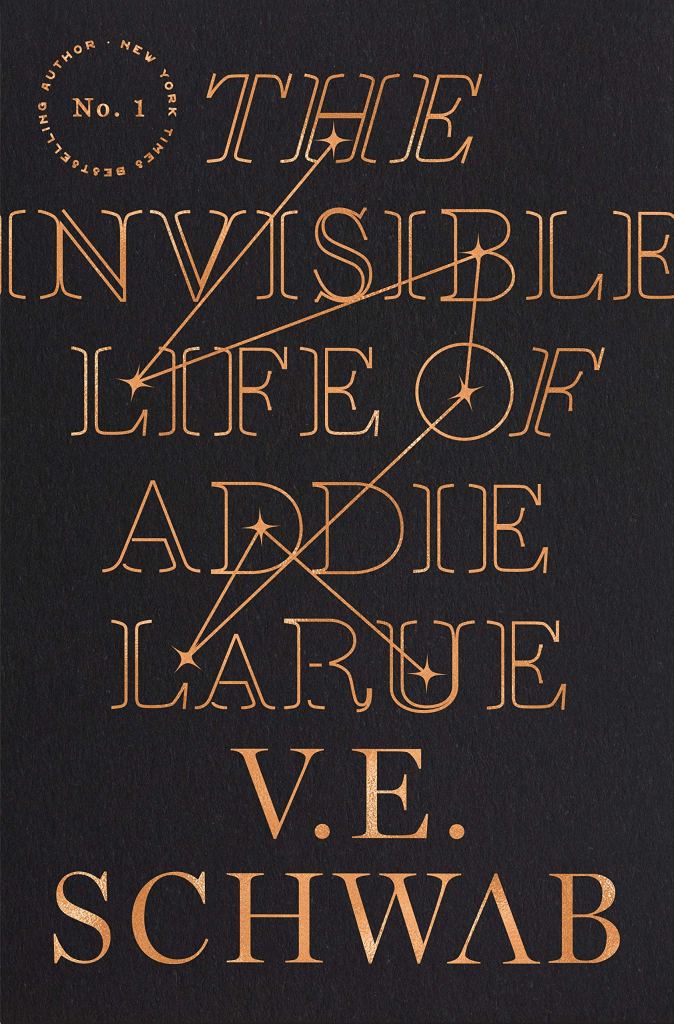
Publisher: Tor Books Genre: Fantasy/Historical Fiction Pages: 448 Format: Hardcover Buy Local My Rating: 5/5 stars
Summary
Adeline “Addie” LaRue was born in Villon-sur-Sarthe, France in 1714. She prays to the New God and the Old ones, but is warned to never pray to the God who answers after dark. However, in a moment of desperation, she accidentally does—and so begins the next 300 hundred years of her life.
In this life, she cannot die, but is remembered by no one once she is out of sight. She can’t even tell anyone her name. She lives her life alone, learning languages and watching the world as we know it evolve. Until, in New York City in 2014, she meets someone who remembers her, and everything changes.
Thoughts
This book continued to pop up everywhere I looked, so finally I caved and bought it. From what I had gathered, the book had a surprising twist and left a lot of people in tears—which is my kind of novel. It’s safe to say I had no idea what I was getting myself into. From the first chapter, I was drawn to Addie’s character, rooting and feeling sorry for her at the same time, while contemplating what I would do in her position. Schwab has created incredibly complex characters who pull at your heartstrings in every direction.
The story itself takes you through history as Addie watches events all around the world take place, with only the darkness to truly keep her company. Schwab has effortlessly weaved fantasy elements and historical events together, making the reader feel as if they were there too, walking the streets of Paris in 1750 or watching the Opera in Italy in 1870. The reader is just as much a part of the story as Addie, and I found myself furiously turning every page, and staying up until the wee hours of the morning just to find out more.
Just as I was warned though, the ending was like a knife to the heart. I kept wondering what it was going to be, what everyone was getting so worked up over, and then it happened. Of course, I won’t spoil it—but get your tissues ready. Not only is the turn of events shocking, but you will find yourself so invested in these characters and their relationships that when you do experience the ending, it breaks you.
I can honestly say I have never read a story like this; it is truly a unique experience. I cannot recommend this book enough, (I have already told all of my friends about it). This is one story I look forward to reading again and again.










 The Spellbinding Shelf